From January to April this year, the cumulative sales of pure electric vehicles increased nearly 98% year-on-year, while the year-on-year growth rate of PHEV reached 176%, surpassing pure electric for the first time. This is an easily overlooked blue ocean market. It is expected that by 2025, the market share of hybrid vehicles will exceed 13%, forming an important market with a scale of nearly three million annually.
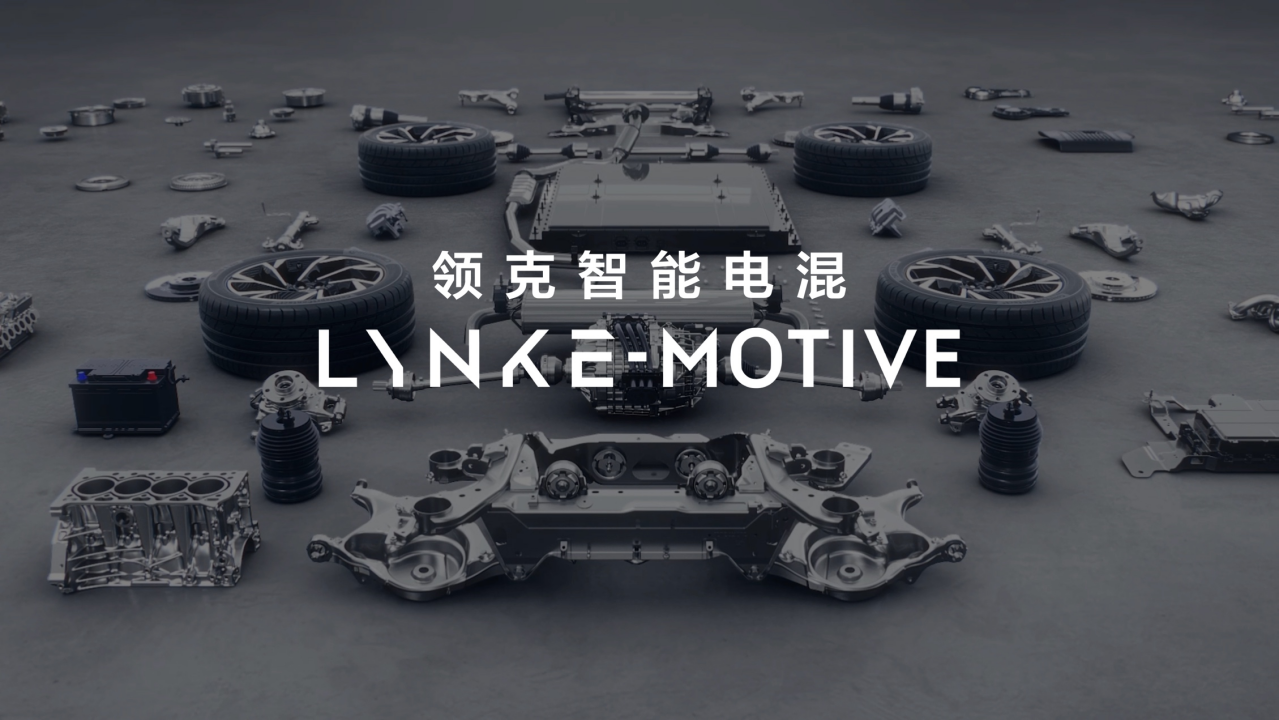
Lynk & Co is also about to usher in a moment of new energy transformation, but not electrification, but a hybrid system called “Lynk E-Motive”. According to the introduction, Lynk & Co will launch four models with the Lynk E-Motive hybrid system this year, and the system will be equipped on all Lynk & Co models by 2025.
Performance and Energy Efficiency
Lynk E-Motive will provide two power forms, HEV and PHEV. The fuel consumption of HEV model is as low as 4.5 liters per 100 kilometers in WLTC test; the electric mileage of PHEV model is as low as 5.1 liters per 100 kilometers in WLTC test.
Lynk & Co CEO stated that when defining this hybrid system, it was discovered that most hybrid products on the market are lacking in performance. Therefore, the three-speed hybrid electric drive (DHT Pro) model balances performance and fuel consumption, which can also be regarded as retaining the sporty genes of Lynk & Co.
The models equipped with the three-speed hybrid electric drive (DHT Pro) all have “launch boost”, which increases the starting acceleration by an additional 0.5 seconds; full-speed parallel connection is achieved, and when accelerating from 80 to 120 km, it actively downshifts to speed up, which is 1 second faster than competing products of the same level. The strongest performance Lynk E-Motive product has a comprehensive maximum power of 382 kW and a comprehensive maximum torque of 910 N·m, capable of completing 0-100 km/h acceleration in less than 5 seconds.
The PHEV of the Lynk E-Motive hybrid system can realize two-wheel/four-wheel drive, WLTC test electric range of 60 km, 100 km, 150 km, and a four-wheel drive product of 180 km can be selected. More endurance products will be available in the future.
Intelligent Hybrid System
Unlike the outdated architecture of “switching from gasoline to electricity”, Lynk & Co will be based on a brand new generation of electronic and electrical architecture to achieve the decoupling of power system hardware and software, and support chassis domain, intelligent driving domain, cockpit domain, and body domain full-scenario OTA upgrade.
At the same time, the system learns the driving style based on user behavior through clustering algorithms to determine the driving mode and intelligently adjust throttle response. Based on navigation data combined with real-time road conditions, weather conditions, driving habits, and vehicle ADAS data, the intelligent algorithm matches different work modes for different sections.
The Next Day
At this press conference, Lynk & Co. presents The Next Day, a concept car that marks the transformation of Lynk & Co.’s hybridization.

The Next Day is a four-door GT model that showcases the brand-new design language and serves as a platform for Lynk & Co.’s intelligent hybrid technology. The front of the car adopts the “Dawn Light” design language for daytime running lights, making it sharper and flatter than the Arctic Light running lights in the first-generation Lynk & Co. design.


Lynk & Co. says that The Next Day is inspired by the sunrise, showing the urban light and shadow changes from dawn to morning. The Next Day represents the brand-new design language of Lynk & Co., and the design elements of the concept car will be gradually implemented in Lynk E-Motive products.


Lynk & Co. and Geely position themselves complementarily and have competitive products in various power forms, which is rare among competitors.
This article is a translation by ChatGPT of a Chinese report from 42HOW. If you have any questions about it, please email bd@42how.com.