In the early hours of this morning, Tesla released its financial report for Q3 2025. Revenue and deliveries reached record highs, with a gross margin returning to 18\%, yet GAAP net income fell by 29\%. The report noted that compared to the same period last year, the number of users purchasing FSD outright has decreased, impacting both quarterly revenue and net income.
The earnings call following the report was even more engaging, focusing on autonomous driving, robotics, and the upcoming AI5 chip. Notably, Tesla revealed some key information regarding AI and FSD:
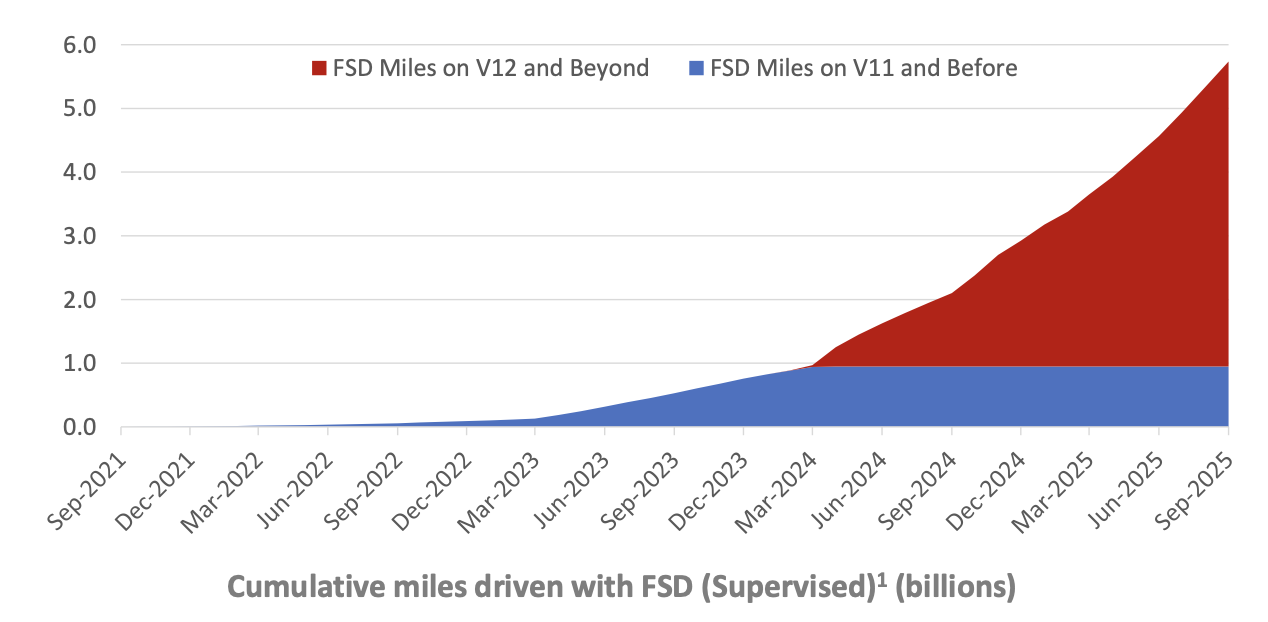
- As of yesterday, the total driving distance for FSD reached 6 billion kilometers, with the chart showing exponential growth;
- Paying users account for approximately 12\% of the total fleet;
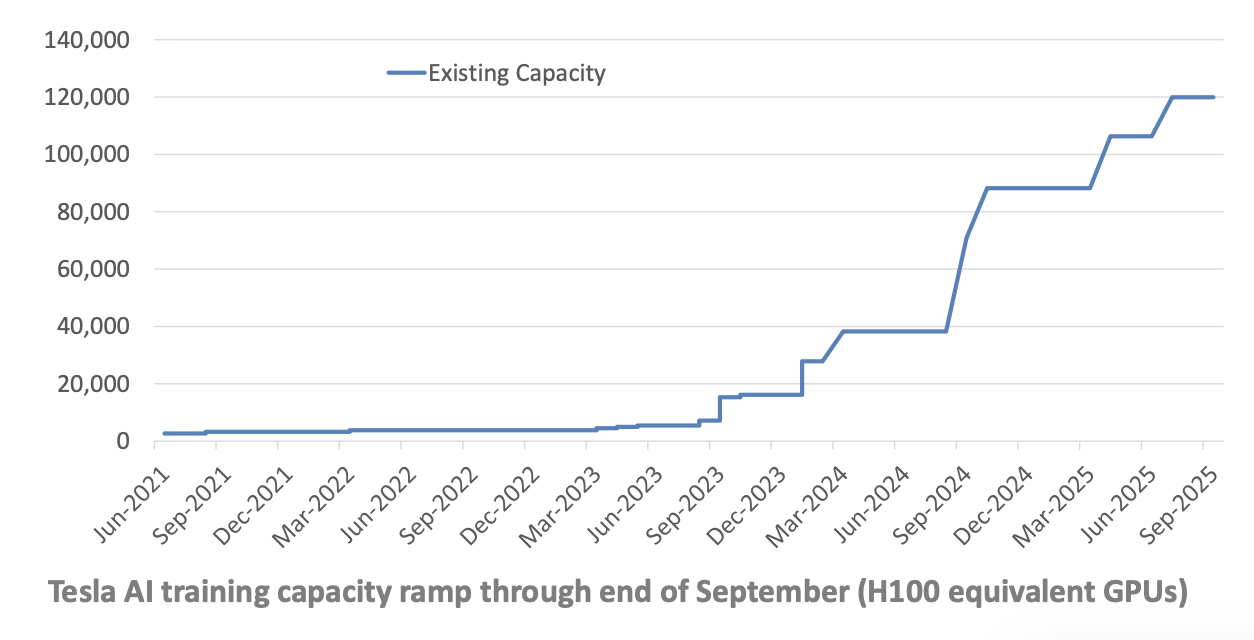
- As of September, Tesla’s AI equivalent computing power reached 120,000 H100 chips.
Meanwhile, Musk unveiled substantial details about the AI5 chip, which in certain performance metrics, outperforms AI4 by up to 40 times. Specifically, AI5’s performance per watt will be 2 to 3 times better than AI4, and AI capabilities per dollar will improve tenfold. Additionally, the AI5 chip will eliminate traditional GPUs and image signal processors, creating more room for memory, accelerators, and CPU modules.
Tesla’s development of AI, FSD, and the AI5 chip will ultimately be integrated into new Tesla vehicles and the nearly counterpart Optimus robots. In Tesla’s new vehicle landscape, the long-rumored affordable model has been replaced with the Model 3 and Model Y standard versions. Next year, Tesla’s production focus will be on the Cybercab (second quarter), Semi, and Megapack 3. Moreover, Tesla will set up production lines for the Optimus prototype products in the first quarter of next year (possibly in February or March).
Clearly, in facing competition in the electric vehicle market, Musk’s product strategy continues to evolve, but the core focus remains AI. As Musk stated: “Tesla is indeed the leader in real-world AI, and no one can accomplish what we do with real-world AI.”
Record High Revenue
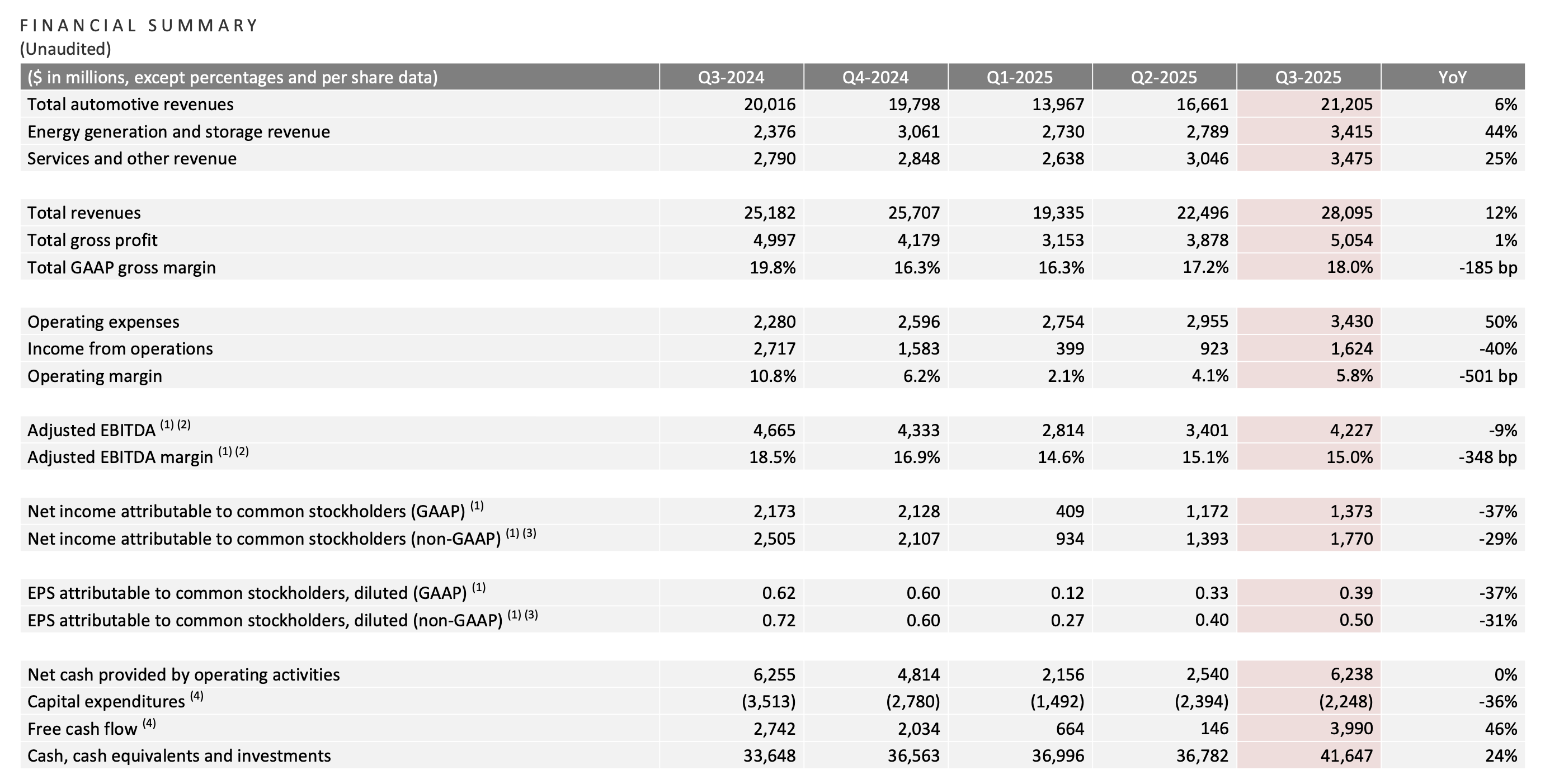
In Q3 2025, Tesla achieved a revenue of $28.095 billion, marking a 12\% increase year-over-year, becoming the quarter with the highest revenue in history. Automotive segment revenue was $21.205 billion, up 6\%; energy storage business rapidly grew, with revenue of $3.415 billion, up 44\%; service and other business revenue reached $3.475 billion, up 25\%.
 Tesla’s three main business segments—Automotive, Energy Storage, and Services & Other—each contribute differently to its profitability.
According to financial reports, Tesla’s overall gross margin in Q3 2025 was 18%. Breaking it down, the Automotive gross margin stood at 17%, Services and Other at 10.5%, while the Energy Storage business achieved a gross margin of 31.4%.
In the third quarter of 2025, Tesla’s net profit saw a significant year-on-year decline, though it rose quarter-on-quarter. GAAP net profit was $1.373 billion, down 37% year-over-year; non-GAAP net profit was $1.77 billion, down 29% year-over-year.
Why did net profit see such a year-on-year decline? Tesla cited four major reasons:
- Increased R&D, AI, and administration expenses;
- Reduced FSD buyout revenue (no new features were released recently, whereas last year saw a FSD buyout peak with the introduction of the summon feature and FSD for Cybertruck);
- Higher average vehicle cost (affected by tariffs and sales structure);
- Decreased regulatory credits revenue.
At the same time, in Q3 2025, Tesla’s free cash flow reached $3.99 billion, a 46% year-over-year increase.
12% of Users Pay for FSD
Recently, Tesla launched FSD V14, enhancing capabilities in obstacle avoidance, emergency vehicle handling, smart parking, and integrating the core model of Robotaxi. Musk stated, “I am 100% confident that unsupervised FSD will be safer than human driving.”
However, Tesla CFO Vaibhav Taneja noted that FSD’s paying users remain a small group, comprising roughly 12% of the total fleet. “Paying users” likely includes both buyout and subscription models. Musk has previously stated on X that the FSD take rate is much higher than the 2% reported by media.
Tesla’s released charts show an exponential increase in total FSD mileage. Ashok, Tesla’s AI software team leader, revealed in a conference call that total FSD mileage has surpassed 6 billion miles as of yesterday.
Regarding the Chinese market for FSD, the financial report still includes only a brief statement: A larger-scale update is in preparation, pending regulatory approval.
Musk revealed that the V14 software version will introduce reasoning capabilities to vehicles. Ashok added that reasoning capabilities will run on AI4 or AI5 and are certain to be in place before the end of the year.
Regarding FSD’s reasoning, Musk gave an example of parking in a mall.
Reasoning begins the moment the vehicle enters the parking lot. The car can drop passengers at the mall entrance, allowing both driver and passengers to disembark, while the vehicle autonomously searches for a parking space. With its 360-degree visibility, a Tesla’s ability to find parking is superior to that of a human.
Musk stated, “The car will feel like it’s alive.”
Speaking of the soon-to-be mass-produced AI5 chip, Musk praised it, claiming that in certain scenarios, it offers a 40-fold improvement over AI4.
During today’s call, Musk provided substantial insights into the AI5 chip. AI5 will achieve a 2-3 times improvement in per-watt performance and up to a 10-fold increase in performance per dollar in AI applications.
He commented, “I have nothing but praise for Samsung, which is a great company that manufactured the AI4 computer.” However, the forthcoming AI5 will be co-produced by TSMC and Samsung. According to plans, production will occur in the U.S., with TSMC in Arizona and Samsung in Texas. Musk mentioned that technically, equipment at Samsung’s facilities is slightly more advanced than TSMC’s.
Regarding chip architecture, AI5 eliminates traditional cores like GPUs and image signal processors, allowing the AI5 chip to fit within half a die area, leaving more space for memory, Tesla accelerators, ARM CPUs, and PCI modules.
Musk also discussed the distinctions between Tesla’s own chips and NVIDIA’s: NVIDIA faces the challenge of catering to a vast and varied clientele, while Tesla needs only to satisfy a single customer. This allows for a simplistic chip design, with unnecessary complex components removed. Musk likened the connections between logic blocks within the chip to highways, mentioning that while NVIDIA excels in tackling “Mission Impossible,” Tesla focuses on sheer simplicity.
In cloud training, Tesla already combines the AI4 with NVIDIA chips, and this will continue into the AI5 era. However, Musk indicated that this does not seek to replace NVIDIA.
While emphasizing AI5, Musk didn’t overlook HW3 legacy owners. Ashok disclosed that Tesla plans to roll out a V14 Lite software version for HW3 hardware next year’s second quarter, enabling older car owners to access the new software. Tesla’s CFO noted that the vehicle he commutes with daily is equipped with HW3 hardware, ensuring that legacy owners are not forgotten.
Optimus V3 To Be Released in Q1 Next Year
Robots are another significant segment in Tesla’s landscape. This July, LateAuto reported that Tesla had paused humanoid robot production to revise its design.
In the Q3 2025 earnings report, this information has been indirectly confirmed.
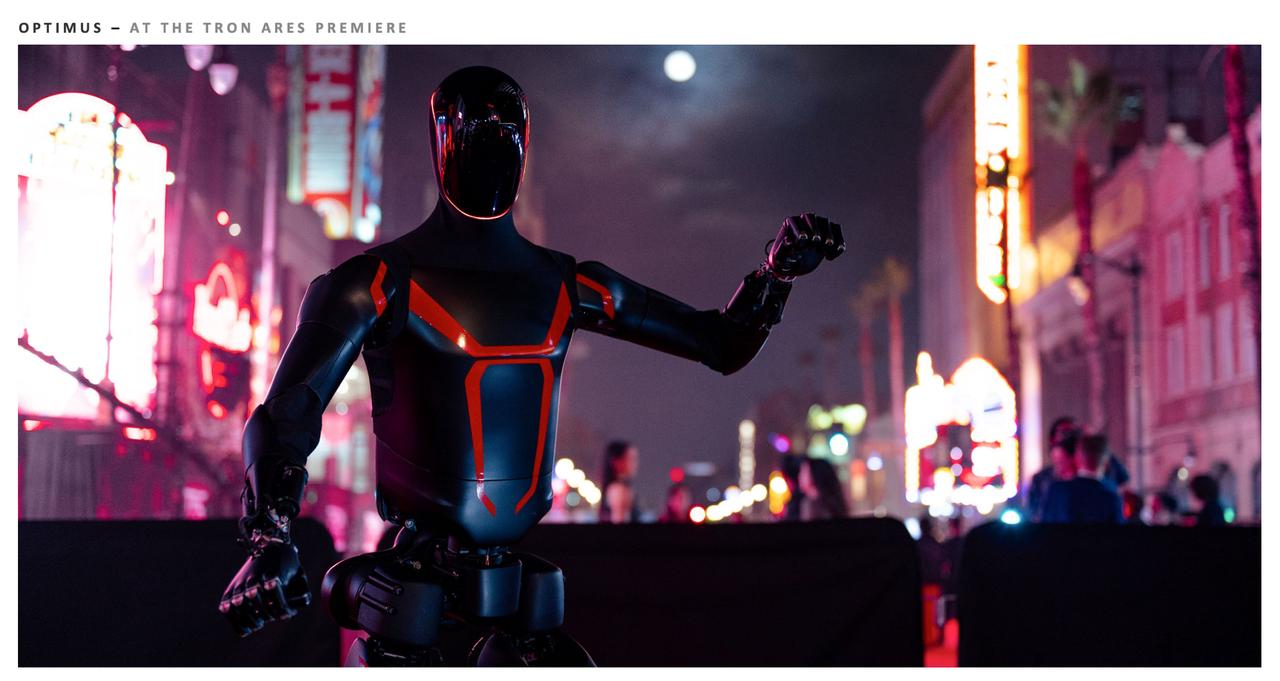 Elon Musk first announced the new Optimus product, Optimus V3, which will be released in the first quarter of 2026. Regarding this robot, Musk remarked that you would feel V3 is not like a robot but rather a person in a robot suit. “It’s so human-like that you’d have to poke it to believe it’s a robot.”
Simultaneously, Musk outlined a plan for robot manufacturing. Tesla must be highly vertically integrated, deeply involved in the supply chain, and manufacture some components itself due to the lack of a supply chain in the industry.
He said: “If I put myself in the shoes of a robotics startup, without large-scale manufacturing technology, I wouldn’t know what to do. Therefore, Tesla is in a unique position.”
According to the plan, Tesla intends to prepare prototype products in the first quarter of next year (possibly February or March). Tesla will build an Optimus production line with an annual capacity of one million units, aiming to start production by the end of next year, though there will be a production ramp-up period. By the time of the Optimus 4 era, there will be an annual production of 10 million units; in the subsequent Optimus 5 era, approximately 50 million to 100 million units per year.
At the beginning of the conference call, Musk discussed how Tesla is at a critical turning point as it brings AI into the real world. Tesla is also a leader in real-world AI. AI connects all of Tesla’s products, whether it’s FSD, Robotaxi, Grok intelligent cabin, or Optimus, they all rely on AI as the core. Despite adjusting strategies to keep pace with industry competition, Musk emphasized that AI remains a constant core.
This article is a translation by AI of a Chinese report from 42HOW. If you have any questions about it, please email bd@42how.com.