Author: Zhu Yulong
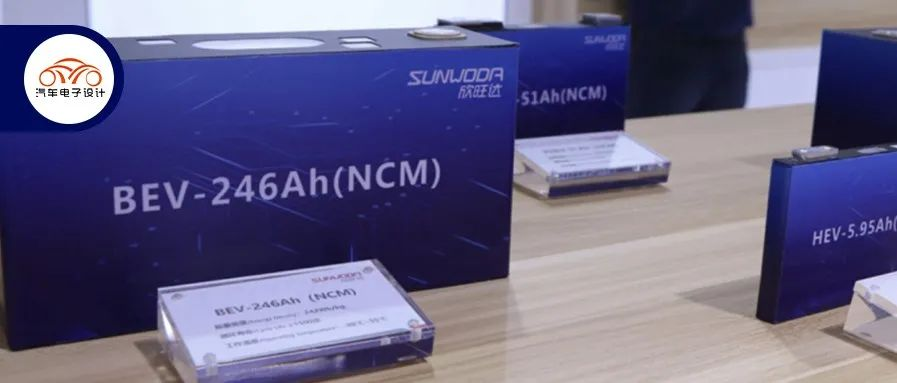
After XPeng launched the G9 fast charging, Xinwanda also released the SFC480 super fast charging battery technology. The maximum charging power of this battery system solution is 480kW, which can achieve a range of 200km after 5 minutes of charging and a range of 400km after 10 minutes of charging. Fast charging and safety will also be necessary choices for power battery companies to hold press conferences in the future.
-
Safety: Battery companies need to say “no heat diffusion” (NP) from the previous 5 minutes.
-
Fast charging: It has increased from the previous 2C directly to 4C, speaking to higher power; and the number of fast charges is also open, which is not limited to non-commercial vehicles.

The foundation of fast charging
Material system
This is based on a high voltage, low cobalt Ni60 positive electrode system, achieved through:
-
Composite coating: to improve surface stability.
-
R-element doping: to reduce the change of crystal cell parameters and stress accumulation.

Process aspects
Using composite porous electrode technology, the thickness of the cell electrode is increased by about 15% compared to traditional processes to obtain higher energy density and better dynamic performance.

Structural design
This battery uses stacking technology instead of winding and adopts connection-free sheet connection technology.
In the stacking, CT inspection technology is used to achieve a stacking accuracy of ±0.1mm, and CCD online inspection is used to prevent the occurrence of defective products, further ensuring the stacking accuracy.

The connection-free sheet connection technology is used to reduce the internal resistance of the cell by 3%. In this schematic diagram, the design difference between 45.8 degrees and 48.3 degrees is 2.5 degrees.
The fast charging battery has imported a new generation of 3D liquid cooling technology at the system level, with a utilization rate of more than 72% of the volume, and the entire product line has no heat diffusion.

This can also support the configuration of battery cells with square shell upright and upside down (this Kirin is about to jump out). Overall, this time Xinwanda has released relatively targeted products, which are quite different from the previous HEV, VDA and MEB series.

In terms of grouping, it is also in line with vehicle manufacturers to do it from CTP, CTB, and CTC. Here, it is relatively simple. Secondary battery companies only need to cooperate with the vehicle manufacturers to do the design, as long as the patent avoidance is good at the cell level, the subsequent grouped design can be handed over to the battery engineering department of the vehicle manufacturer, and various differentiated designs can be coordinated.

Is there any hidden danger for Chinese battery cells heading towards 4C?
At the beginning of the year, we saw this product named 155Ah at the Hundred People Conference. We saw that the average charging rate of everyone’s design was about 1C, and the peak was above 2C within about 30% SoC. Suddenly, it went up to 4C (I understand this as the peak), and the average rate was above 3C.

There are several basic supports here:
- Demand: Battery companies have seen that vehicle companies have this demand. Artemis, Lotus, and a series of car companies such as XPeng and Ideals want to do high-end and differentiated products. Fast charging batteries are a good business.- Security: That is to say, everyone has started to master the protection technology. Whether it is aerogel or mica sheet, in the technical tests such as exhaust emissions, etc., they are not particularly afraid of the thermal runaway problem caused by fast charging.
- Battery lifespan: From the information disclosed by several companies so far, they have matched and designed from several main materials.
- Thermal management: Several companies have applied multiple-sided liquid cooling or direct cooling to these battery packs, which was done in a supporting role.
Of course, this is just my opinion. Although it is claimed that they are all in mass production, I have some doubt about whether this battery cell can be directly used in cars. I believe that it may not be until 2023 that we can see the 4C battery cells in large quantities.
Conclusion: From all aspects, after the energy density and group technology of the battery cell reach a certain bottleneck, it can only rely on fast charging ability to rise up.
This article is a translation by ChatGPT of a Chinese report from 42HOW. If you have any questions about it, please email bd@42how.com.