A few days ago, a media outlet released a video discussing the current navigation-assisted driving. The video emphasized a conclusion that none of the navigation-assisted driving systems on the market in the first half of 2021 could be used.
The key reason behind this conclusion is that the success rate of entering and exiting ramps is very low in his experience, and there are also situations such as driving the wrong way and entering the wrong lane.
Due to these bad experiences, the view on the navigation-assisted driving in the video is that none of them can truly guarantee safety, and it is not recommended to purchase or recommend everyone to use these functions. If you must use these functions, be prepared to take over at any time and keep more focused than when driving yourself, otherwise accidents are highly probable.
In addition, the video also states that a driving assistance system should bring value to drivers by making driving easier, more comfortable and safer. However, NOA, NOP, and NGP not only fail to achieve these goals, but also bring a greater burden to drivers. Drivers need to respond to the system’s errors at any time with more focus, caution and care, and be prepared to take over and correct them, which goes against the meaning of assistance.
As the earliest media to launch 42Mark, a systematic, standardized and quantifiable evaluation of mass-produced driving assistance systems, we believe that the current insufficient ability of navigation-assisted driving pointed out in the video is objectively present, and there are indeed bad experiences. However, the view and conclusion on the navigation-assisted driving in the video are biased and misleading.
Definition of driving assistance capability has always been incomplete
In the widely-used SAE (Society of Automotive Engineers) definition of L2 level driving assistance, the system can perform vehicle acceleration, deceleration and direction control actions under specific circumstances.
However, monitoring the driving environment during driving and responding to special situations are still the responsibility of the human driver.
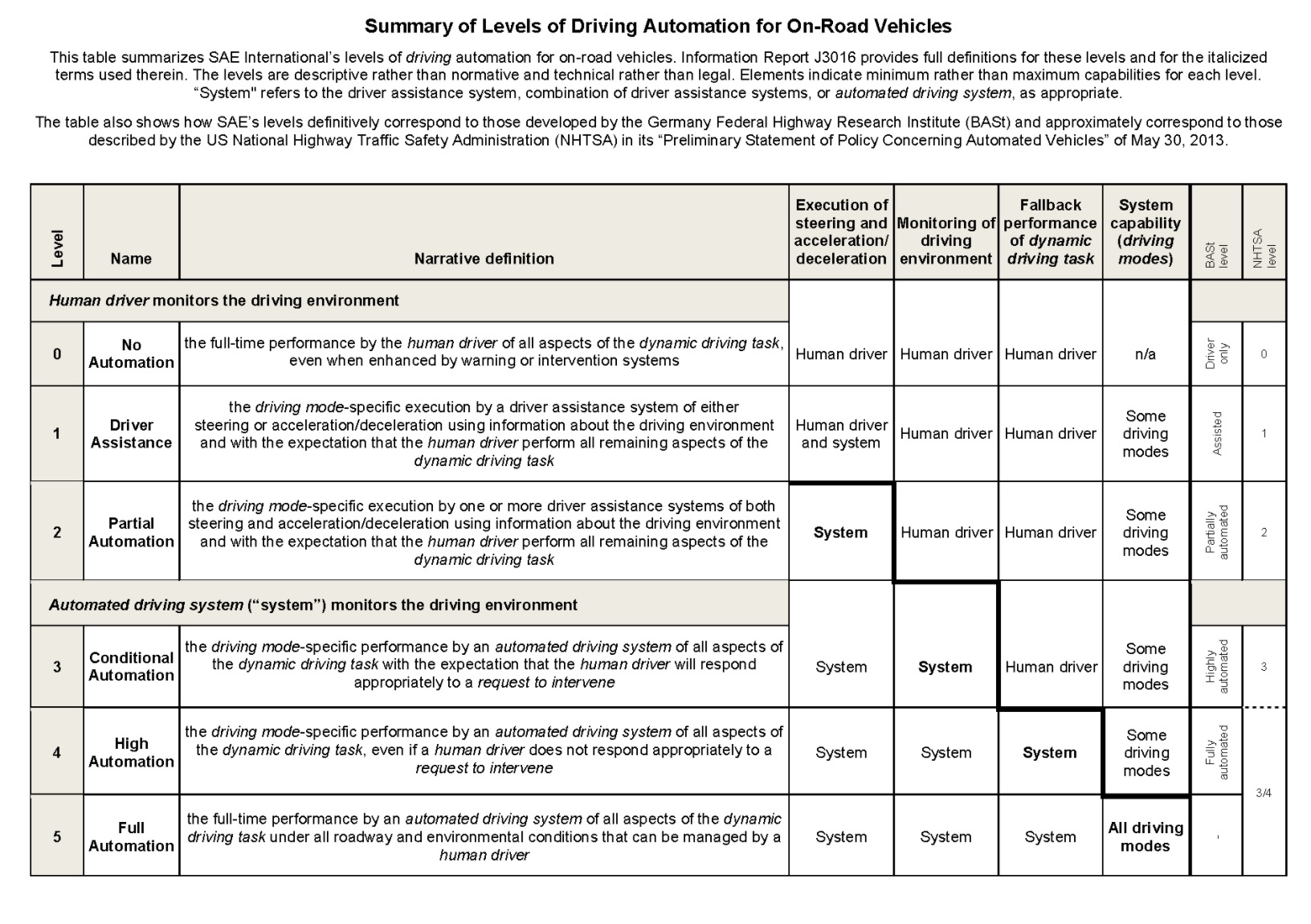
After upgrading to L3, the system is defined as automatic driving. At this time, the system can still perform all vehicle dynamic driving operations under specific circumstances. The vehicle is responsible for monitoring the surrounding driving environment, but the driver still needs to respond to special situations.
Until L5, the system operates under specific circumstances, but in the SAE definition, what “specific circumstances” means and what it entails are not clearly specified, which is actually particularly important.
In real-world scenarios, the system’s driving assistance can only operate under specific circumstances, but outside of these specific circumstances, the system may not operate well or even not at all.
Can the SAE classification represent driving capability?A car’s lane keeping function is available on clear lane markings, but may not work well on unclear markings. If the clear lane markings are on a curve with a tight radius, the system may fail. Even with clear lane markings and straight roads, if the markings widen on both sides and a new line appears in the middle, the system may also fail.
These three situations are actually three types of “specific conditions”. However, SAE’s classification does not provide sufficient emphasis on this, and “specific conditions” are not considered as quantitative reference factors in the evaluation of autonomous driving level.
Therefore, there may be situations where Vehicle A can perform lane keeping well in all situations mentioned above, while Vehicle B can only perform lane keeping on straight roads with clear lane markings. Their abilities are clearly different, but according to SAE’s classification, they are both considered L2.
There may even be a situation where a vehicle with L3-level semi-autonomous driving capabilities cannot drive normally on roads with unclear lane markings in some cases, while another vehicle with only L2-level capability may be able to.
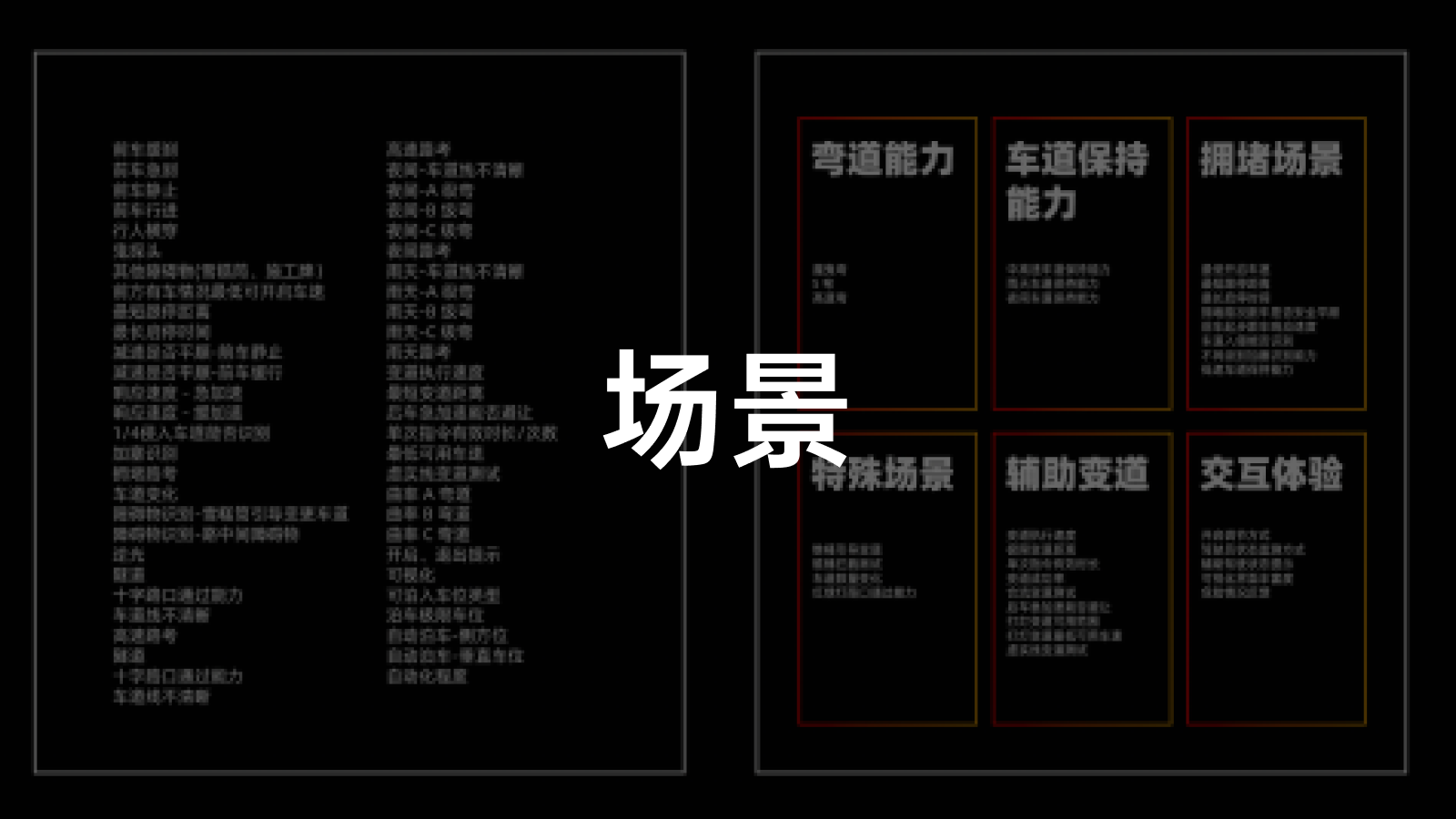
Therefore, SAE’s classification of autonomous driving is more of a macro concept, and cannot intuitively reflect system performance. The scene is what truly shows the system’s ability in a specific and quantitative way.
That is why the leading companies in the industry have been downplaying SAE’s classification of autonomous driving in recent years, while other less prominent companies have been striving to play along with it.
Therefore, with regard to the view in that video that “none of the navigation-assisted driving functions can be used at this stage”, our view is “depending on the specific scenario”.
The two main factors determining the effectiveness of driver assistance besides system capabilities
Driver assistance has recently become a frequent focus of the public’s attention. For such a new thing, people are generally curious and unfamiliar.
However, in popularizing and promoting driver assistance, there is not much detailed and profound content about the need to consider scenarios when describing its performance. We strongly believe that the concept of scenario is worth widespread attention.
System performance in road scenarios: one of the key factors determining the driving experience
Just as with the different states of lane keeping mentioned above, the scenarios I am referring to here are not just the larger types of road sections such as roundabouts, highways, and streets, but also the more specific and fine-grained road environment conditions, including road form, road conditions, other traffic participants, and weather variables.
Our driving environment is composed of many such scenarios in real life. As drivers, we may not be sensitive to the differences between these scenarios, but for driver assistance systems, the differences we overlook may be the key variables in perception and decision making, which is why the system’s performance varies in different scenarios.We emphasize the concept of scenarios, which is important because the performance of assisted driving in similar scenarios is highly consistent.
Therefore, when there is a correlation between the scenario and the vehicle performance, the driver can predict the vehicle’s performance by identifying the scenario.
Currently, some manufacturers will mark “human intervention is necessary if necessary according to actual road conditions” in the precautions for the use of assisted driving. However, if users are not clear about which actual scenarios the system is not good at, this reminder is equivalent to “you are on your own”.
After realizing this problem, we decided to qualitatively classify these scenarios and use actual testing and horizontal visualization to tell everyone how different assisted driving performs in these scenarios.
In the previous 42Mark test, we pointed out that some common scenarios are challenging for assisted driving systems, such as other vehicles cutting in at low speeds, other vehicles tailgating and changing lanes, unclear, chaotic, or missing lane markings, and changing lanes when the vehicle distance is not enough, etc.
Similar scenarios present a challenge for the current capabilities of assisted driving systems, and the vehicle may not perform as well as human drivers in such challenging scenarios. It is possible for dangerous situations to occur if the vehicle continues to drive without human intervention in these challenging scenarios.
The correct approach when facing these scenarios is for the driver to intervene manually instead of challenging the boundaries of the assisted driving system’s capabilities.
Actual driving scenarios can be difficult or easy, and if the vehicle density on the actual road is not congested, the road lines are clear, and the overall driving environment is within the system’s execution capabilities, the driver can let the system drive the vehicle and keep normal road state monitoring for a good experience.
This is also the normal state of assisted driving usage at this stage: human-machine co-driving by scenarios.
Scenario allocation for human-machine co-driving: Key factor that determines user experience
The same set of assisted driving may receive different evaluations from different users. One of the reasons is that users have different expectations of actual experience, and the other reason is the logic and experience that users use.
Real road scenarios are diverse, under human-machine co-driving, the decision of whether a certain scenario is handed over to the vehicle or manually driven by the driver can be made at any time. Therefore, such differences may arise:
- User A understands the boundary of assisted driving’s scenario capabilities, is familiar with reliable and insufficient scenarios of assisted driving, keeps driving attention normally when using, hands over the driving to the vehicle in reliable assisted driving scenarios, and intervenes manually in scenarios where the assisted driving capabilities are insufficient.
- User B is not familiar enough with the boundary of assisted driving’s capabilities, lacks a clear concept of reliable and insufficient assisted driving scenarios, cannot judge whether the vehicle has the ability to cope with the current scenario, and cannot grasp the timing of taking over, leading to a lack of confidence.It is evident that User A, through personal experience, makes a rational decision to allocate driving scenarios to the system in safe and easy situations and takes control of difficult scenarios, avoiding many scenes where ADAS cannot handle and the dangers and poor experiences associated with such scenes.
User B, on the other hand, may not be familiar with the system’s ability range and fails to intervene in situations where ADAS is insufficient until an emergency is about to happen, feeling the negative experience of the system’s inability to handle difficult scenes. Also, due to insufficient awareness of the system’s capability boundary, some users may become highly nervous even when using ADAS in efficient scenarios.
Although both sets of experiences are genuine, these two types of users have completely different experiences. Naturally, they will have different opinions when discussing ADAS with others.
Moreover, the industry actually needs the dissenting voices of Type B users. These voices can make real thinkers aware that not only are the current capabilities of ADAS limited, but there are also many shortcomings in the industry’s promotion and education.
Our understanding of ADAS
Understanding and evaluating ADAS is multifaceted. Currently, SAE’s definition of ADAS is too macro to reflect its capabilities intuitively. ADAS performance is closely related to actual road scenes, and individual usage experience satisfaction is directly related to individuals’ expectations and awareness of different scenarios.
Taking these factors into account, let’s talk about our understanding of ADAS.
Safety of ADAS
Evaluating the safety of ADAS can be discussed in terms of perception, prediction, and decision-making. Overall, it is two intersecting sets with their own strengths between ADAS and the driver.
Assisted driving systems that perceive the environment through multiple cameras and radar sensors can actually obtain more diverse and multidimensional information than humans in certain specific scenarios, allowing them to better understand their surroundings.
For example, if the vehicle ahead suddenly brakes on the highway, at a distance, we may only know that the car has braked through its taillights, but we are unsure if it is a heavy brake. The system may have already sensed that the vehicle is braking rapidly in real time through distance and relative speed sensing, enabling the vehicle to slow down before the driver is aware of the situation, avoiding a rear-end collision.
During the time we check the rearview mirror before changing lanes, our vision is already off-center. If the vehicle in front brakes suddenly, we may not react in time. At this point, an ADAS system may help to slow down the vehicle.
However, ADAS may not be as good as human drivers in predicting the behavior of other traffic participants or making complex decisions in certain situations that require thinking.“`markdown
If there is a merging vehicle on the main road without using turn signals, and it is entering the main road from a ramp while you are driving at a faster speed with abundant driving experience, you will slow down and change lanes to the left in advance. However, the system may not be aware of this potential danger, and if you do not intervene, it may not react until the merging vehicle enters your lane.
There are also situations where the system cannot control the vehicle correctly, such as the intersection of old and new traffic lines, sudden disappearance of lane lines, which can pose potential dangers that drivers should handle better than the system and take over manually in time.
This is why it is important for drivers to monitor the environment and anticipate potential hazards actively while using driver assistance features.
In addition, there are some situations that neither the system nor the driver can avoid, such as rear-end collisions when braking suddenly or other drivers running red lights. These scenarios are basically unsolvable.
In conclusion, using driver assistance can provide higher safety when drivers maintain normal driving attention and predict road conditions in real-time, and are ready to deal with special situations at any time.
Now for the second question, is it more tiring to drive with assistance?
Is using driver assistance more tiring or less tiring?
In regular driving, the driver handles the steering wheel, brakes with their feet, looks at the road and GPS navigation, and predicts road conditions with their mind.
A driver familiar with vehicle-assisted driving ability boundaries drives like this: hands resting on the steering wheel, feet resting on the brakes, looking at the road and GPS navigation, with a relaxed mindset, and the brain primarily predicting road conditions while being ready to take over when danger is anticipated but the vehicle does not respond.
A driver unfamiliar with vehicle-assisted driving ability boundaries drives like this: hands resting on the steering wheel, feet resting on the brakes, looking at the road and GPS navigation, unsure about when to take over, feeling nervous, and with the brain both predicting road conditions and worrying about the car’s next move.
Conclusion: when using driver assistance, the second type of driver is more relaxed, while the third type has the opposite effect.
Can navigation-assisted driving be used effectively at present?
The functions of Tesla NOA, NIO NOP, and XPeng NGP include automatic lane changing, overtaking, and ramp merging in addition to basic driver assistance. We have used these three functions for long distances. As for whether they can be used effectively, I believe the experience is subjective, but the test results are objective.
Some time ago, we recorded a long-distance video from Shanghai to Hangzhou, a total of 380 kilometers round trip, and uploaded it to major platforms. The data for the single trip from Shanghai to Hangzhou is as follows:
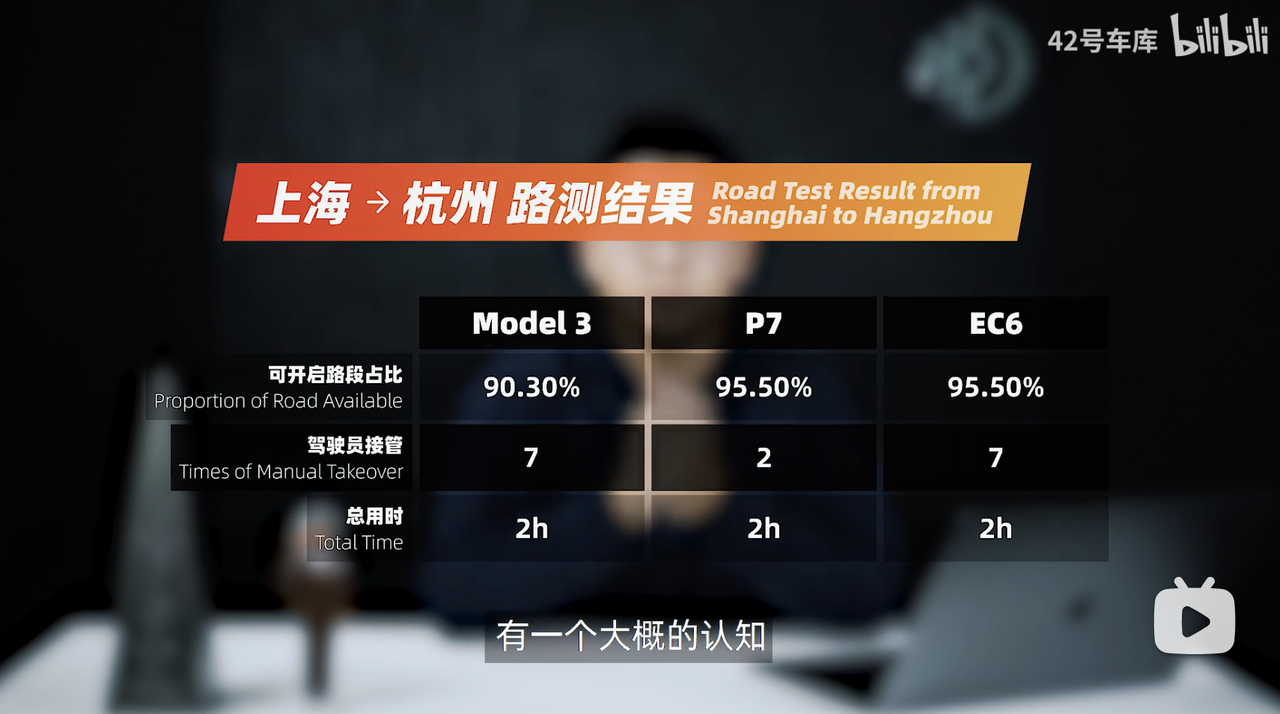
“`The data provided above are not sufficient for a comprehensive understanding of the performance of navigation-assisted driving. To give a more objective evaluation, we conducted a 15-point scoring system based on key driving parameters and analyzed relevant data statistics in the retrospective review.
The videos and test results above provide a certain reference for those who are genuinely interested in navigation-assisted driving without preset biases.
In Conclusion
The growth of concepts and awareness takes time and environment. Before my first experience with assisted driving, I considered it an unnecessary feature. However, I am now a heavy user of assisted driving and the first thing I do when entering the highway during my daily commute is to activate it.
Through actual driving practice and reflection, I am now very clear about the scene ability boundaries of various new power-assisted driving technologies and do not challenge them beyond their capabilities.
Therefore, I can confidently say that assisted driving systems bring a lot of convenience to my travel and are a necessary requirement when purchasing a car.
However, I am aware that my experience is just a small example. Most people still do not have a clear understanding of the scene ability of assisted driving, and their perception of its capabilities is still limited to SAE’s defined L2.
This is an area that needs improvement, which requires the collaborative efforts of institutions, enterprises, media, and users to establish a good information environment and convey a more comprehensive understanding of assisted driving to more people.
As there are still limitations and thresholds in the current assisted driving systems, criticism towards them is never absent. We do not reject debates, as they can bring clarity. But instead of creating opposition, we hope to lead everyone to a better understanding of assisted driving. However, please do not underestimate the communication cost of looking at this matter correctly.
Looking back on the past few years, it is not difficult to see that the entire industry, from capital to technology strategies, is accelerating in this direction. In 2021, even the automotive industry has started an arms race.Under such trends, occasionally, I look forward to the travel status in 2025: By then, autonomous driving has been popularized, and with the coverage of broader scene capabilities, we rarely need to take over. In the areas specifically built for autonomous driving vehicles, drivers are even allowed to sleep while driving. Driving schools have already added necessary learning content for autonomous driving, and more and more people have felt the convenience.
However, now I know that I still need to take over the system several times within the tens of kilometers journey back home, and when I arrive home and check my phone, I can still see the message “the value of assisted driving is 0.” What we can do is to insist on doing the right thing and hope to plant a seed of positive attitude towards the development of new technology for those who are reading this article.
Finally, if you have any confusion or need any help with the use of assisted driving, please feel free to leave us a message.
This article is a translation by ChatGPT of a Chinese report from 42HOW. If you have any questions about it, please email bd@42how.com.