


Search 42HOW
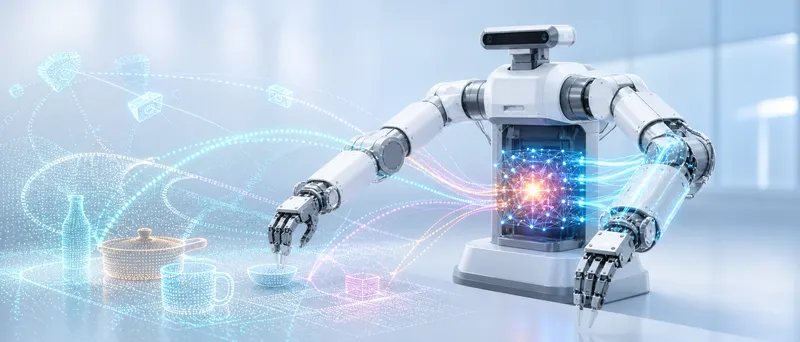
Track4Action: Distilling 3D World Dynamics Into VLA Policies for Robust Robot Control
A new approach by Shanghai Jiao Tong University and Zhejiang University integrates 3D world tracking knowledge into Vision-Language-Action models to help robots understand how their actions change the physical environment.

Three Major Embodied AI Papers Reveal the Gap Between VLMs and Reliable Robotic Agents
Recent reports from Anthropic highlight the race to make LLMs and VLMs the brains of robots. Three new papers from Meta/NUS/University of Washington, Sungkyunkwan University, and Tsinghua/Purdue propose different frameworks to bridge the gap between frozen models and reliable robotic agents.

The University of Hong Kong and INFIFORCE Team Tests VLA Continual Learning on Real Robots
A new study from HKU and other institutions demonstrates how experience replay and action normalization can prevent catastrophic forgetting in Vision-Language-Action models during continuous learning on real-world robots.

INTACT: Search-Free World Model for Robotics Achieves Faster, More Reliable Control
Researchers propose INTACT, a search-free world model framework that aligns physical and goal intentions using a shared operator. Achieving 95.33% success rate with 300x faster inference than LeWM, it upgrades JEPA from prediction to deployable control.

First collaborative study by 30 researchers from PKU, NTU & others maps the embodied data pyramid
A comprehensive review by nearly 30 researchers clarifies the five-layer embodied data pyramid, exploring data scaling laws, model-specific requirements, and the synergy between simulation and real-world data.
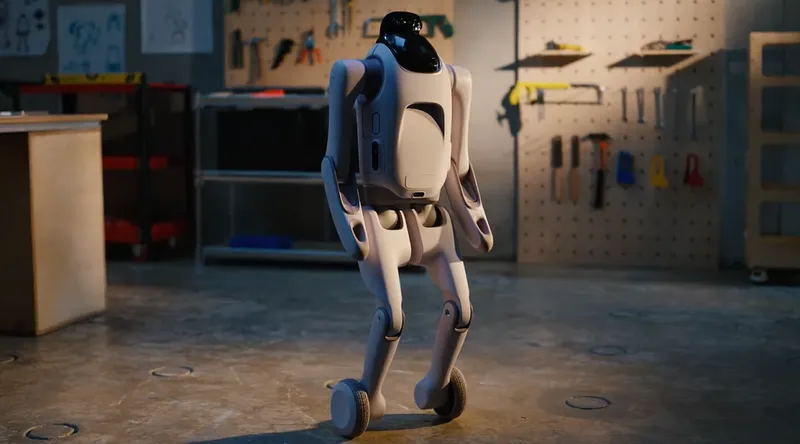
Chemical Materials Firm's Subsidiary Launches Consumer Robot Division in Shanghai
PrimeBot New Ventures (Shanghai) Technology Co., Ltd., a robotics subsidiary of Shangwei New Materials Technology Co., Ltd., has officially settled in Zhangjiang Robotics Valley, Pudong, Shanghai. The project was signed during the 2026 World Artificial Intelligence Conference (WAIC).

D-Robotics Unveils 0.04B X-Lens for Real-Time Depth Estimation on Heterogeneous Cameras
D-Robotics, in collaboration with Tokyo University and Suzhou University, released a technical report on July 15 introducing X-Lens, a lightweight depth estimation model with only 0.04B parameters. Capable of real-time metric depth estimation with heterogeneous cameras on edge devices, X-Lens uses a 'ray space' approach to unify fisheye and pinhole camera inputs, achieving high accuracy and efficiency compared to larger models.

How 500,000 Hours of First-Person Video Can Add 'Touch' to Embodied World Models
BeingBeyond releases Being-H0.8, a latent tactile world-action model trained on over 500,000 hours of first-person video. By generating pseudo-tactile labels from visual data and unifying robot sensor inputs, it aims to bridge the gap between visual observation and physical contact for embodied AI.

Tencent Open-Sources Three Embodied AI Models to Build a Unified Robotics Foundation
Tencent's Robotics X Lab and Futian Lab, in collaboration with Hunyuan, have released three open-source embodied AI foundation models based on the Hunyuan large model: Hy-Embodied-VLM-1.0, Hy-Embodied-RxBrain-1.0, and Hy-Embodied-VLA-0.5.
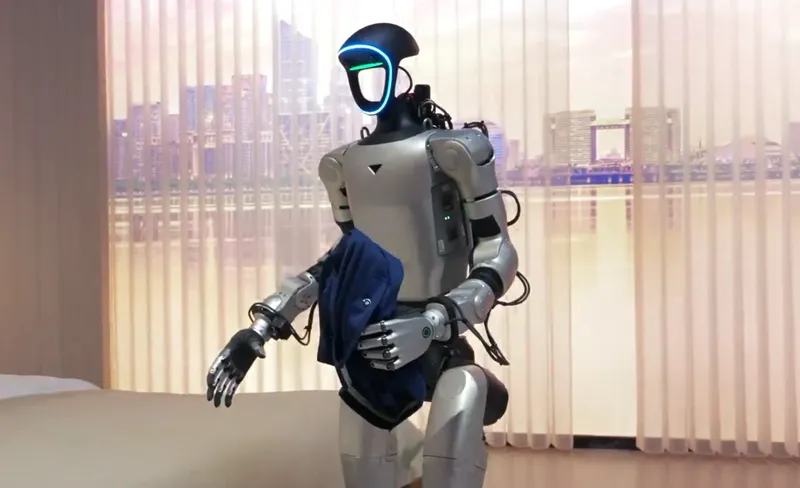
Unitree's New Brain Debuts, Moving Whole-Body Intelligence from Concept to Real Robots
On July 20, Unitree Technology officially released UnifoLM-OminiA-0.3, an embodied large model for home care tasks, natively integrated into the G1 robot. This marks a substantive step toward real-world deployment in civilian service.

GigaAI and Tsinghua University Release GigaWorld-1 to Use World Models as Robot Evaluators
As physical evaluation bottlenecks slow down embodied foundation model iteration, GigaAI and Tsinghua University release GigaWorld-1, using world models as evaluators to reduce reliance on real-world robot testing. Xiaofeng Wang discusses how this approach can accelerate development cycles.

Xiaomi Turns World Model Into a Data Engine, Beyond Prediction
Xiaomi has open-sourced U0, a 38B-parameter multimodal model that integrates five embodied synthesis functions. By treating embodied generation as a natural extension of foundation models rather than domain-specific fine-tuning, U0 acts as an expandable data engine, significantly enhancing robot generalization in real-world scenarios.

LimX Dynamics, Which Raised USD 400 Million in Six Months, Accelerates Plans for Public Listing
Embodied AI unicorn LimX Dynamics announces a nearly $200 million Pre-IPO round, bringing its half-year total to $400 million and pushing its IPO process forward.

ASPIRE: A Continuous Learning System for Robotics by Zhu Yuke, Jim Fan and NVIDIA
The new paper ASPIRE introduces a continuous learning system for embodied AI, where agents debug robot failures using execution traces, evolve solutions, and build reusable skill libraries.
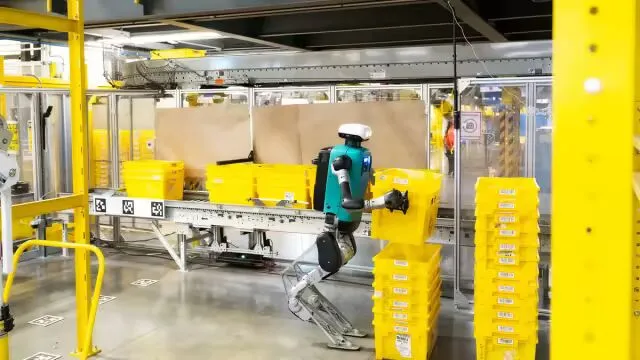
The First Embodied AI IPOs in China and America: Unitree and Agility's Divergent Paths
Agility Robotics and Unitree Technology represent two diverging paths for embodied AI commercialization. Agility focuses on specialized, vertical integration in logistics and manufacturing, while Unitree pursues a broad, horizontal hardware platform strategy to lower costs and expand ecosystems.
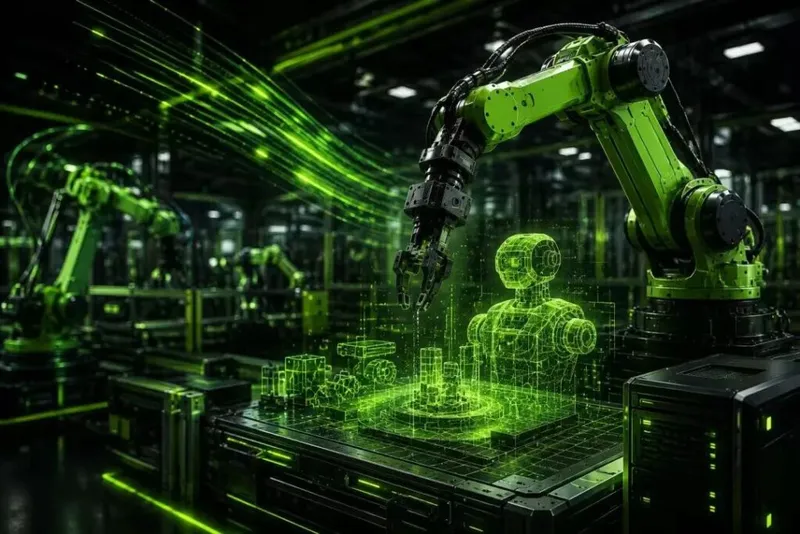
Nvidia's SimFoundry Bridges the Final Gap in Real-to-Sim Robot Data
Nvidia and Stanford's Fei-Fei Li team released SimFoundry, an automated Real2Sim infrastructure that transforms real-world environments into high-fidelity simulations for scalable robot policy training.
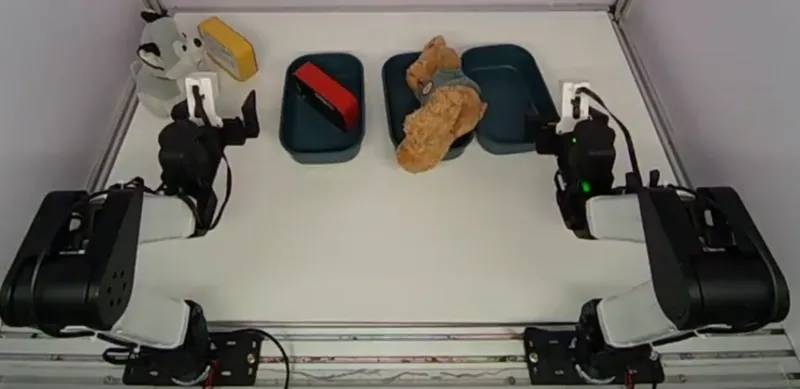
KEMO Plugin Boosts VLA Long-Horizon Task Success by 23.6%
XDOF releases KEMO, an event-driven keyframe memory plugin for VLA models that improves long-horizon manipulation success rates by 23.6%.
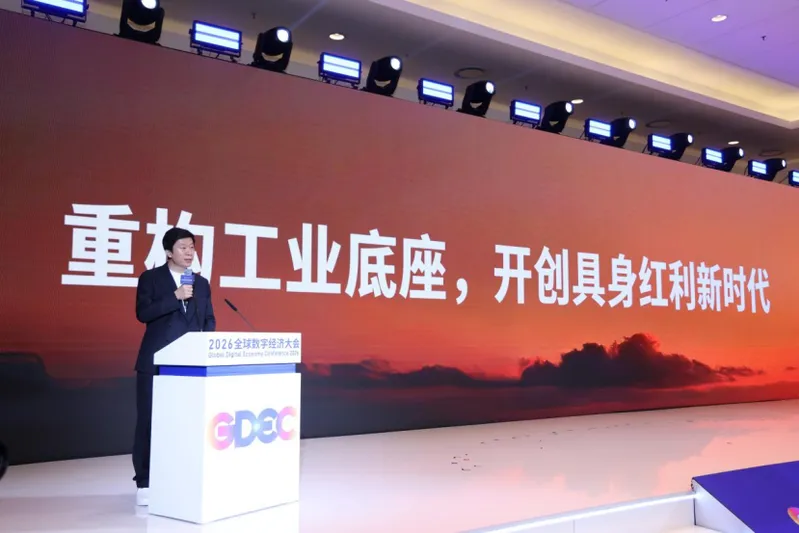
Xiaoyu Intelligence Unveils 'Embodied Dividend' Concept and First Welding Robot at Global Digital Economy Conference
At the 2026 Global Digital Economy Conference, Xiaoyu ZhiZao unveiled its first welding robot and three core technologies. CEO Qiao Zhongliang introduced the concept of 'Embodied Dividend,' defining it as using Embodied AI to create scalable silicon-based labor for heavy industrial tasks.
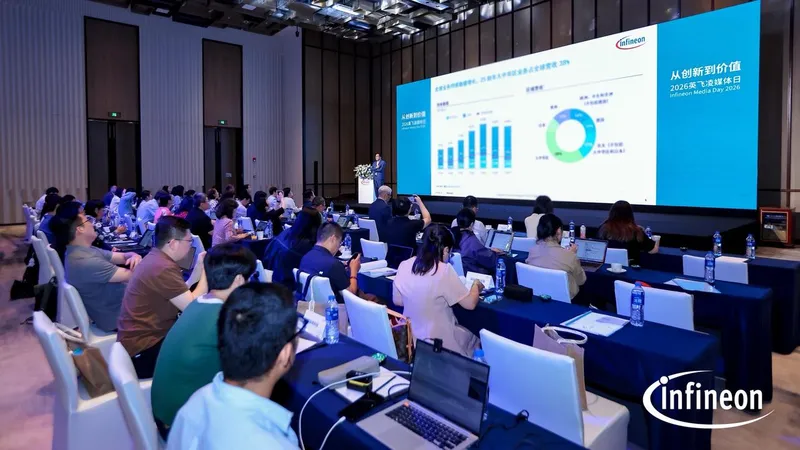
Infineon Opens Shanghai Innovation Hub, Completes Restructuring into Three Business Units
Infineon officially opens its Shanghai innovation space, reinforcing its 'In China, For China' strategy. The company optimizes its structure into three divisions—Automotive Electronics, Power Systems, and Terminal Intelligence—to address surging AI computing and power demands.
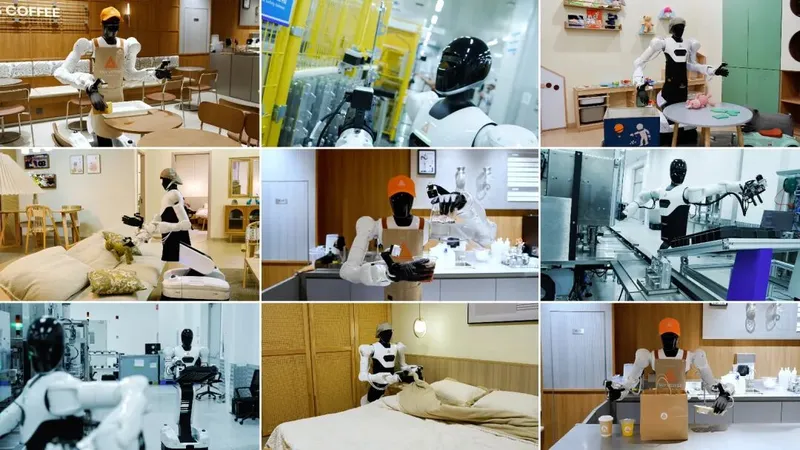
After Raising Hundreds of Millions, WuJie Dynamics Launches MWA Latent World Model
WuJie Dynamics officially released the MWA Embodied General Brain, a latent space world model based on long-horizon bidirectional physical causal chains, and topped the RoboCasa GR1 TableTop leaderboard. The company recently completed a $200 million angel round.