


The ID.7 That Can Compete With the EQE Overseas: A RMB 200,000 Domestic Price Tag Shows Sincerity
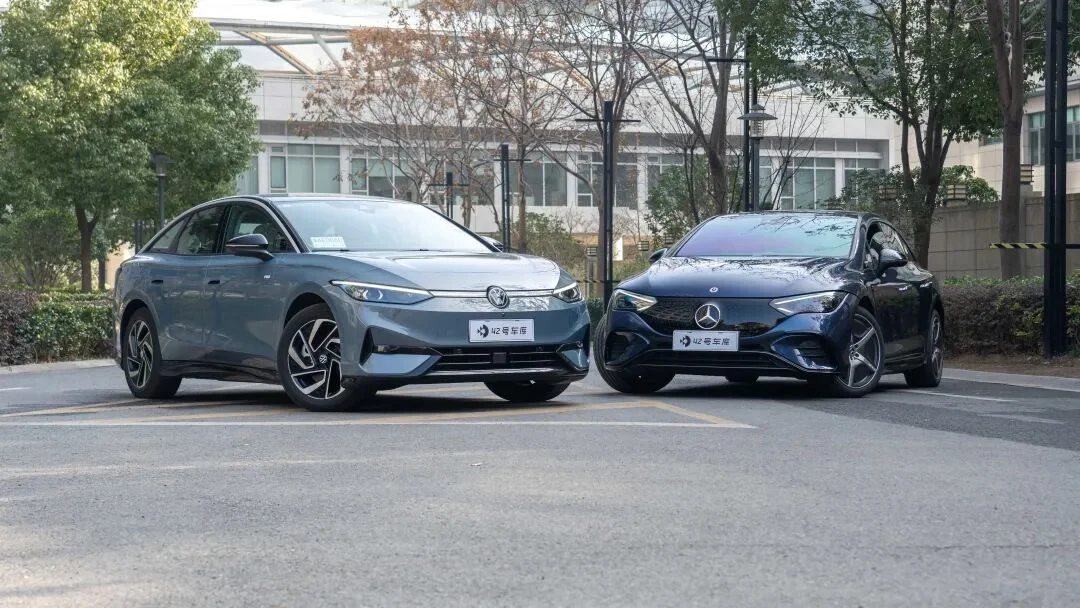
When the Volkswagen ID.7 was first released, overseas media who test-drove it evaluated the ID.7 as being able to compete with luxury brands like the Mercedes-Benz EQE, and even bestowed upon the ID.7 the title of "Best EV Sedan."
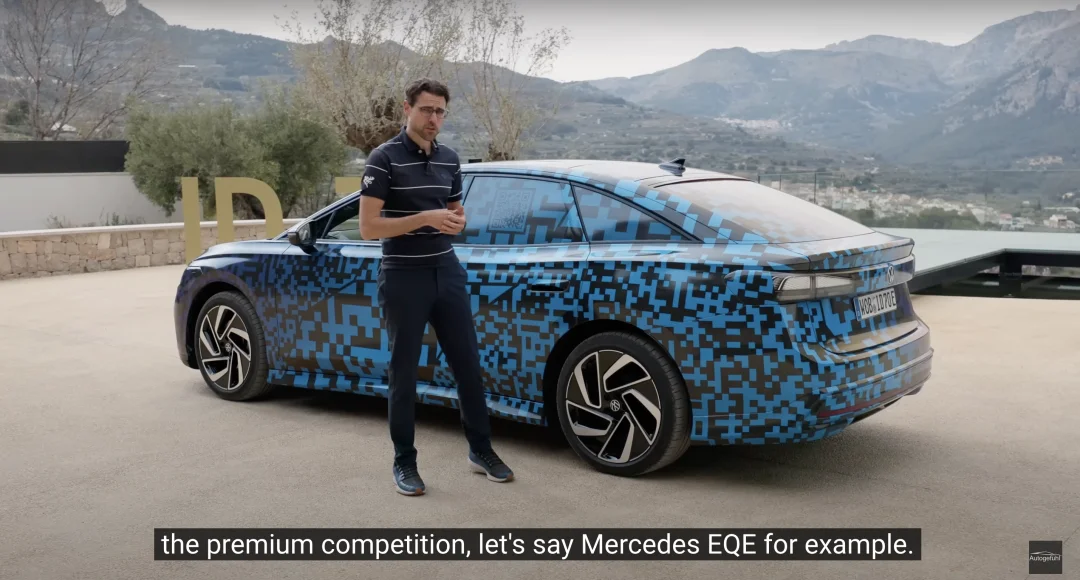
Even I, a long-time Volkswagen owner, found this hard to believe: How could Volkswagen, traditionally focused on the mass market, dare to compare itself to a German luxury benchmark like Mercedes-Benz?
Now that the domestic FAW-Volkswagen ID.7 VIZZION has officially launched, adopting the authentic design of the overseas ID.7, its price range of 227,800 to 262,800 yuan is even less than half that of the Beijing Mercedes-Benz EQE. This naturally piques my curiosity: will the ID.7 that has come to China still be as miraculous as foreign media claim?
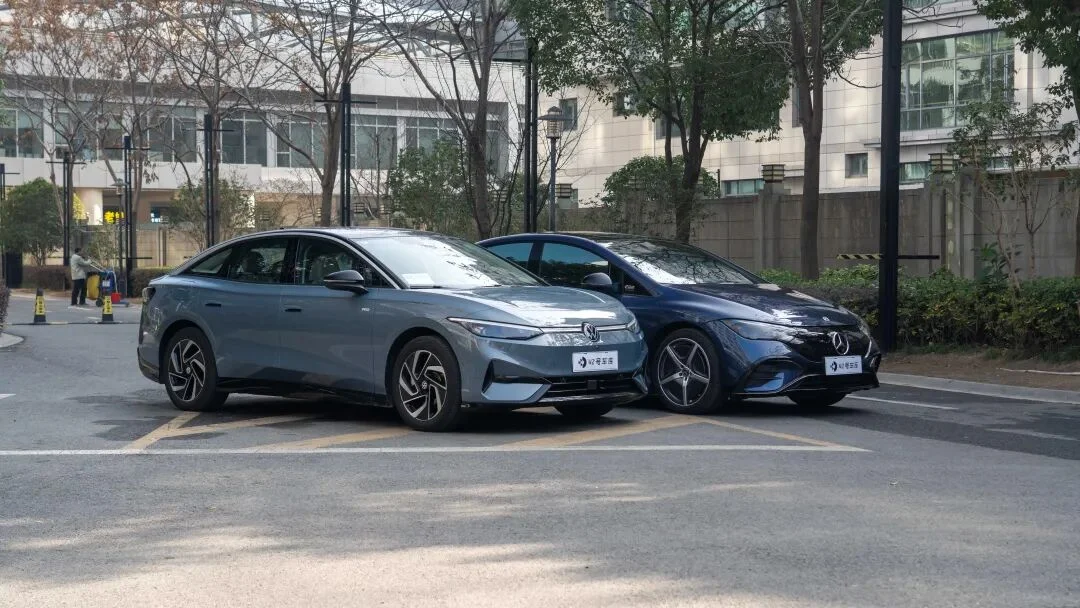
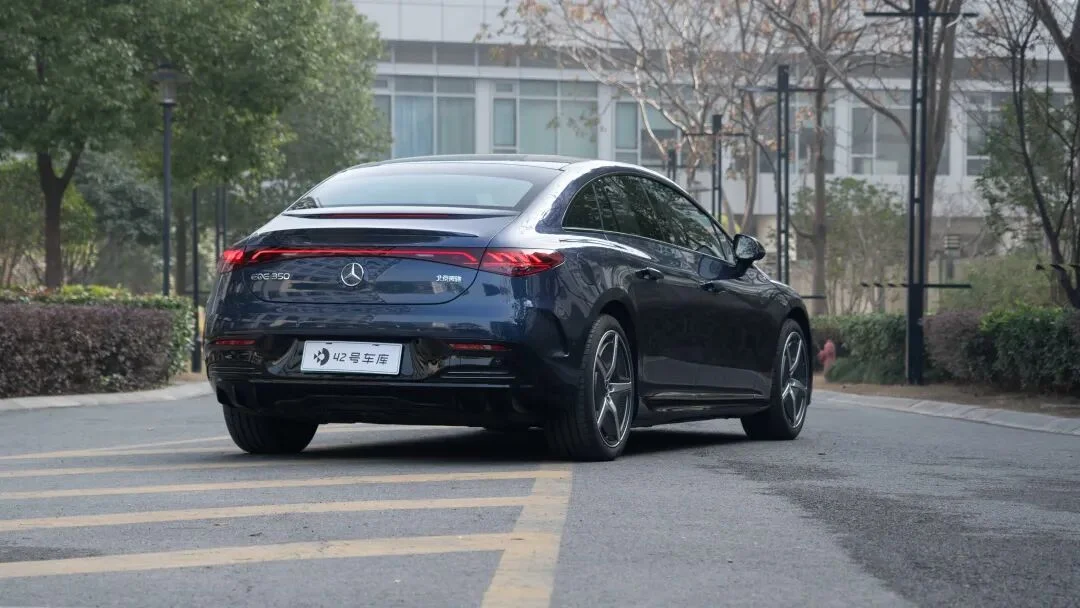
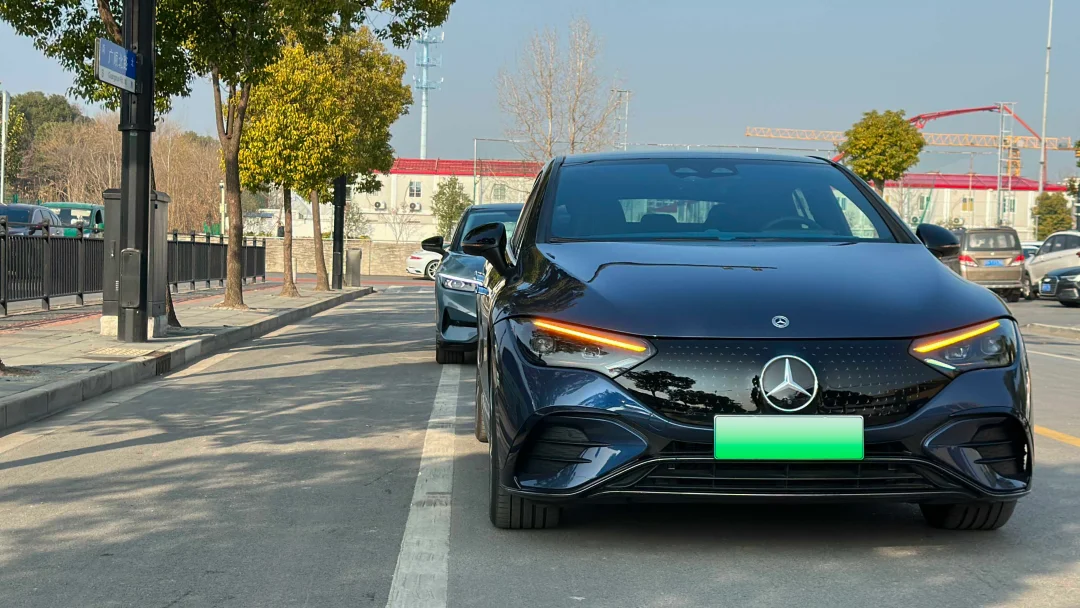
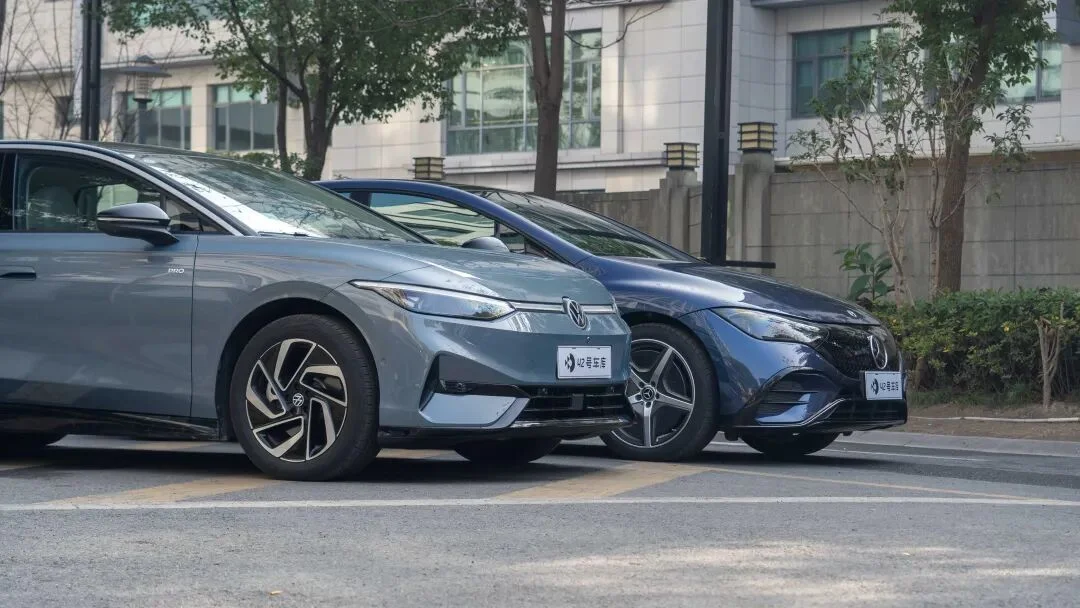
It just so happened that an ID.7 VIZZION arrived at this time, and a colleague in our editorial team had also just purchased a Beijing Mercedes-Benz EQE 350 Sedan. With both conditions met, I decided to act as the rumor terminator, placing these two German cars side by side to see if foreign media were telling the truth.
01The ID.7’s Interior Is Truly Not Volkswagen
B-Class Positioning, C-Class Space
When it comes to this comparison, owners who have purchased the EQE with their own money feel no pressure. When we discussed interior space efficiency, a Mercedes-Benz owner felt that the C-class EQE and the B-class ID.7 VIZZION were not even in the same league.
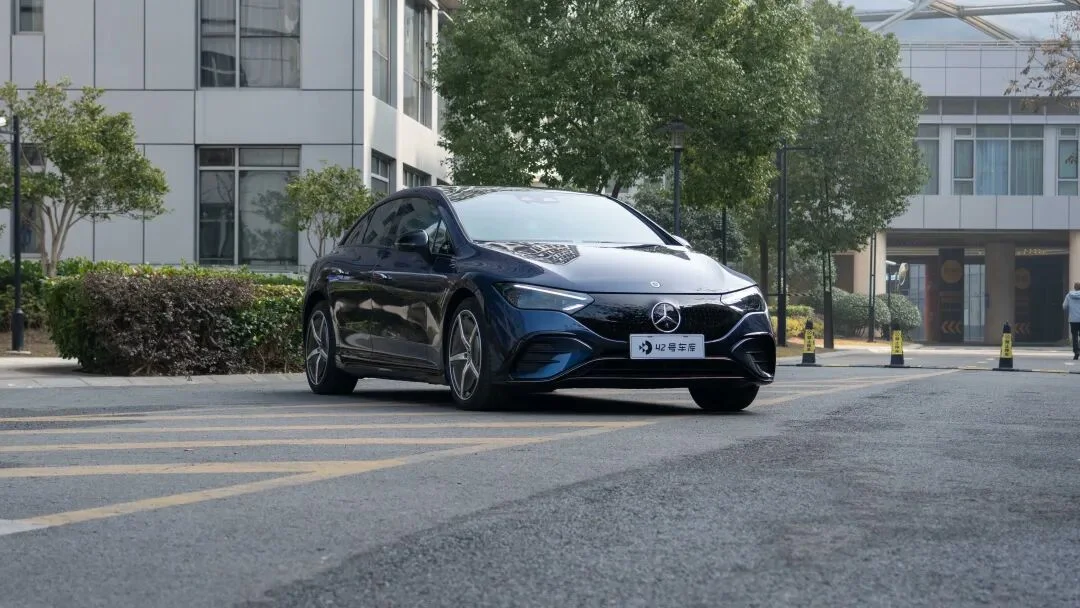
We can compare them using straightforward data. Although the higher-positioned Mercedes-Benz EQE does not significantly exceed the ID.7 VIZZION in overall body dimensions, the EQE has a 155 mm advantage in wheelbase, which is what allows it to be classified as a C-class vehicle.
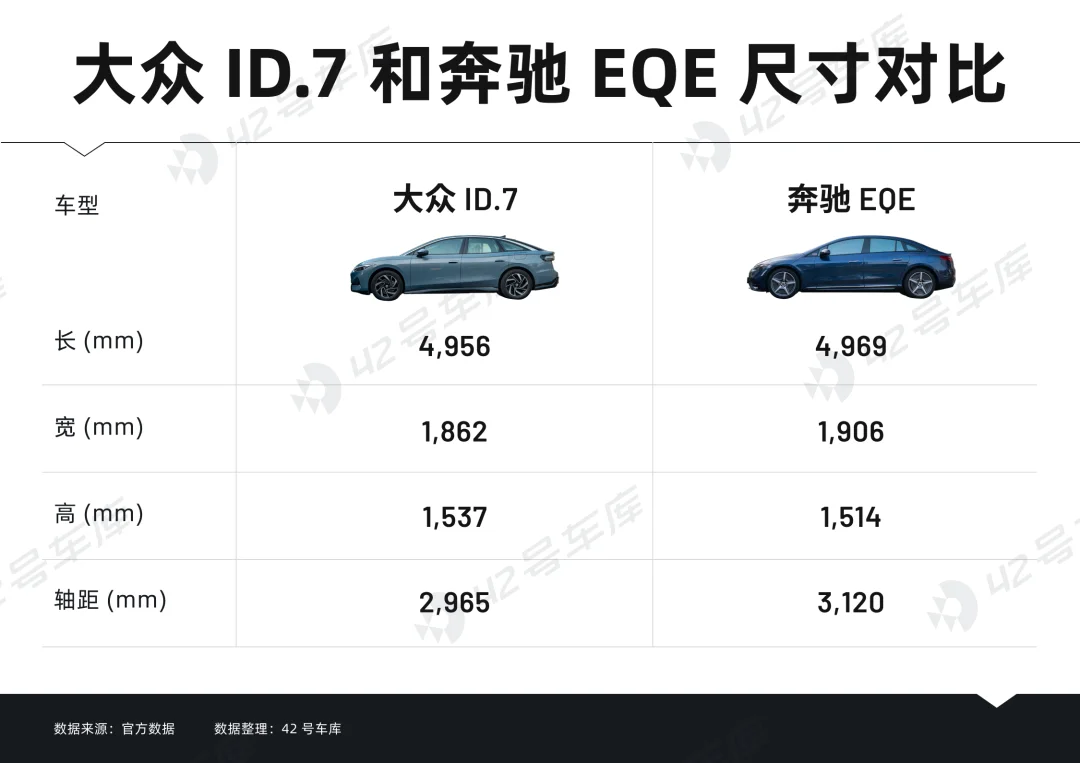
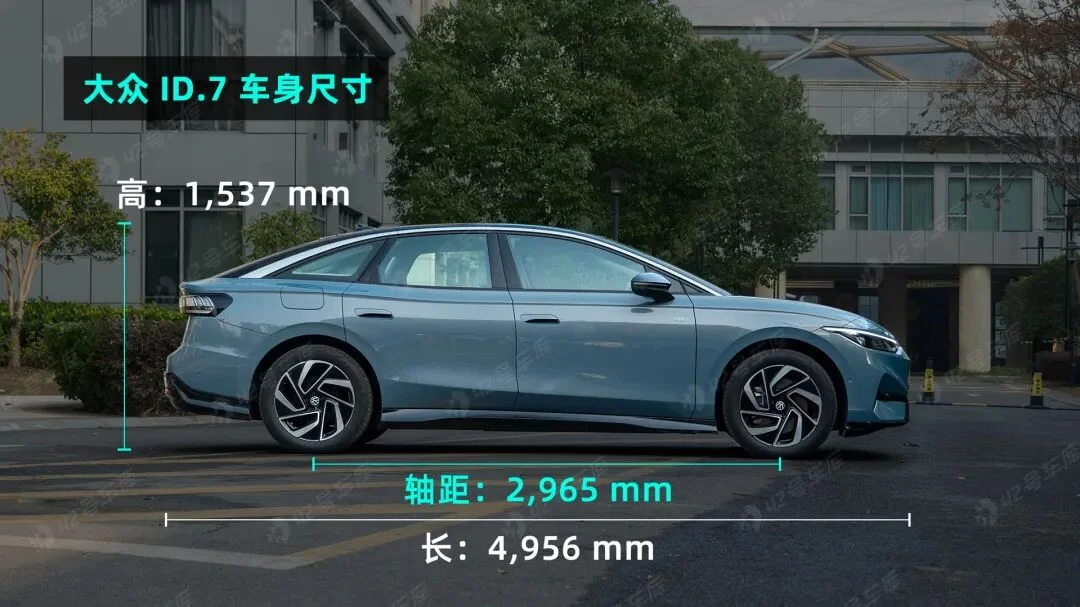
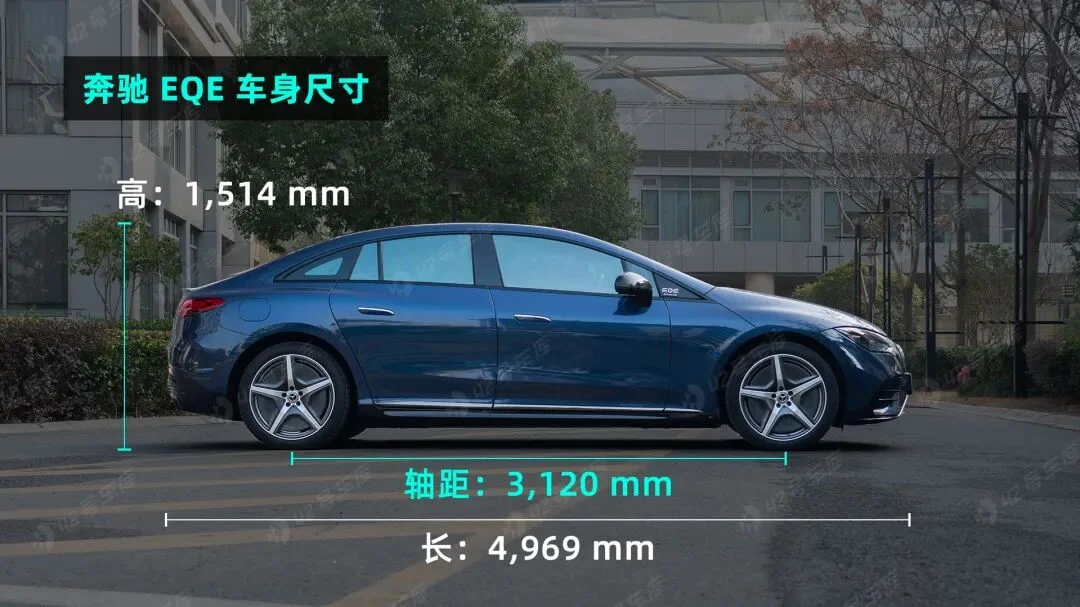
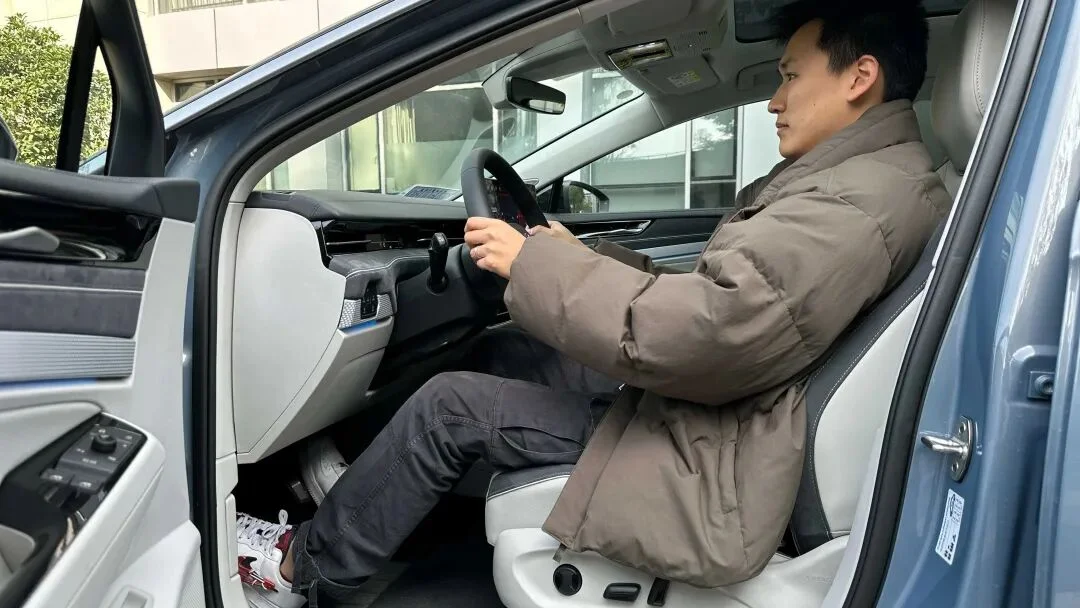
However, when it comes to actual passenger space, the ID.7 VIZZION offers more room. At 1.75 m tall and weighing 65 kg, I found the most suitable driving position for myself. In this posture, the ID.7 still provided a legroom of one fist plus one hand's width in the rear seat. The Mercedes-Benz EQE failed to leverage its longer wheelbase to provide greater legroom.
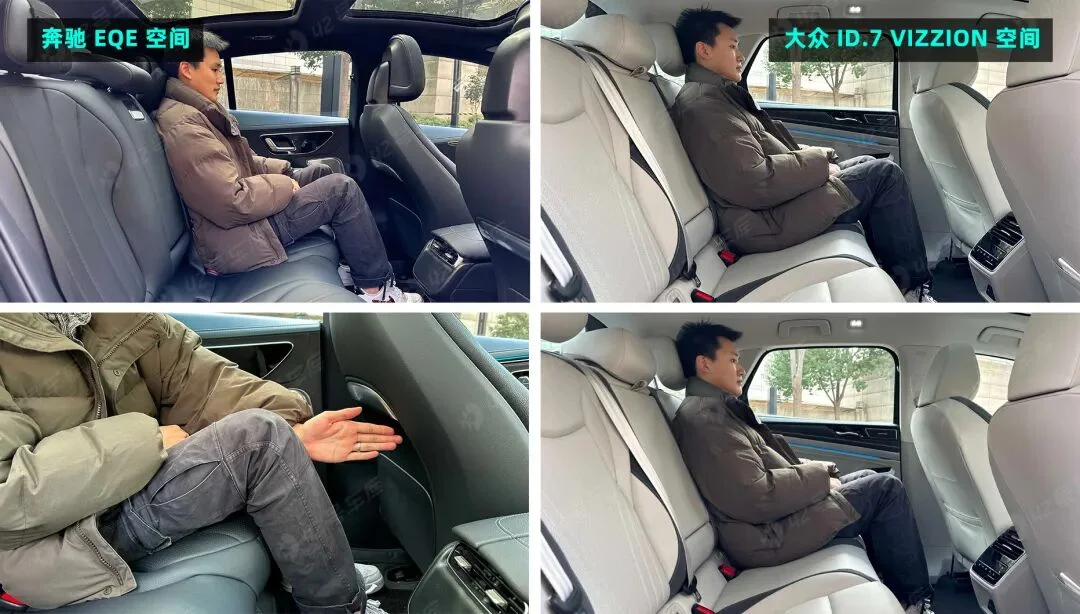
The main reason is that Mercedes-Benz EQE lengthened its front end and parts of the L113 platform to optimize aerodynamics, sacrificing some wheelbase utilization in exchange for a drag coefficient of 0.22. Volkswagen ID.7 VIZZION did not pursue the most extreme aerodynamic figures; instead, it struck a balance between drag and space utilization. With a Cd of 0.23, its aerodynamic performance is inferior to Mercedes-Benz's, but it offers a class-leading rear-seat experience.
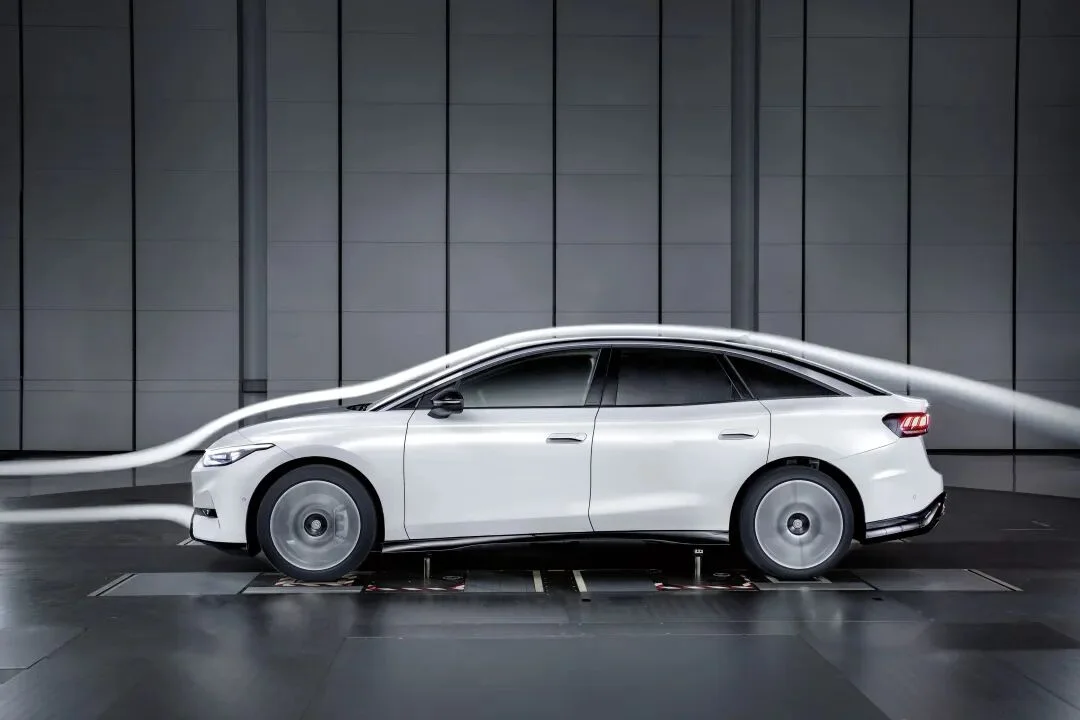
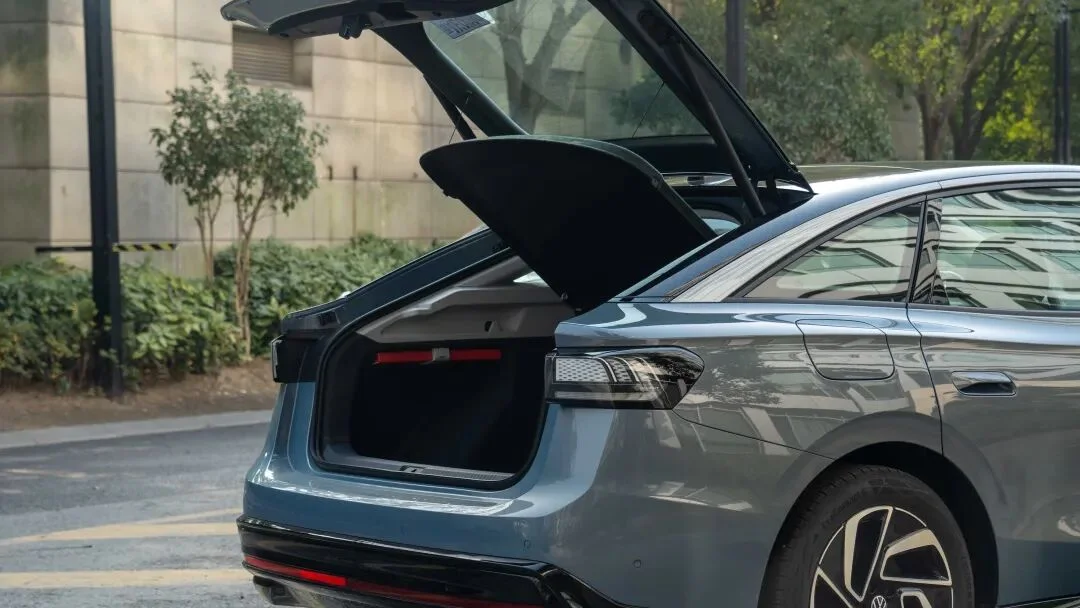
Most sedans currently adopt a fastback design to optimize aerodynamics. The ID.7 VIZZION’s fastback is one of the few designed as a highly practical liftback. This provides considerable trunk volume and a large opening, making it more convenient to load luggage and other items on a daily basis.
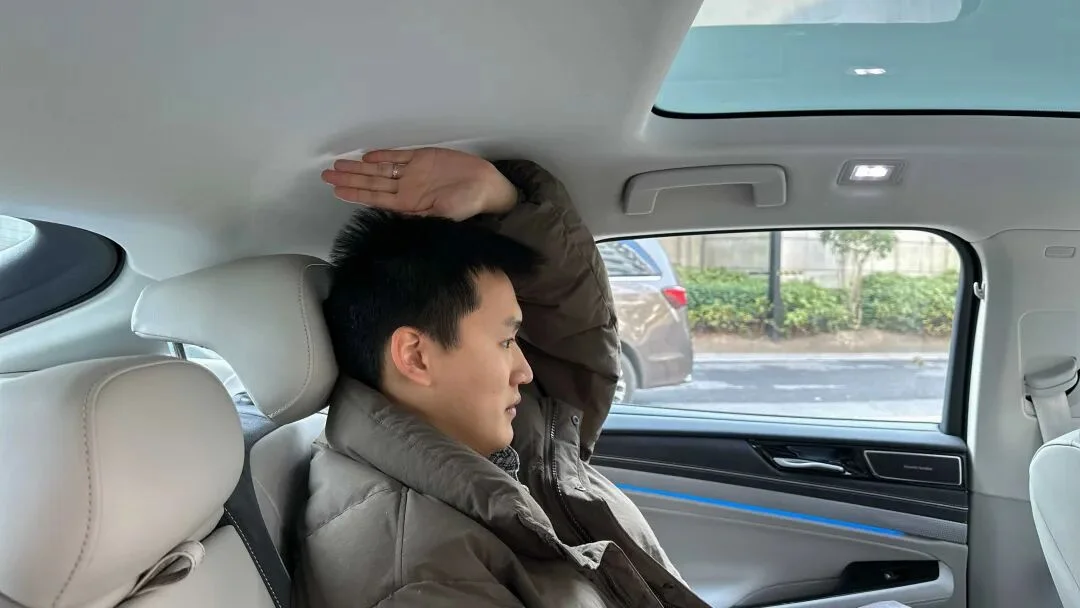
Under this liftback design, the ID.7 trades a vehicle height of 1,537 mm for more generous headroom. In my normal rear-seat seating position, there is still about a fist’s width of headspace. Based on this rear-seat space, even passengers with larger frames should be comfortable.
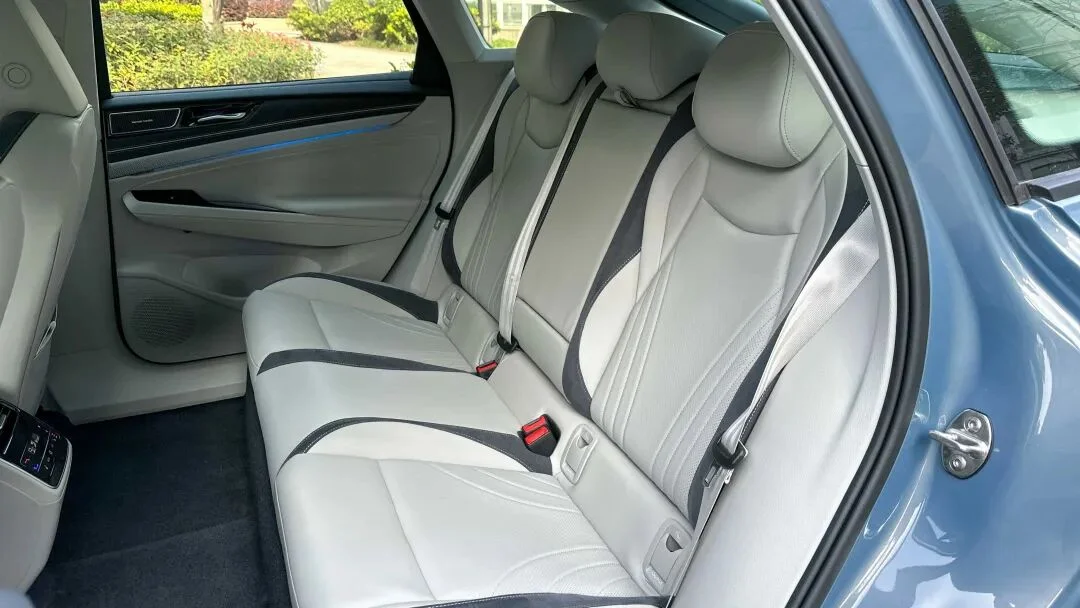
The ID.7 VIZZION’s rear seat backrest angle and cushion length are well-suited. The backrest angle is appropriate, providing adequate support for passengers' backs. The cushion length is sufficient to support passengers' thighs, avoiding the "small stool" feeling common in many pure electric sedans.
The front seats of the ID.7 VIZZION also offer excellent support and wrapping, with high conformity from the legs to the waist and back.
Ride comfort and space utilization are fundamental vehicle capabilities; as an established automaker, Volkswagen has delivered on these basics in the ID.7 VIZZION. Inside the cabin, however, attention turns to the equipment and features.
Cabin Features
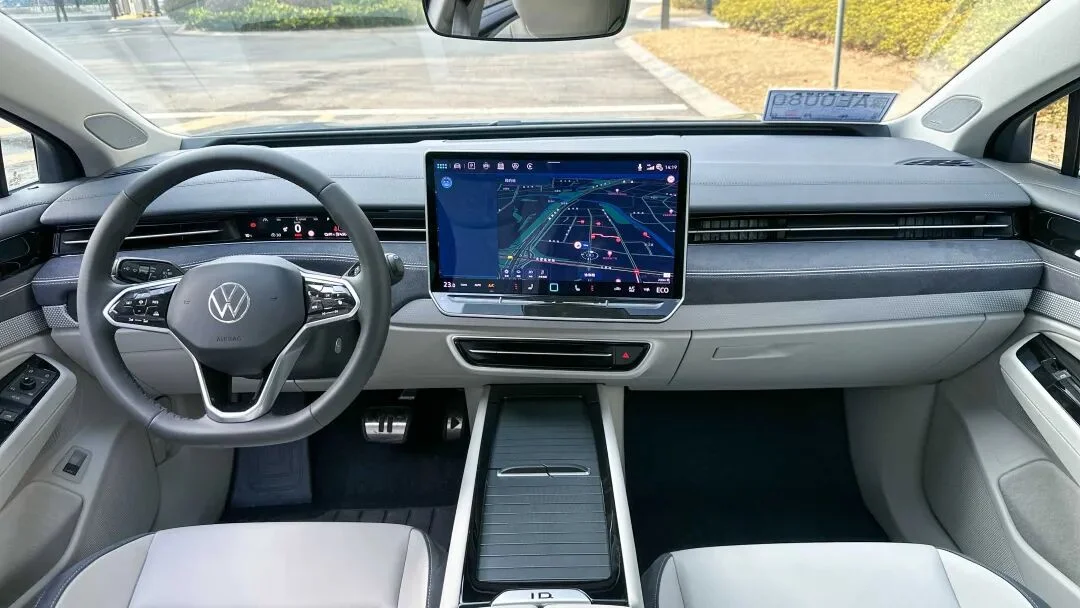
Historically, both mainstream joint-venture brands and luxury marques have been stingy with comfort-oriented equipment. Compared to previous Volkswagen models, the ID.7 VIZZION’s specification list demonstrates a degree of sincerity.
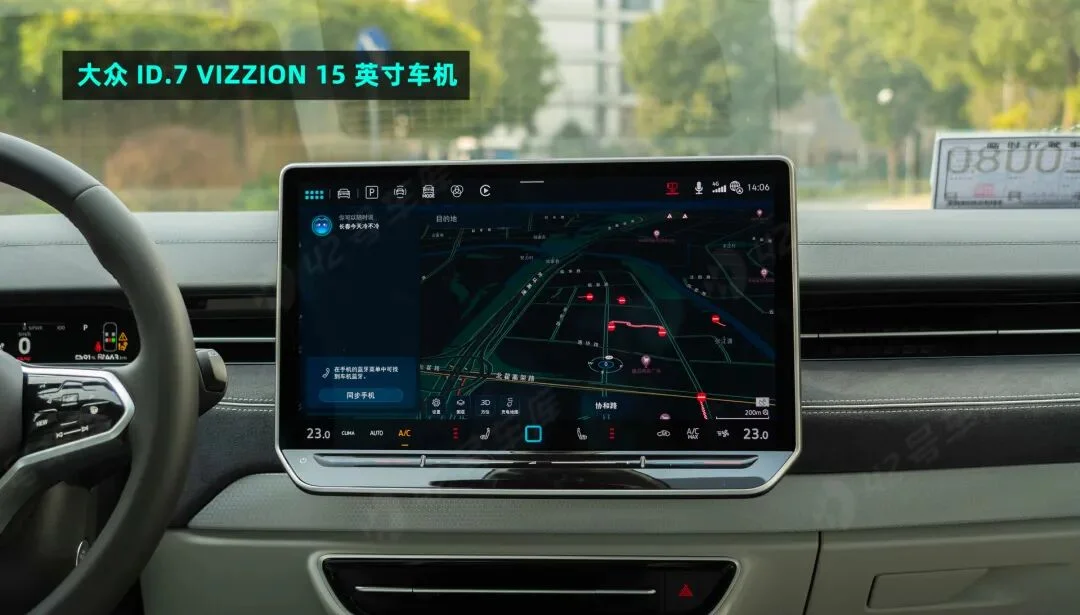
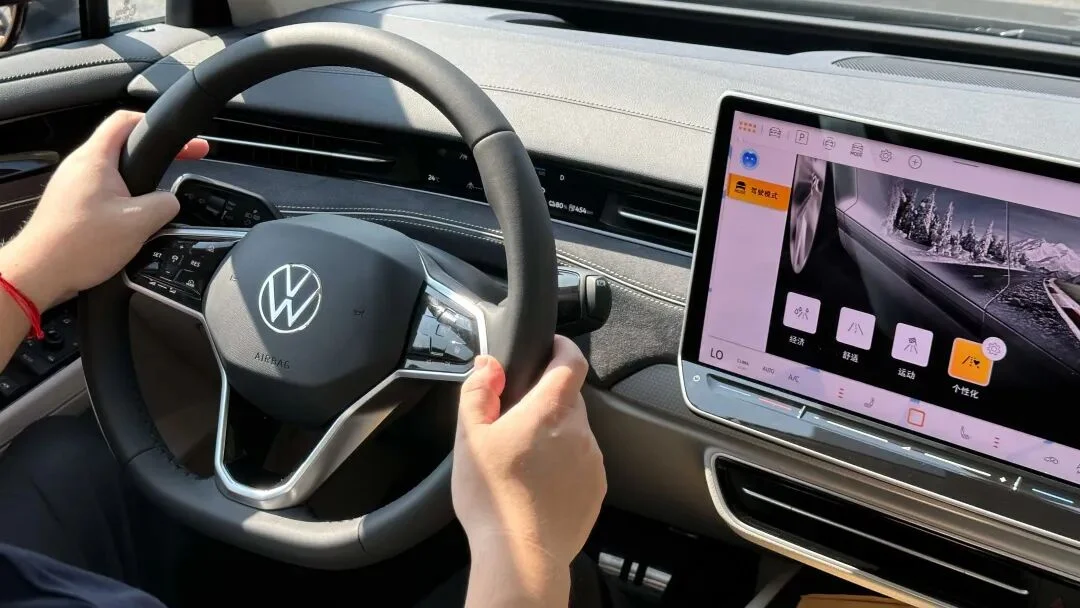
Take our ID.7 VIZZION Pro as an example: the smart cockpit comes standard with a 15-inch, 2K-resolution touchscreen. Volkswagen has finally made significant improvements to its infotainment system. Voice recognition, screen quality, and expandability have all seen notable upgrades. While it still lacks the feature richness of new-energy startups, it now meets mainstream standards for modern car systems.
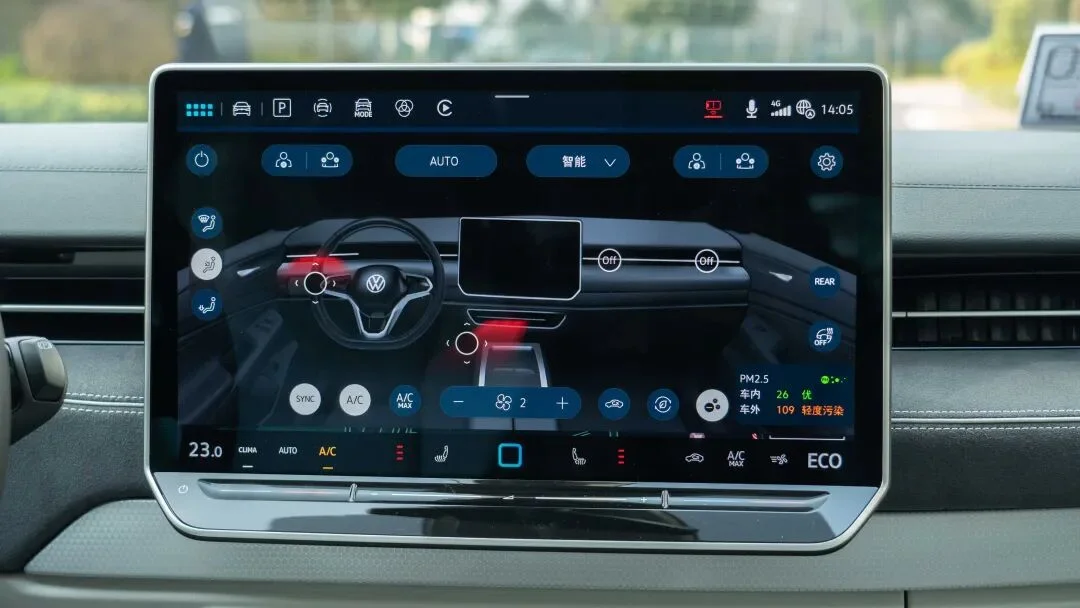
This infotainment suite includes Volkswagen’s smartair automatic airflow climate control, which allows users to adjust air direction via the touchscreen. Uniquely, the system integrates with cameras to detect the sun’s position and automatically redirects airflow accordingly, mimicking a sunflower’s tracking behavior. This helps mitigate discomfort from uneven body temperatures.
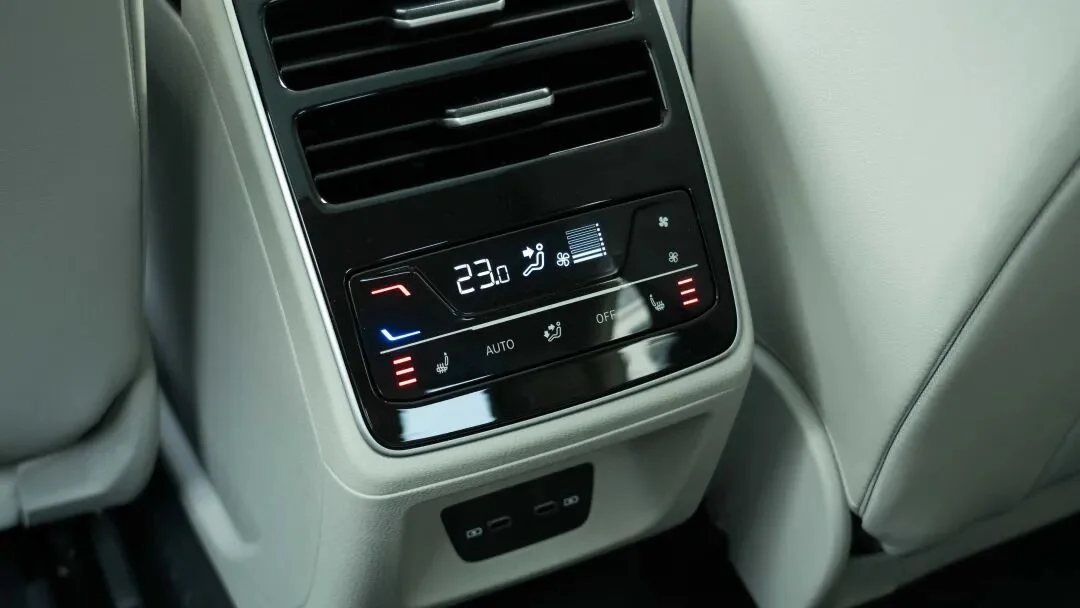
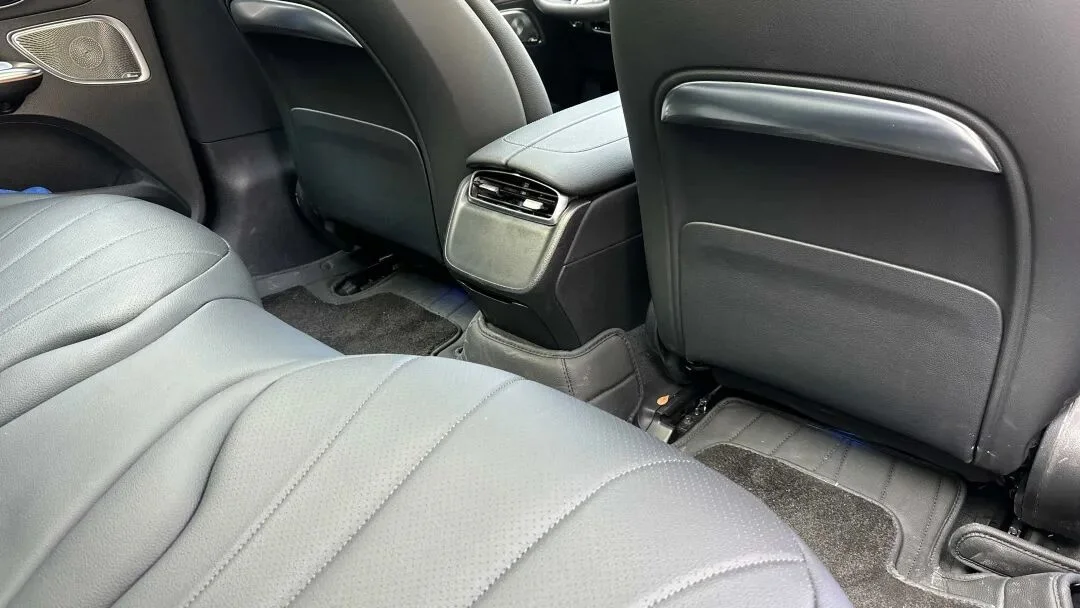
The Pro version, priced at RMB 237,000, also comes standard with tri-zone climate control and rear seat heating—features particularly practical for elderly family members in the back row. These rear-seat amenities fill a gap left by the Mercedes-Benz EQE, which notably omits them.
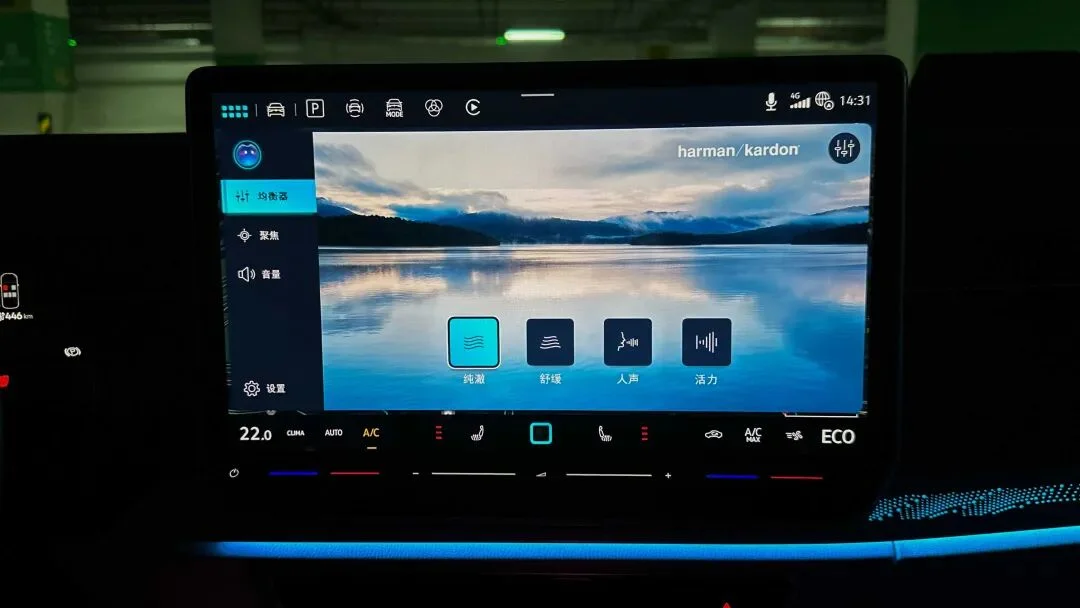
Customers purchasing the Pro version currently receive a free Harman Kardon 14-speaker audio system worth RMB 4,000—an uncommon inclusion for a mid-tier Volkswagen. In practice, the system delivers satisfying surround sound and performs well with pop music.
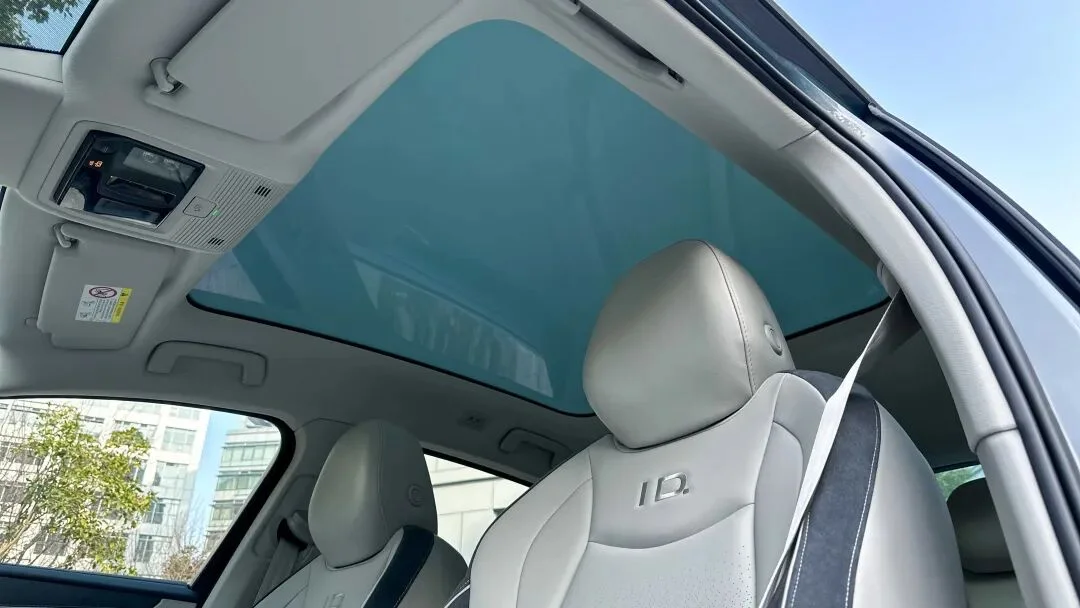
The cabin features a smart light-sensing panoramic roof, a component that stands out as distinctly un-Volkswagen due to its high cost. By controlling the current, the roof can instantly switch to a frosted, translucent state similar to a drawn sunshade but with significantly better light transmission, reducing the sense of confinement inside the vehicle. It also blocks over 99.9% of ultraviolet rays, alleviating concerns about intense summer sun exposure.
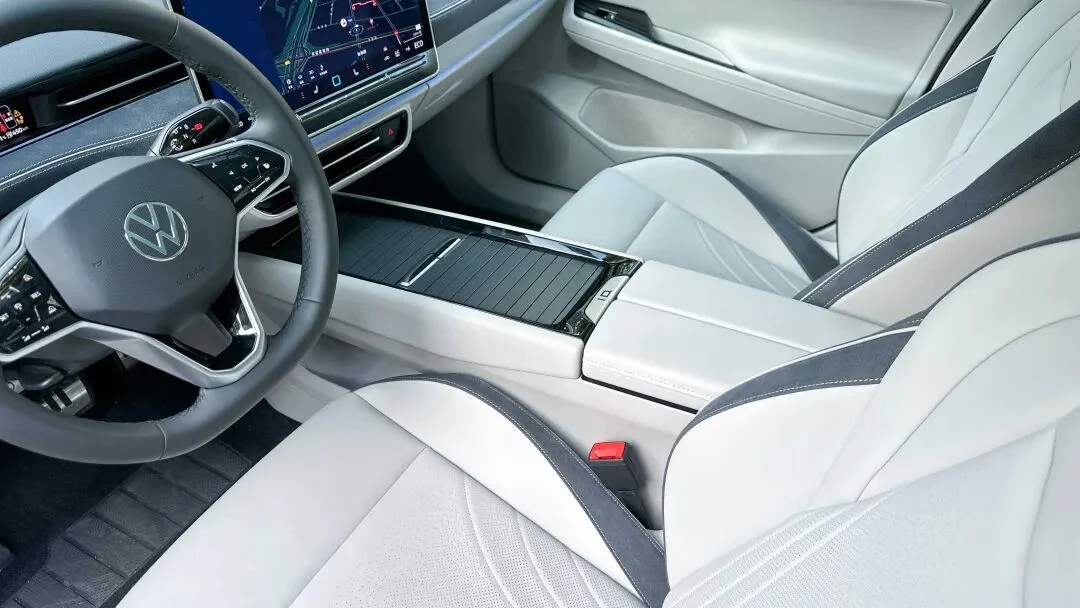
Comfort-oriented features are the first step toward premium positioning; if the subjective driving experience is poor, other attributes become irrelevant. Volkswagen interiors have traditionally carried an impression of simplicity. After driving the ID.7 VIZZION for a period, I, as an ID.3 owner, noticed that Volkswagen has indeed begun putting considerable effort into interior design.
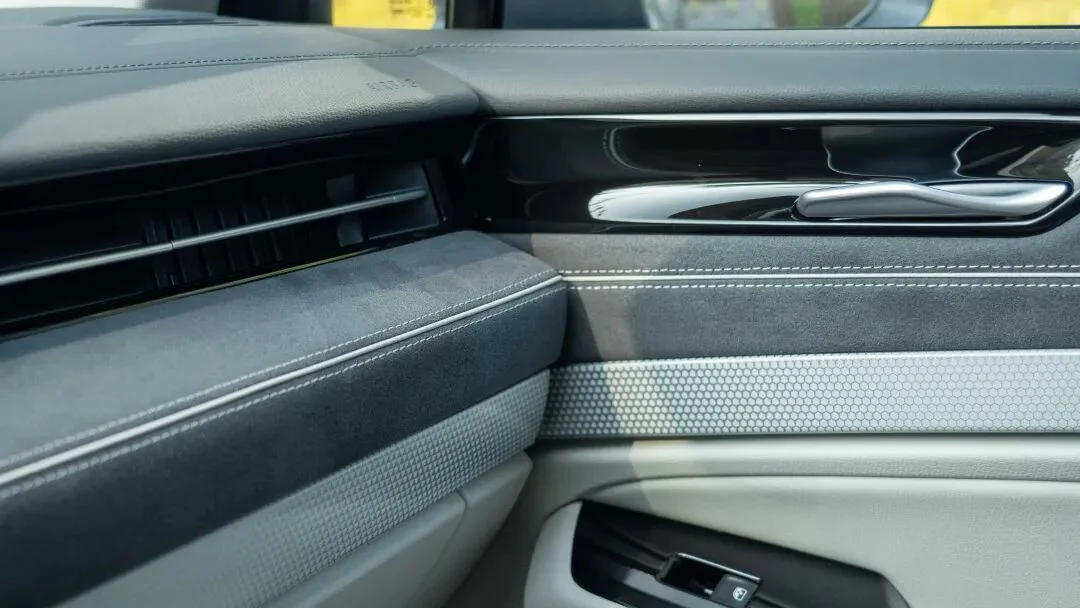
First, in terms of materials, the interior employs a rich mix of textures. Beyond standard leather, extensive microfiber leather wraps run along the entire dashboard, while soft leather covers the door frames and knee pads. Areas frequently touched by hands and feet during driving convey a distinct sense of quality.
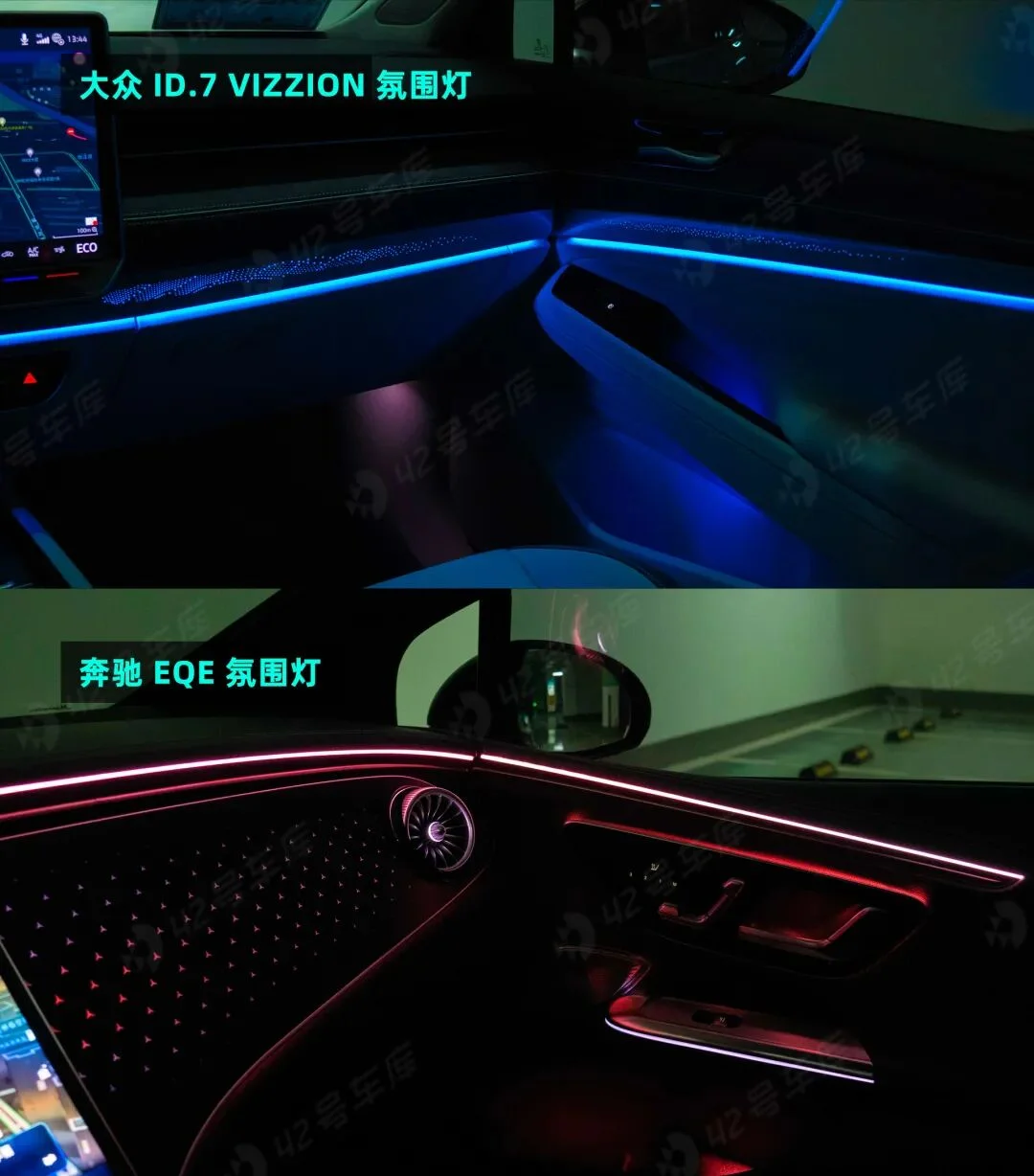
Hidden within the otherwise understated trim panels are laser-etched ambient lighting patterns. Once illuminated, the effect genuinely feels premium. When it comes to ambient lighting, Mercedes-Benz, as the benchmark for luxury brands, holds the most authority. Compared against the EQE, the ID.7 VIZZION’s atmosphere creation is equally impressive.
Volkswagen’s improvements to the ID.7 VIZZION in terms of configuration and materials are undeniable. As an electric sedan priced around RMB 200,000, it combines Volkswagen’s traditional commitment to space utilization, features, and design with innovative attempts. The resulting driving experience challenges conventional perceptions of the brand, giving it the capability to compete with luxury marques.
02A New Benchmark for MEB Platform Tuning
Foreign media outlets raised questions during last year’s test drives: "What sets the Volkswagen ID.7 apart when compared to more expensive models from Audi, BMW, and Mercedes-Benz?"
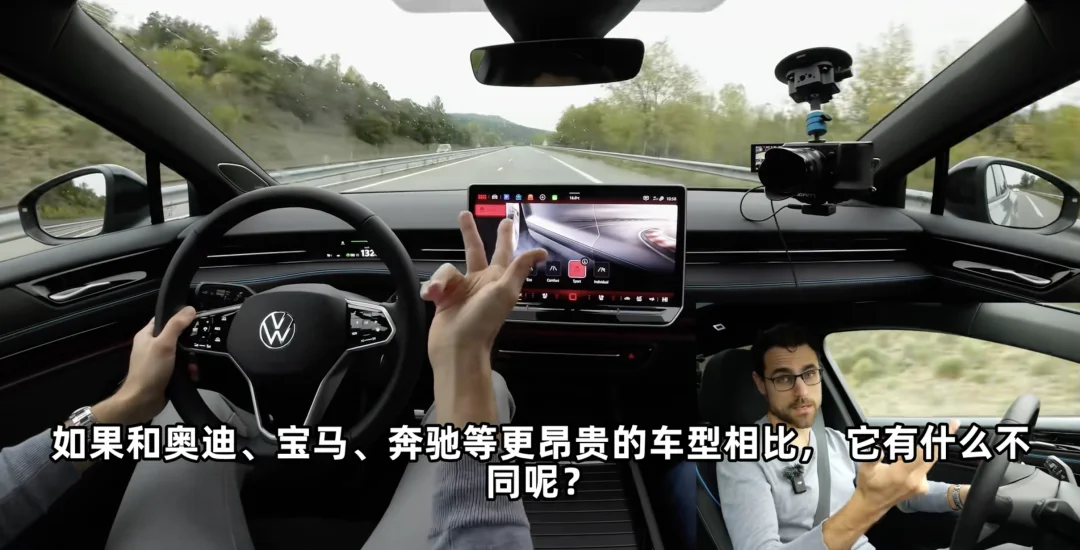
While the chassis tuning of the Volkswagen ID. series has earned a solid reputation in the market, competing on brand heritage and tuning finesse is one thing; going head-to-head with century-old luxury brands is another. Most people, myself included, would instinctively consider such a comparison unrealistic.
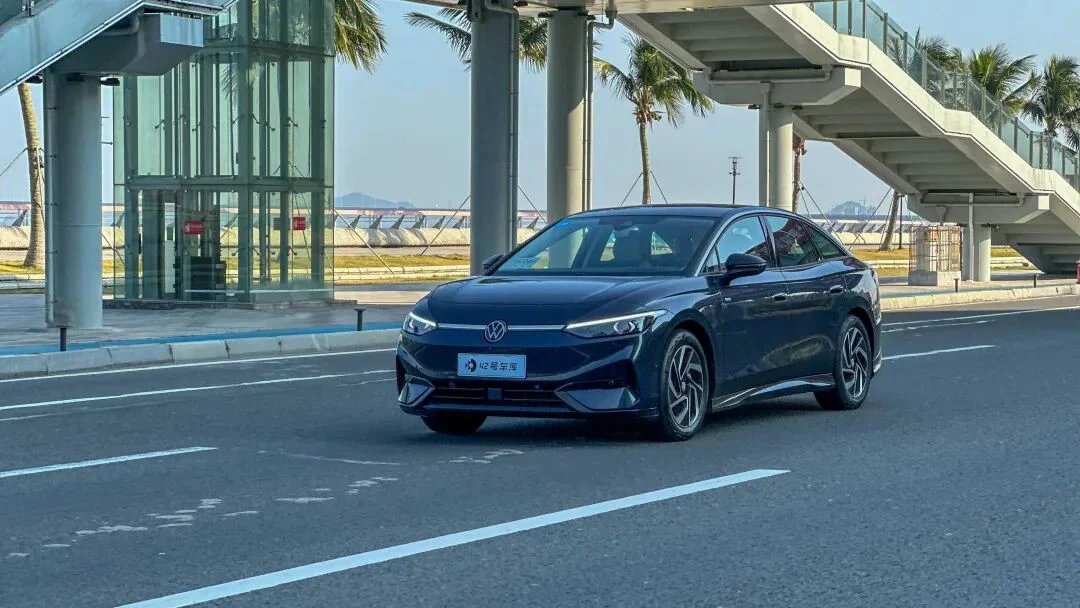
In terms of hardware, the ID.7’s front MacPherson independent suspension paired with a rear multi-link independent setup is standard for this price segment. After driving it for several days, setting aside amplitude-related hardware issues, Volkswagen has indeed elevated the ID.7 VIZZION’s chassis dynamics to new heights beyond the ID.4 and ID.6 platforms.
The chassis tuning follows the traditional German automotive style of firmness, with the ID.7 VIZZION’s stiffness primarily evident in its direct shock absorption and clear road feedback. On uneven surfaces, the suspension compresses and rebounds with crisp precision, maintaining minimal body movement. This creates a solid foundation that delivers engaging performance at higher speeds.
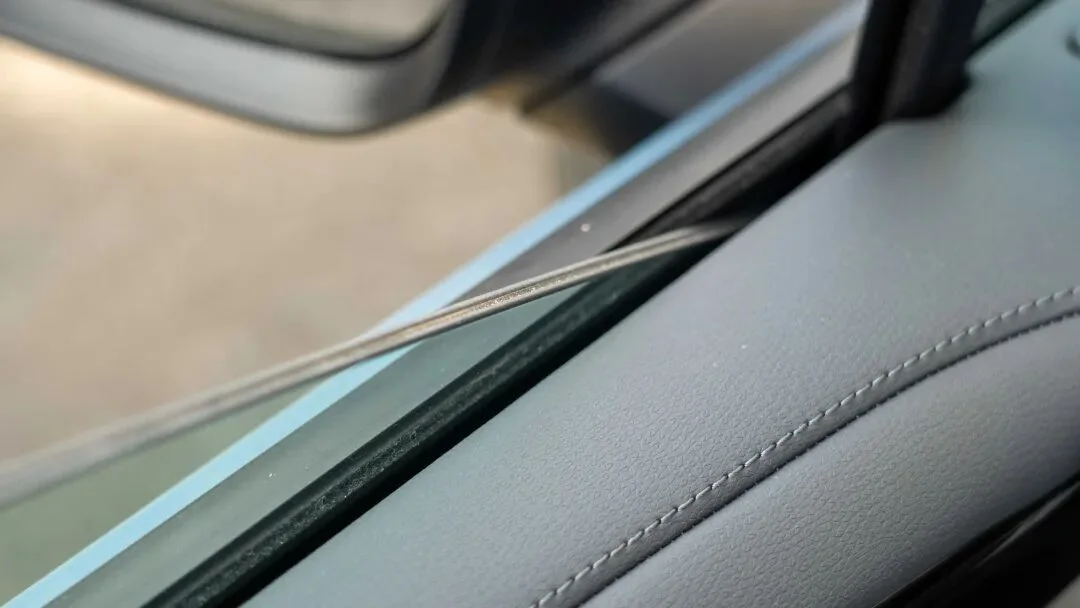
However, firmness does not mean harshness. Although the road feel inside the car is quite clear, the impacts and vibrations actually transmitted to the seats are uncommonly few, which is one of the excellent aspects of the Volkswagen ID.7 VIZZION. The handling of bumps is crisp, while a relatively resilient filtering quickly absorbs them, ensuring that the chassis of the ID.7 delivers a comfortable experience. Additionally, this time all four doors of the ID.7 use laminated glass, and the suppression of chassis NVH is also good.
For the driver, the ID.7 cultivates an excellent driving atmosphere, particularly through precise communication via the steering system. The steering feel is weighted but offers predictable responsiveness, providing drivers with greater confidence during spirited driving maneuvers.
The ID.7 VIZZION also retains the advantage of large steering angles inherent to the MEB platform. Even when directly compared to the Mercedes-Benz EQE equipped with rear-axle steering, the difference in turning radius after completing a U-turn is only slightly over 10 centimeters. Consequently, despite its 5-meter length, the vehicle remains manageable for parking or navigating narrow streets in older residential areas.
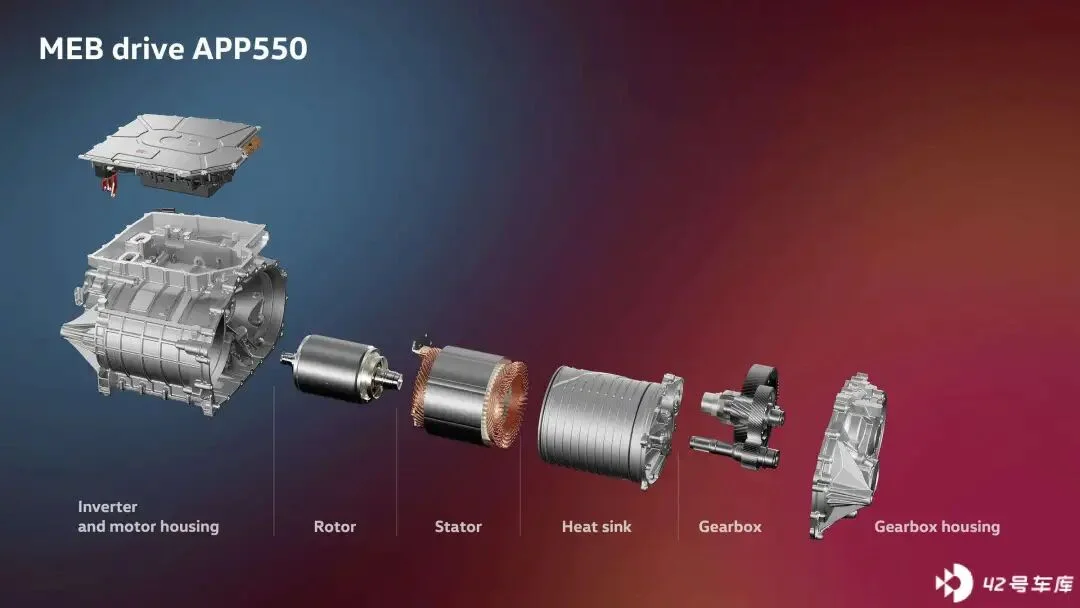
The only exception is in the powertrain: the best-selling single-motor rear-wheel-drive model still uses the APP310 motor, with a maximum power of 150 kW and a peak torque of 310 N•m. Volkswagen has not yet introduced the latest overseas APP550 motor (210 kW power, 545 N•m torque) for use in China. A power output of 210 kW aligns better with the current mainstream standard for pure electric vehicles in the domestic market. Therefore, we also look forward to Volkswagen quickly launching production of this motor for use in locally manufactured models.
However, the power delivery calibration of this motor system is excellent. The ID.7 VIZZION features a long pedal travel with good linearity, and both power output and regenerative braking are responsive and easy to control, making it simple for both new and experienced drivers to handle. Additionally, due to the characteristics of the electric motor, it feels very agile in urban driving. If you also require strong mid-to-late stage acceleration, the dual-motor all-wheel-drive ID.7 VIZZION PRIME version can meet your needs.
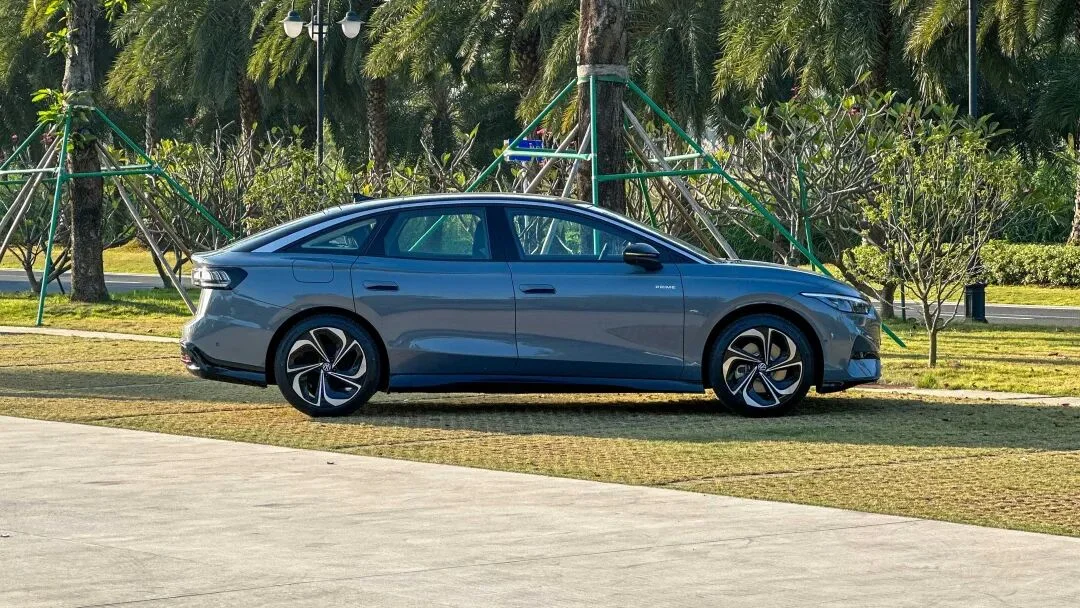
Overall, the dynamic performance of the ID.7 VIZZION meets the standards expected of a German sedan in daily use, thanks to its well-calibrated suspension stretch and excellent NVH experience.
03Final Thoughts
After this round of comparative testing, the FAW-Volkswagen ID.7 VIZZION delivers a solid ownership experience in terms of basic design, ergonomics, and driving dynamics.
The ID.7 tested by foreign media in Germany features specifications nearly identical to the domestic PRO version, including an AR HUD, large battery, light-sensing panoramic roof, and Harman Kardon audio system. After options, it retails for €67,000, equivalent to approximately RMB 527,000.
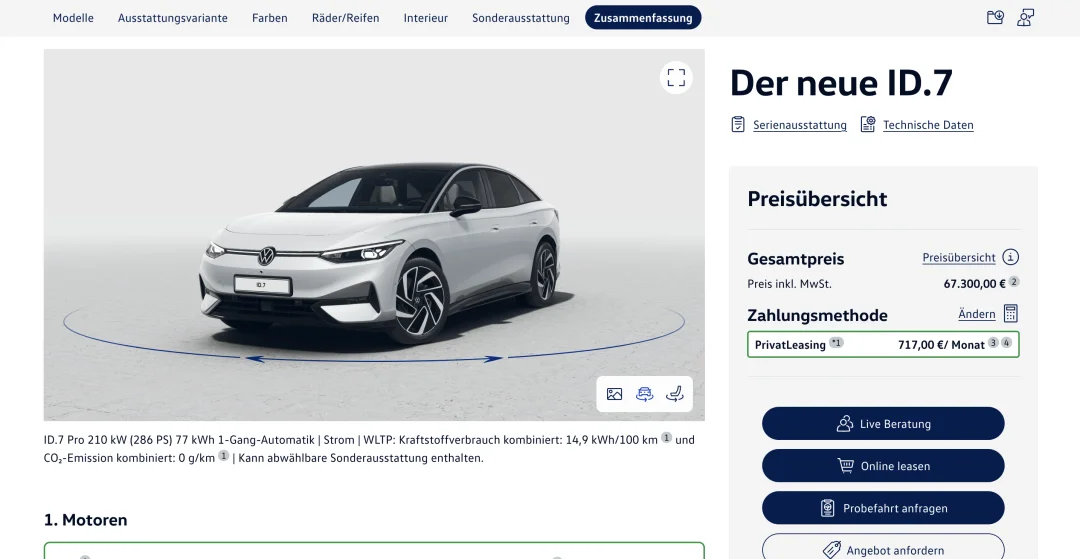
However, in China, the FAW-Volkswagen ID.7 VIZZION is priced at RMB 230,000–260,000—roughly half the price in its home market. This pricing demonstrates Volkswagen’s sincerity. It also positions the ID.7 VIZZION squarely in this year’s most competitive segment: family sedans around the RMB 250,000 mark.
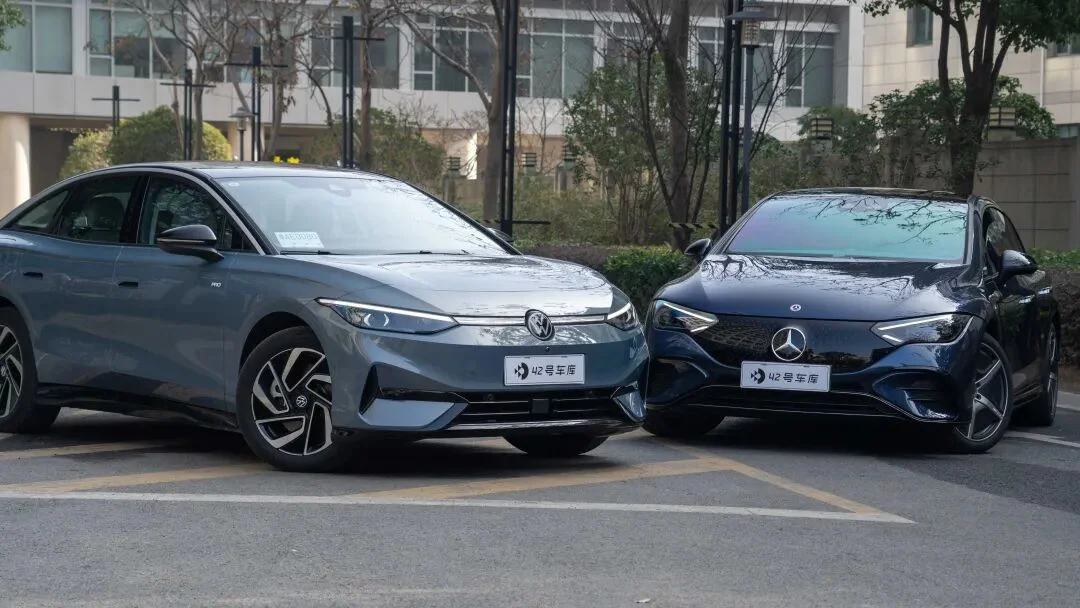
As a family vehicle, the ID.7 VIZZION excels in space, practicality, and comfort, aligning well with consumer needs. Its extensive personalization options also appeal to younger buyers. As a brand deeply rooted in the Chinese market, Volkswagen has tailored the materials, tuning, and configuration of the ID.7 VIZZION to meet local quality expectations, delivering performance befitting a German mid-to-large sedan. Selling at half the German price is key to the ID.7 VIZZION’s entry into the Chinese family market.
Written by Jiang Xiaohei Edited by Daji