


How Should AVATR Play Its Strong Hand?
The automotive industry is undergoing its most significant transformation in a century. The trends toward electrification, connectivity, and intelligence have stirred up the sector, which had remained calm for over a decade.
Representative of the first batch of disruptors entering the market, "Weixiaoli" secured the most financing and garnered the most attention, while continuously growing amid consumer criticism. They have now emerged as clear leaders in the smart automotive industry. Whether in terms of sales volume, brand awareness, or accumulation of core intelligent technologies, they enjoy a "discontinuous" lead over other enterprises.
Through the joint efforts of these first-mover enterprises, the product competitiveness of new energy vehicles has improved substantially, earning recognition from Volkswagen.
According to data from Chenglianhui (China Passenger Car Association), cumulative sales of new energy vehicles reached 1.007 million units in the first half of 2021, a year-on-year increase of 220%. Sales in just six months already exceeded the full-year total of 2020. In November alone, wholesale sales of domestic new energy vehicles reached 429,000 units, up 131.7% year-on-year, with a wholesale penetration rate of 19.9%.
The vast market space is full of opportunities, attracting more entrants. A second wave of companies is now entering the race at a sprint.
Facing only two choices, the second-wave automakers must either walk alone, taking small, slow steps; or form alliances and cooperate closely. Having entered the market later than the first wave, and benefiting from the maturation of the smart vehicle incremental parts supply chain after years of development, most second-wave entrants have chosen the latter path.
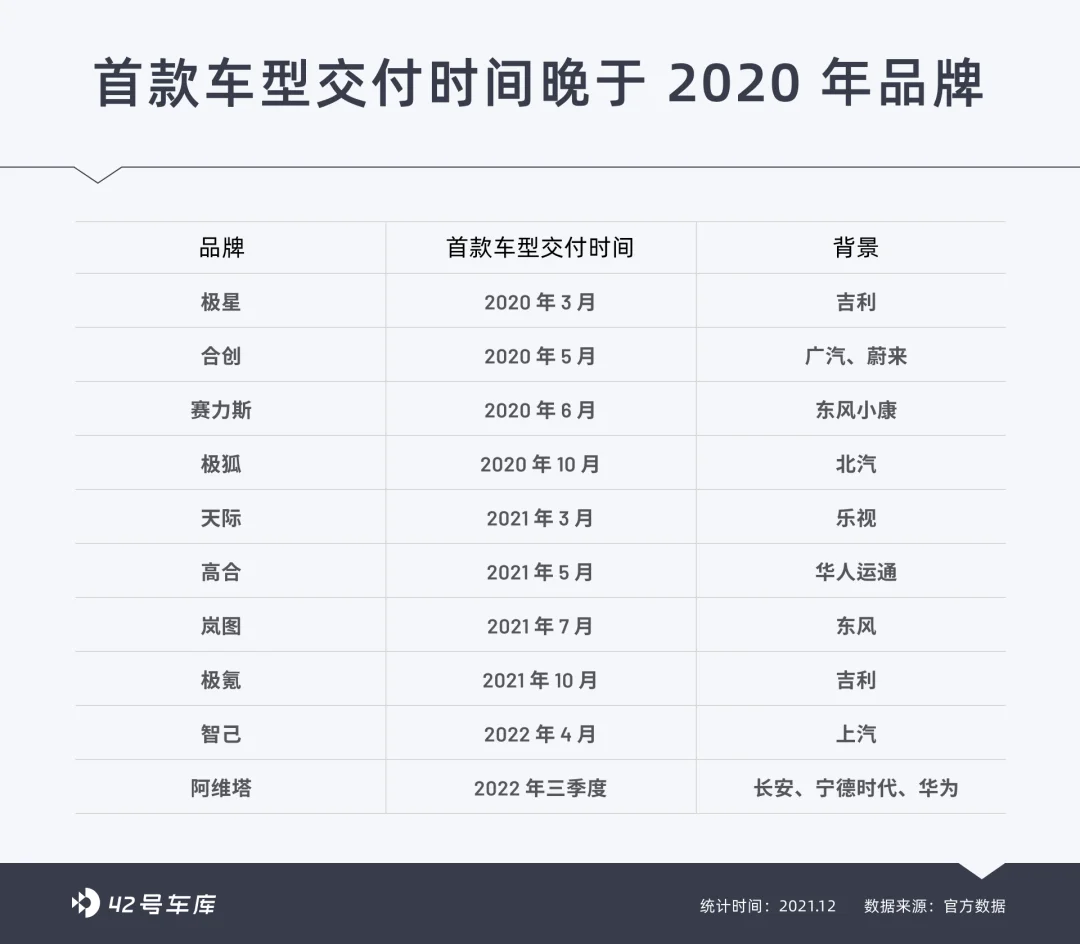
As the chart shows, among automakers in the second batch whose first models were delivered after 2020, most emerged from established traditional Chinese brands. Compared with the first batch, these companies not only have stable financial backing but also inherit industrial partnerships from their parent organizations. AVATR likely boasts the most impressive lineup of industrial partners among this second wave.
01The 'C' Position in 'CHN'
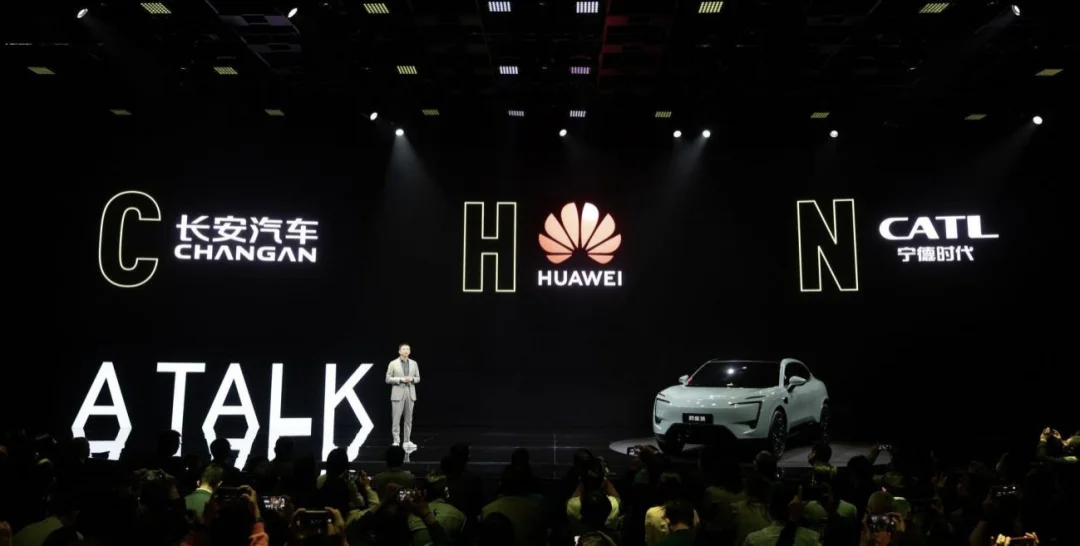
AVATR unveiled its CHN platform and the first model built on it, the AVATR 11, at its Technology Day event last year. The platform’s name, CHN, is derived from the initials of its three partners: Changan, Huawei, and CATL.
Just by looking at the reputations of these three partners, one can sense AVATR’s formidable momentum. One partner is Changan, with over six decades of vehicle manufacturing experience; another is CATL, which has ranked first globally in battery installation volume for four consecutive years; and the third is Huawei, a leader in ICT technology that possesses its own operating system.
Whether it is the recently launched AITO M5, the Jihuaerfa S HI Ban, the SERES SF5, or the AVATR 11, consumers generally categorize them all as Huawei-collaborated vehicles. However, there are significant differences among these models. In terms of cooperation depth, breadth, and capability strength, AVATR was the first to collaborate with Huawei on a synergistic basis starting from the underlying architecture, jointly dedicated to realizing software capabilities and sustainable iterative development.
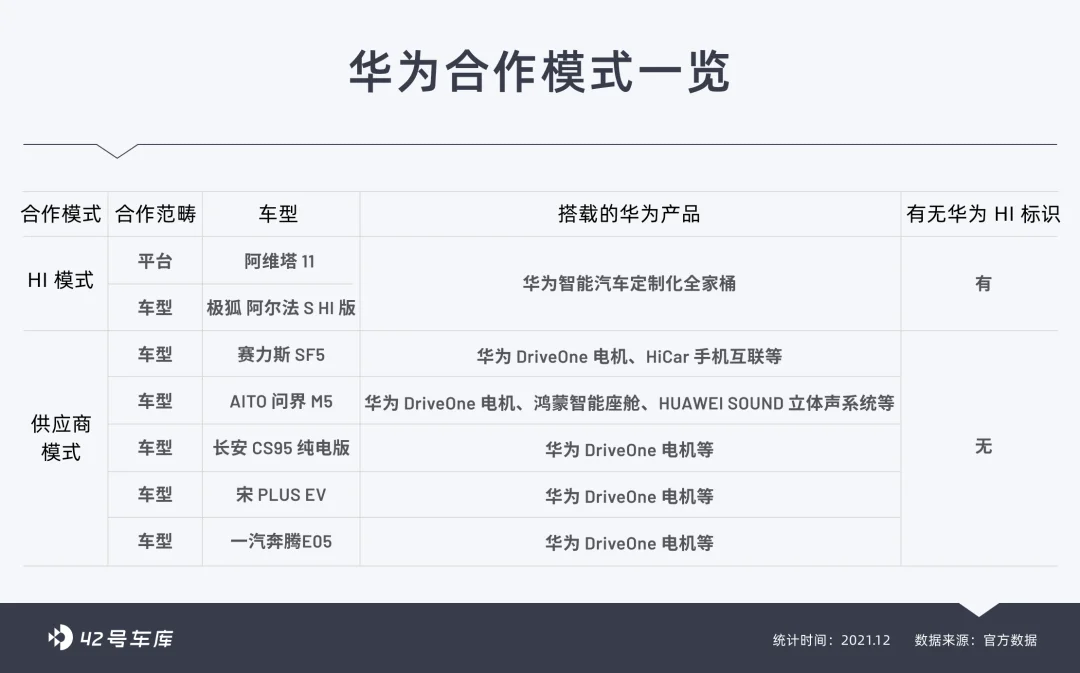
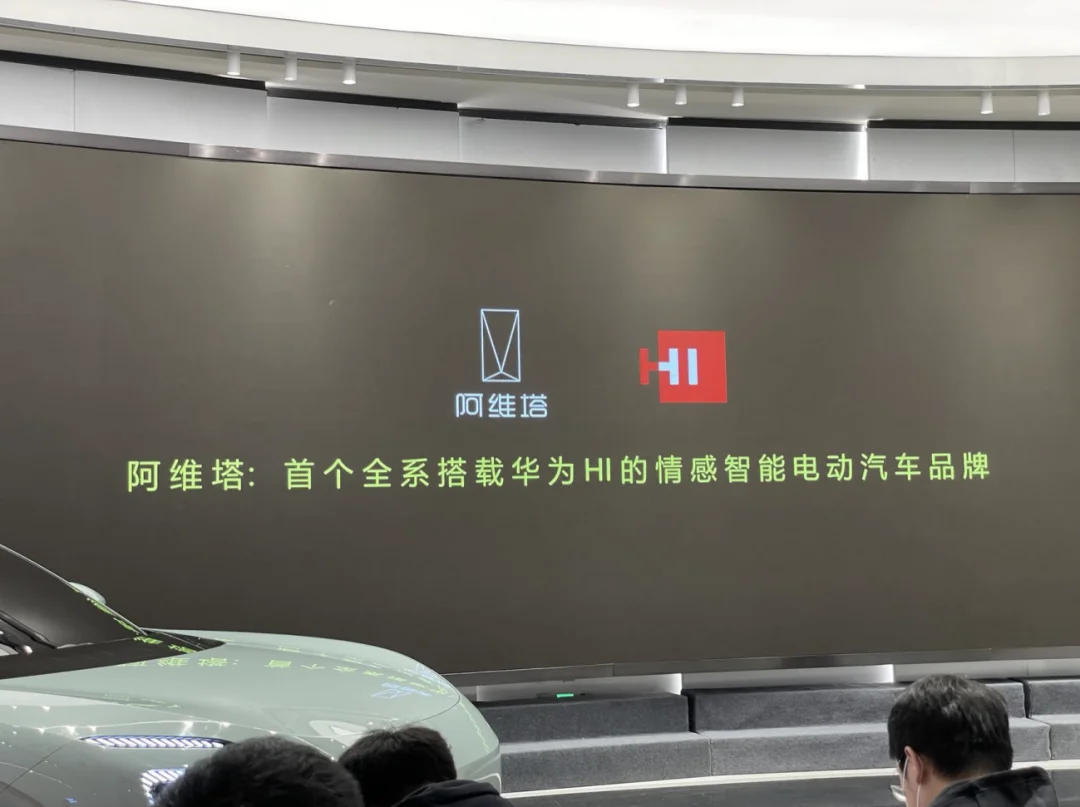
Synergy on the CHN underlying architecture forms the foundation of their cooperation. Building on this, the entire AVATR lineup is equipped with Huawei’s full-stack intelligent solution, known as the Huawei Inside (HI) mode, which Huawei currently promotes.
In October last year, Huawei released its Intelligent Automotive Solution HI. This is a cooperative model featuring higher participation and collaborative definition compared to the traditional supplier model. Its full-stack intelligent automotive solutions include:
Three platform ecosystems: the iDVP Smart Vehicle Digital Platform, the MDC Smart Driving Computing Platform ecosystem, and the HarmonyOS Smart Cockpit ecosystem;
Three operating systems: the HarmonyOS Cockpit Operating System (HOS), the Smart Driving Operating System (AOS), and the Smart Vehicle Control Operating System (VOS);
Five smart systems: smart driving, smart cockpit, smart connectivity, smart electric power, and smart vehicle cloud services;
More than 30 intelligent components: including the MDC smart driving computing platform and LiDAR sensors.
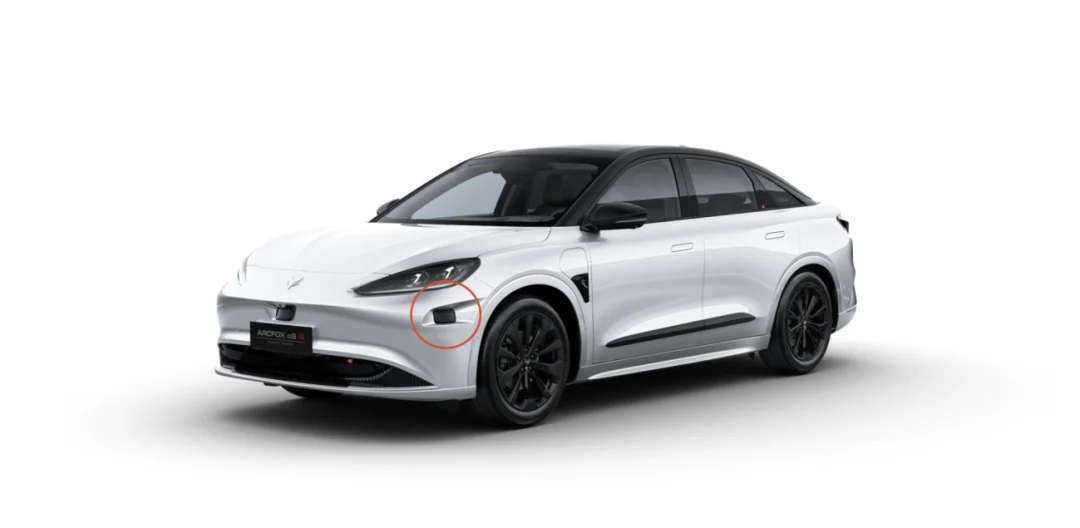
Vehicles born from the HI model feature a distinctive HI badge on their bodywork for identification. Currently, only the HI version of the BAIC Arcfox Alpha S displays this badge.
In the AVATR 11 project, the work of the CHN trio was not three parallel lines operating independently, but rather extensive collaborative co-creation at every stage, considering optimal solutions for overall and systemic performance from multiple dimensions.
AVATR Technology Chairman and CEO Tan Benhong also stated that the tripartite CHN partnership is not a simple "buy-and-sell" transaction. During joint development, all parties supervise each other to advance together, maximizing the potential of their products.
In previous HI collaboration models, Huawei provided more vertically integrated business solutions, such as smart cockpits and intelligent driving. However, in terms of overall vehicle exterior and interior design, the OEM remained dominant, limiting what Huawei could actually do.
But on the AVATR 11, Huawei plays a different role. From the very beginning of the AVATR 11's platform development, Huawei has been involved in various aspects of the vehicle's planning and design, including the layout of driver assistance hardware and architecture, underlying technology platform design, software architecture integration, supply chain selection, and production coordination. In short, the AVATR 11 can be considered the car with the highest "Huawei content" to date.
Furthermore, due to its deep involvement from the early planning stages, Huawei’s automotive business ideas and capabilities were fully realized.
We can see the effects of this process through a specific detail.
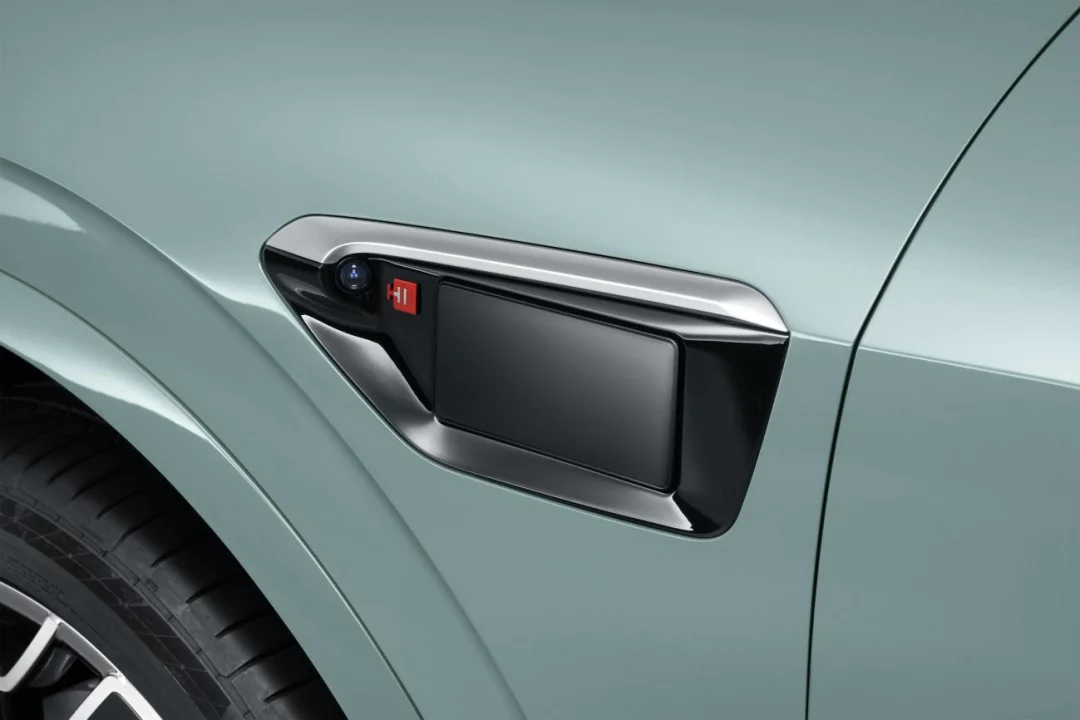
The Arcfox Alpha S Huawei HI version adopted a front-mounted triple-laser configuration. While its sensing capabilities are formidable, it is evident from images that the sensor arrangement did not optimize the vehicle's styling; under light-colored paint, the setup appears quite conspicuous.
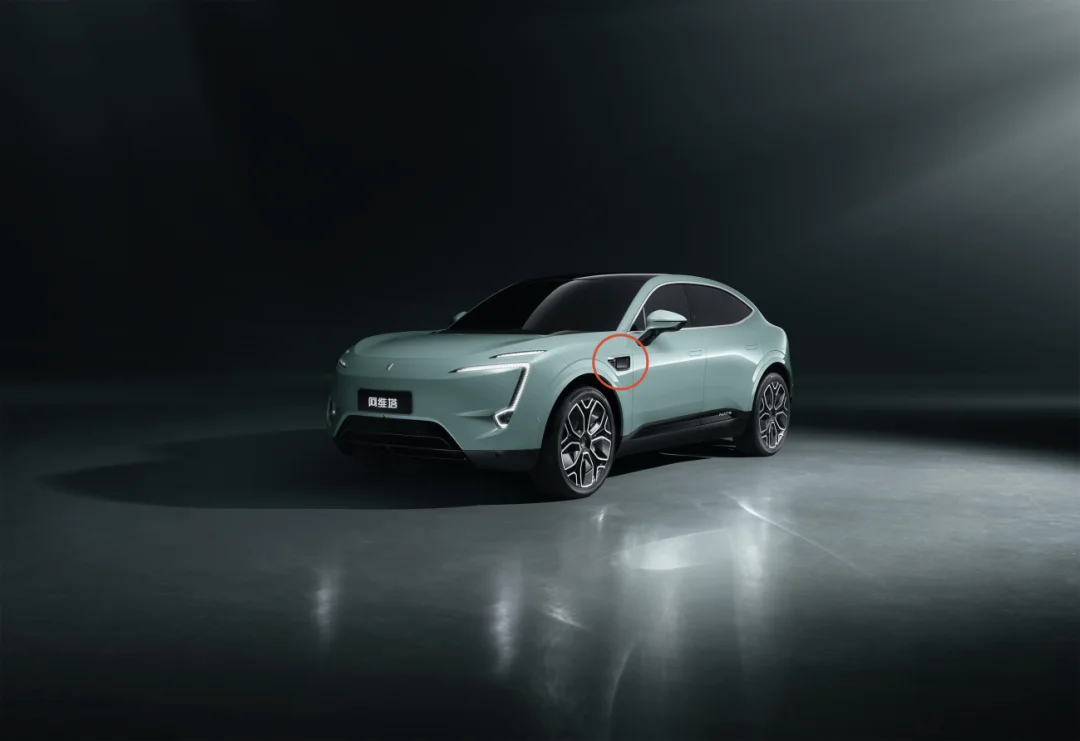
Turning to the AVATR 11, although it is also equipped with a LiDAR sensor, this unit is cleverly integrated into the side turn signal position using a design reminiscent of animal camouflage. It is nearly imperceptible unless one is an industry insider, preserving the vehicle's overall aesthetic while maintaining functionality.
These are merely visible details; unseen optimizations likely extend to the underlying architecture and cabin design as well.
Wang Jun, President of Huawei’s Intelligent Automotive Solution BU, stated, 'Huawei’s strength lies in ICT technology, while its weakness is mechanical manufacturing. China and the world have no shortage of automakers; what they lack are foundational suppliers capable of truly excelling in intelligence.'
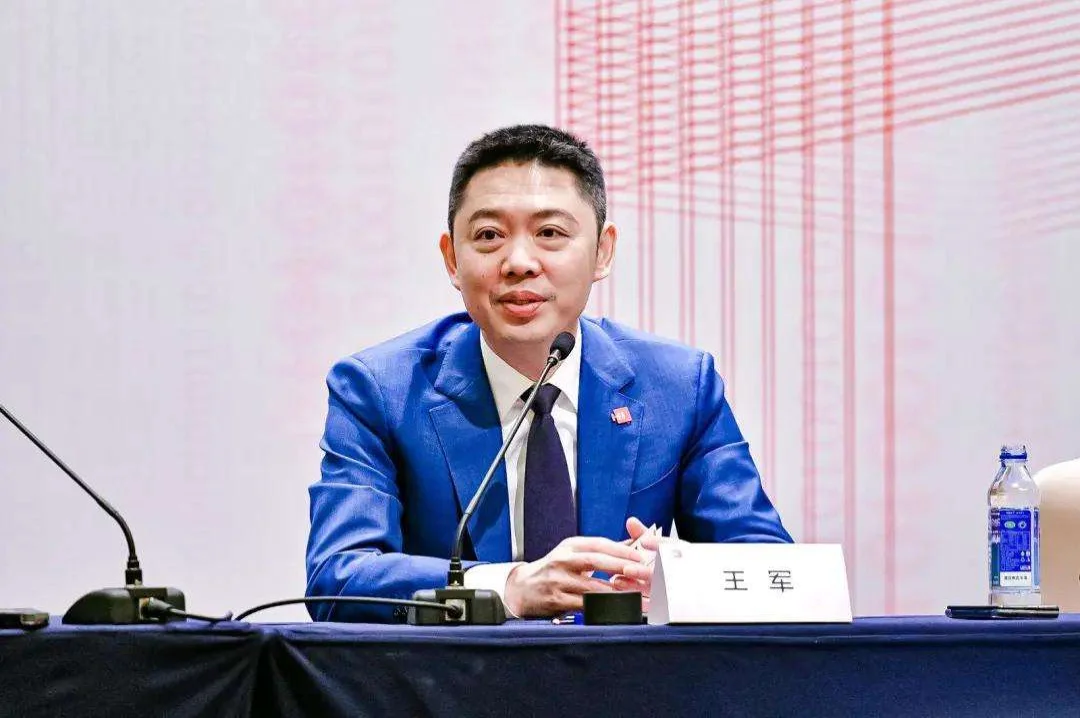
Consequently, beyond the HI model, Huawei can also participate in partnerships as a traditional Tier 1 or Tier 2 component supplier.
This approach allows both parties to bring new technologies to vehicles more quickly, addressing traditional automakers' needs to fill specific gaps in their product lines. The AITO M5 and SERES SF5 exemplify this cooperation model. However, under this arrangement, Huawei’s role is limited to providing impetus within specific segments. Compared to the HI partnership model, the overall vehicle capabilities and final outcomes are subject to greater constraints.
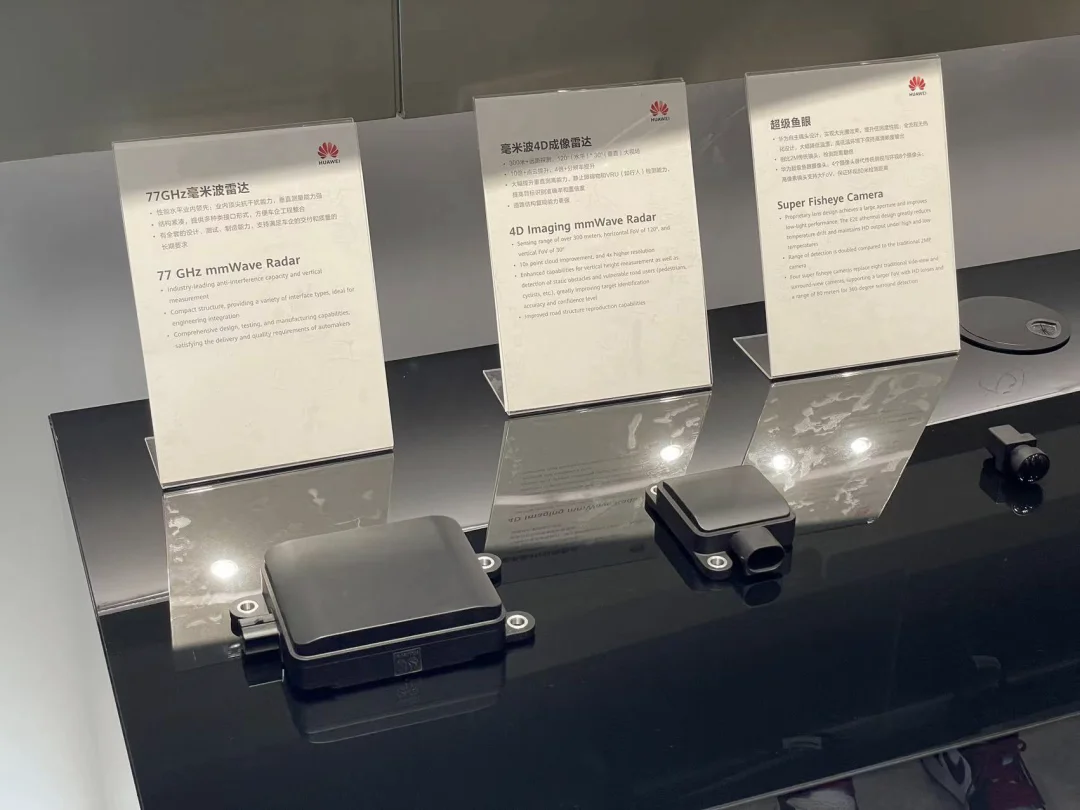
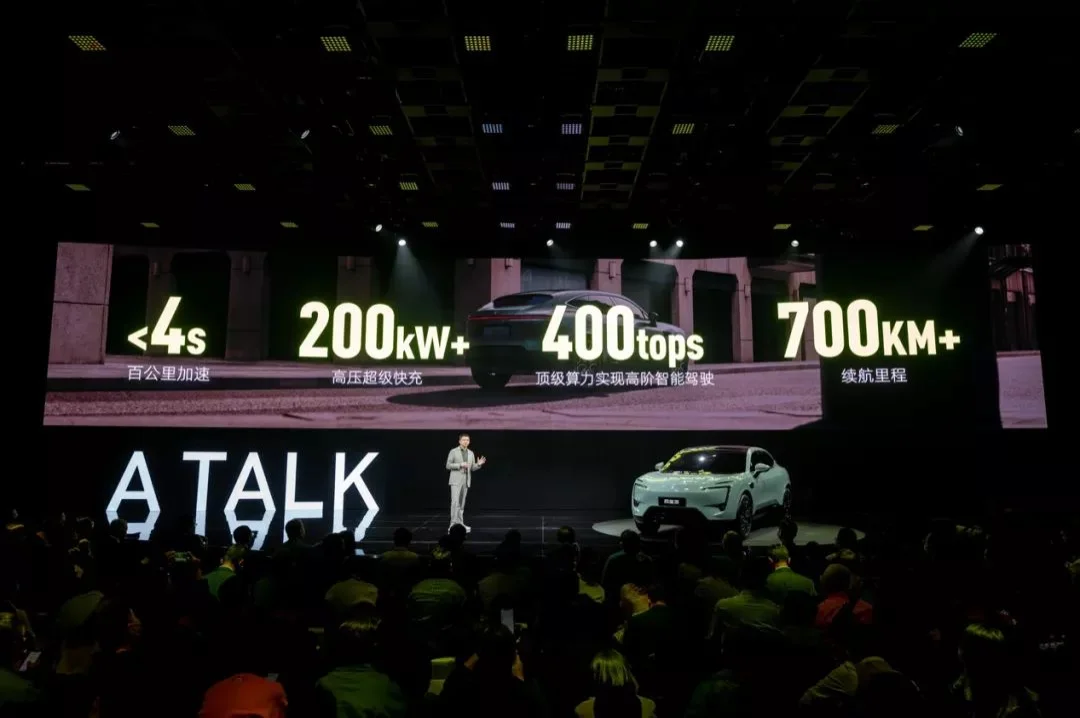
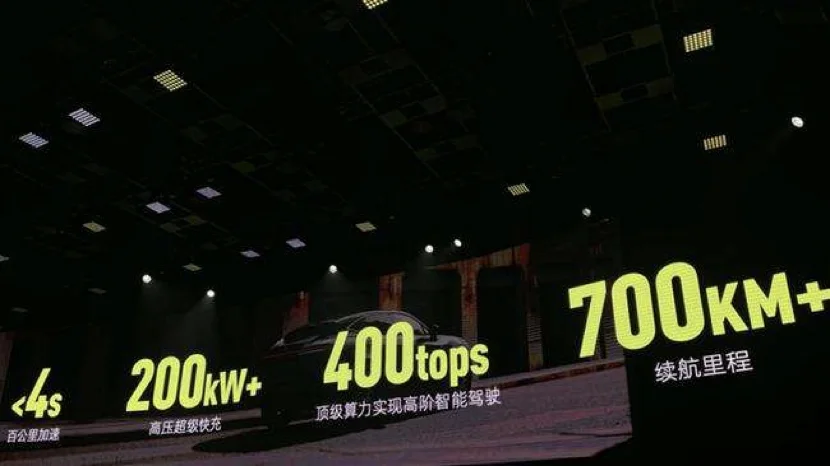
If we turn our attention back to the AVATR 11 product itself, the AVATR 11's book data is also noteworthy:
0-100 km/h acceleration under 4 seconds
200 kW high-voltage fast charging
400 TOPS of ADAS computing power
Over 700 km of range
Among these four figures, the remaining question is whether the 'zero-to-100 km/h acceleration under 4 seconds' and 'range exceeding 700 km' can be achieved simultaneously. If so, as an electric vehicle, the AVATR 11 would have been a top-tier product in 2022. We have already heard about the '200 kW high-voltage fast charging' and '400 TOPS driver assistance computing power' from previous Huawei Inside (HI) collaboration models. In April this year, we witnessed the capabilities of Huawei's system for 'city navigation-guided driving.'
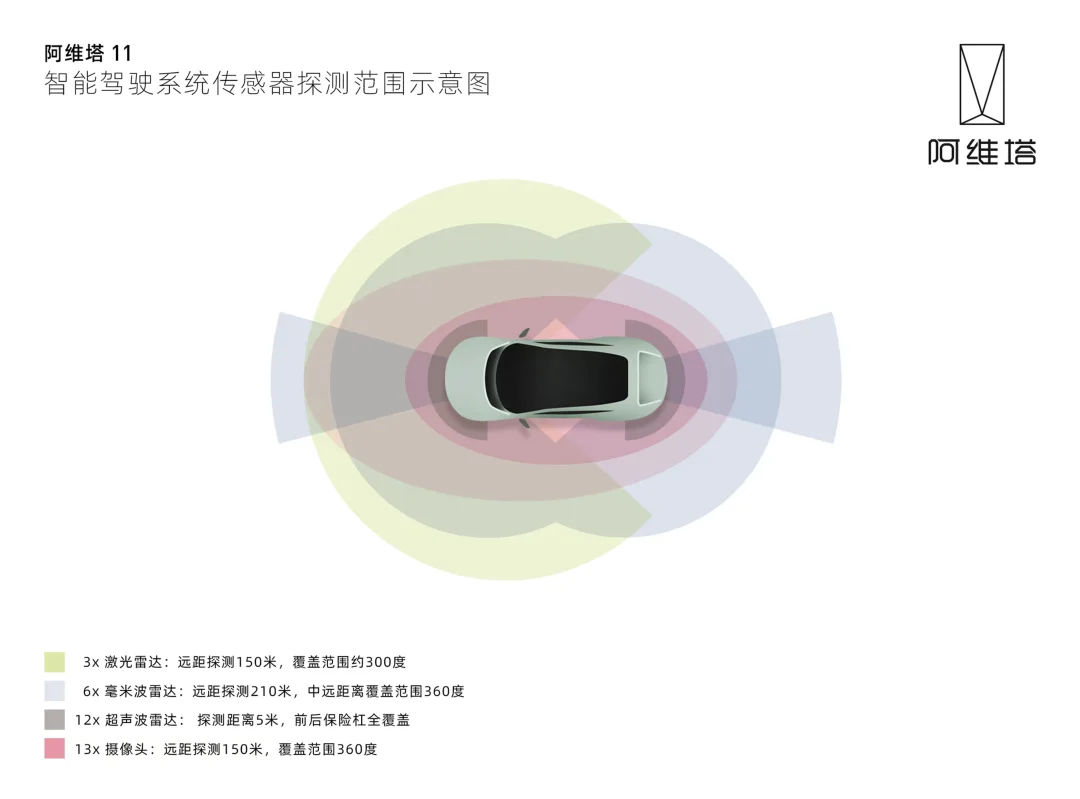
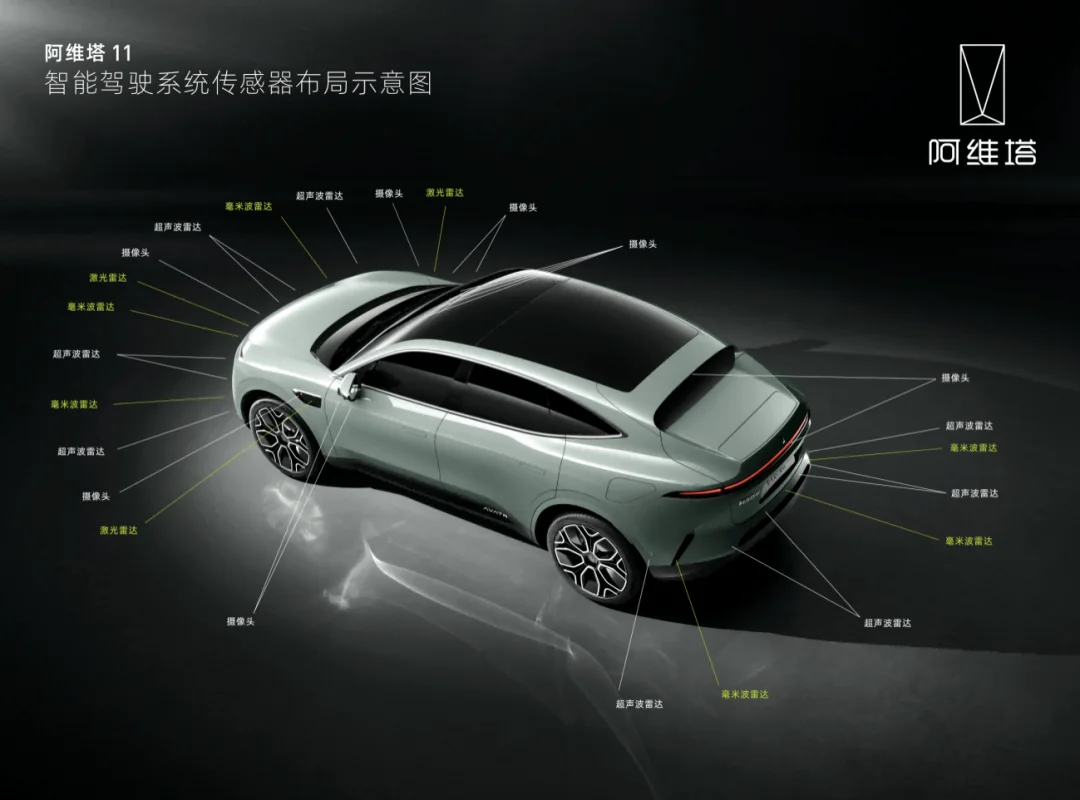
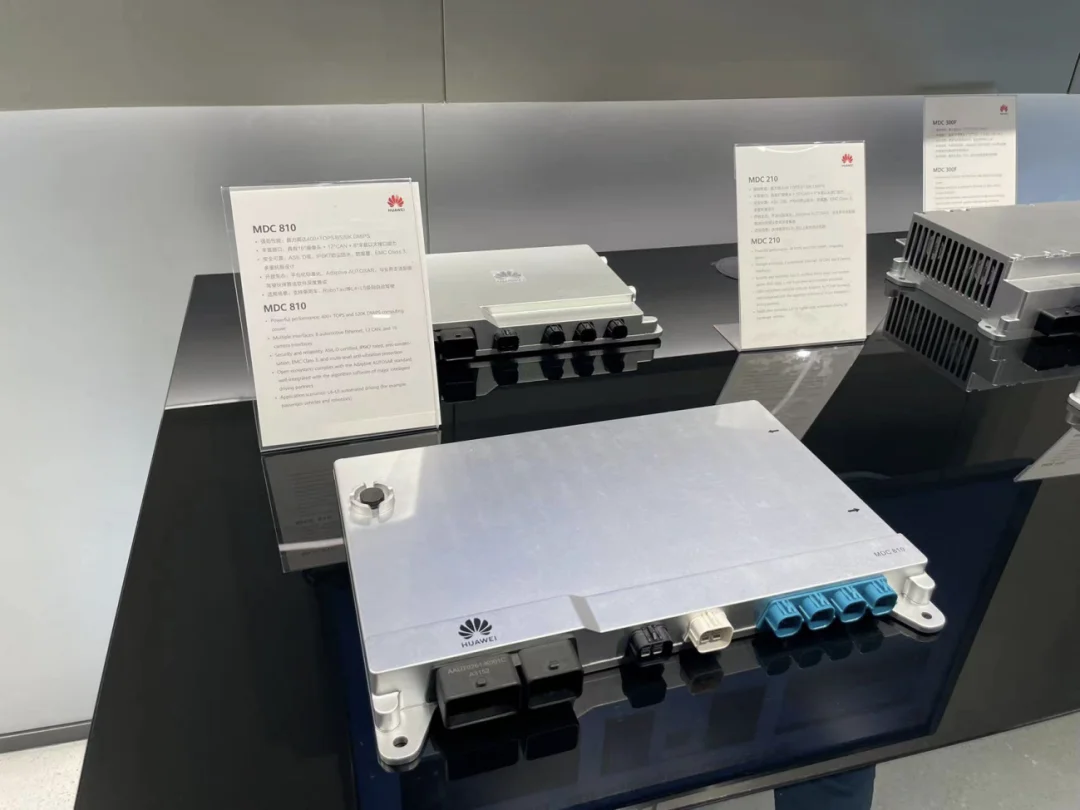
The AVATR 11’s intelligent driving system relies on Huawei’s top-tier solution, featuring three LiDARs, six millimeter-wave radars, twelve ultrasonic radars, thirteen cameras, and the MDC 810 platform.
Although AVATR 11 has only revealed limited information so far, expectations regarding its product capabilities need not be overly cautious. This confidence is grounded in previous Huawei-collaborated models and the repeated emphasis that AVATR has been deeply involved from the project's inception.
02Mobile Phones and Cars: Depth and Boundlessness
Regardless of how intelligent the technology becomes or how cars evolve, their ultimate goal remains meeting people’s needs. Tan Benhong, CEO of AVATR Technology, stated, 'For consumers, unmet needs always exist.'
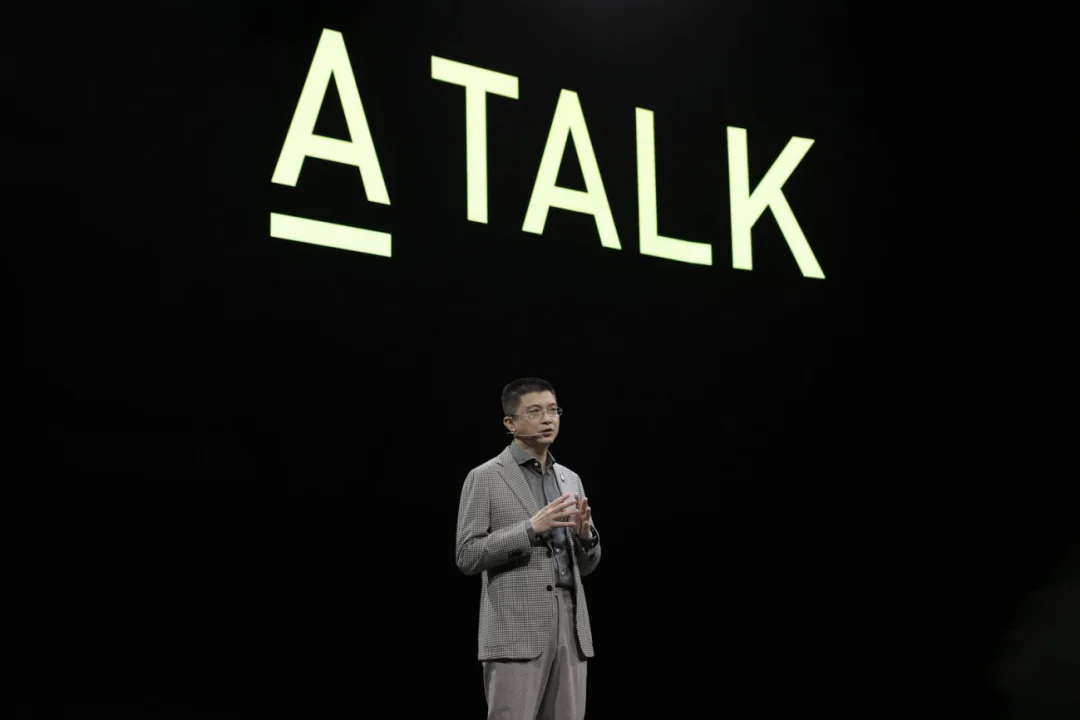
However, consumers often do not realize these needs exist until a company identifies them, develops a differentiated product to satisfy them, and presents it to the market. Only then do consumers genuinely appreciate, 'It can be this easy to use.'
The same logic applies to smart cars. Once performance and cost are balanced, the experience of the intelligent cockpit will become one of the key differentiators for premium brands and an important vehicle for meeting users' latent needs.
We can imagine a simple scenario: suppose you purchase a group-buy voucher for a restaurant on Sunday evening. When you get in the car and prepare to drive there, the vehicle's navigation system automatically pops up a prompt with the restaurant's address, asking if you want to go there. This saves us the steps of taking out our phones, opening Meituan, viewing the order, checking the restaurant address, and then manually entering it into the car's system.
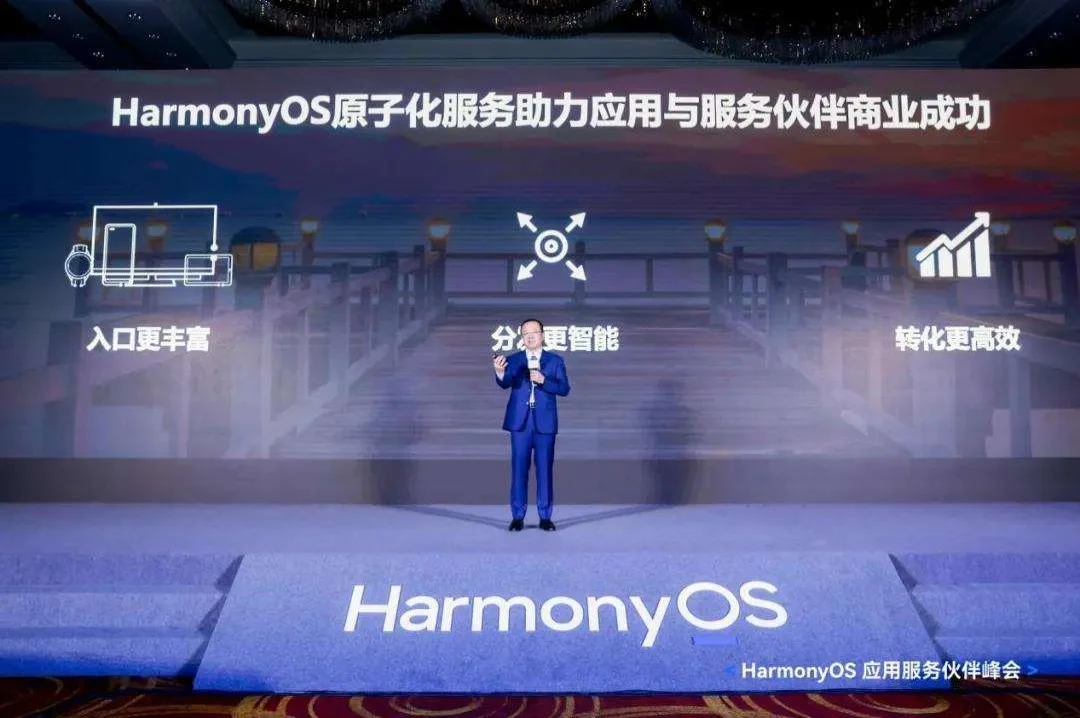
This experience presupposes that the vehicle account and mobile phone account are fully integrated, enabling the car to perceive your latent needs. Current smart EV brands limit their interaction with users on mobile devices to their proprietary apps; automakers cannot break down the barriers between vehicle and mobile accounts, data cannot be shared, and there is no prospect of mining latent needs.
The HarmonyOS intelligent cockpit equipped in the AVATR 11, relying on the Huawei account system and leveraging the flow functionality of HarmonyOS 'atomic services', is capable of extracting restaurant addresses from Meituan on a mobile phone and seamlessly transferring them to the vehicle's infotainment system. Other automakers may need to seek partnerships with Meituan to achieve this. This capability is granted to the AVATR by its HarmonyOS intelligent cockpit; however, the actual performance after purchase depends on how AVATR utilizes this capability.
03Design is also a product strength that cannot be overlooked
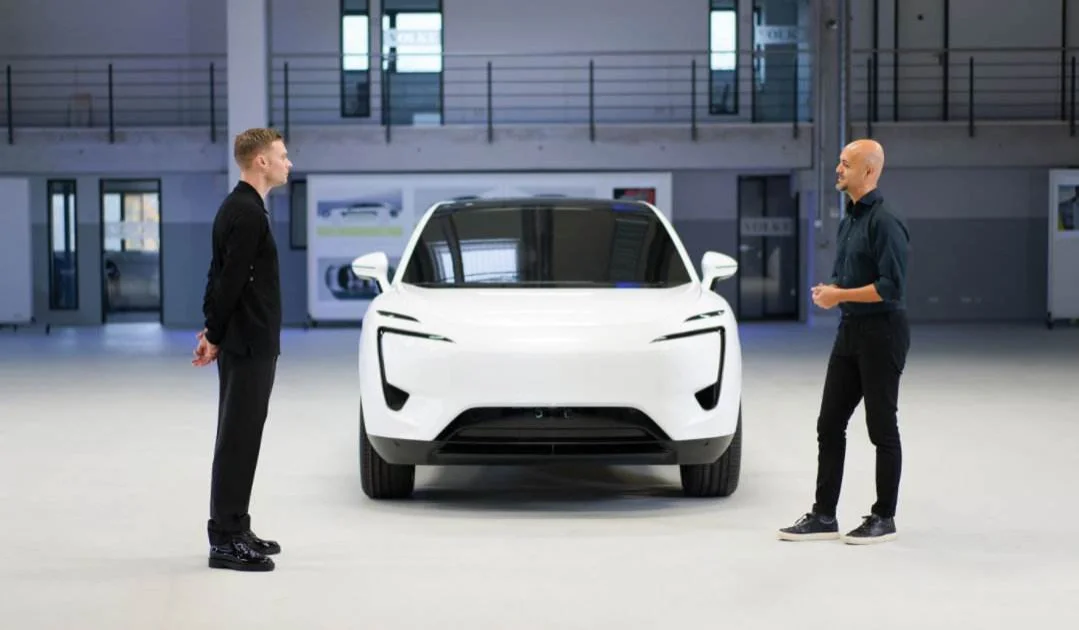
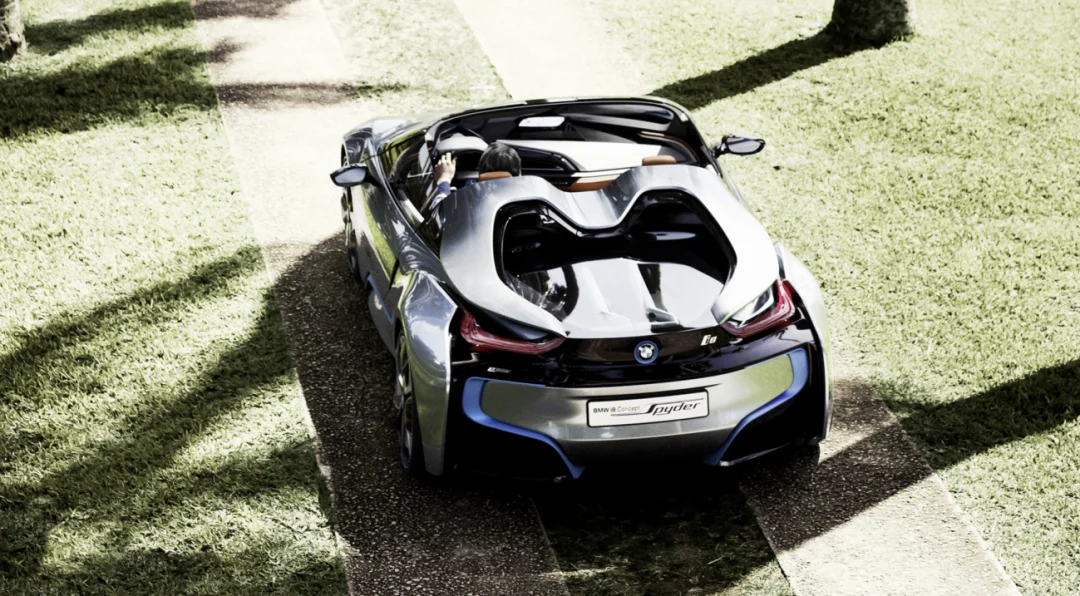
The design of the AVATR 11 was led by AVATR's global design center in Munich, Germany. Chief Design Officer Nader Faghihzadeh previously oversaw the design of vehicles including the BMW 7 Xi, the BMW iNEXT concept car, and the BMW i8 convertible.
After its debut at the press conference, public opinion on it was mixed. Enthusiasts praised its bold, futuristic design, while critics found it overly exaggerated and jarring.
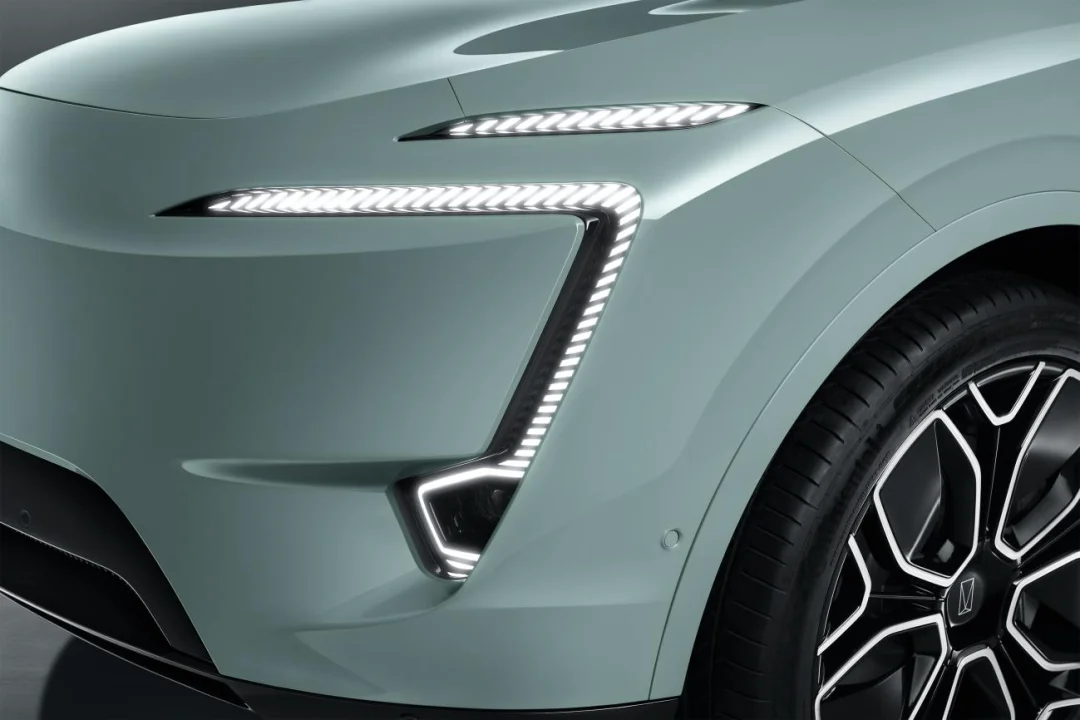
The AVATR 11’s closed-off front fascia avoids excessive complexity, with the F-shaped headlights on either side serving primarily to outline the vehicle's silhouette.
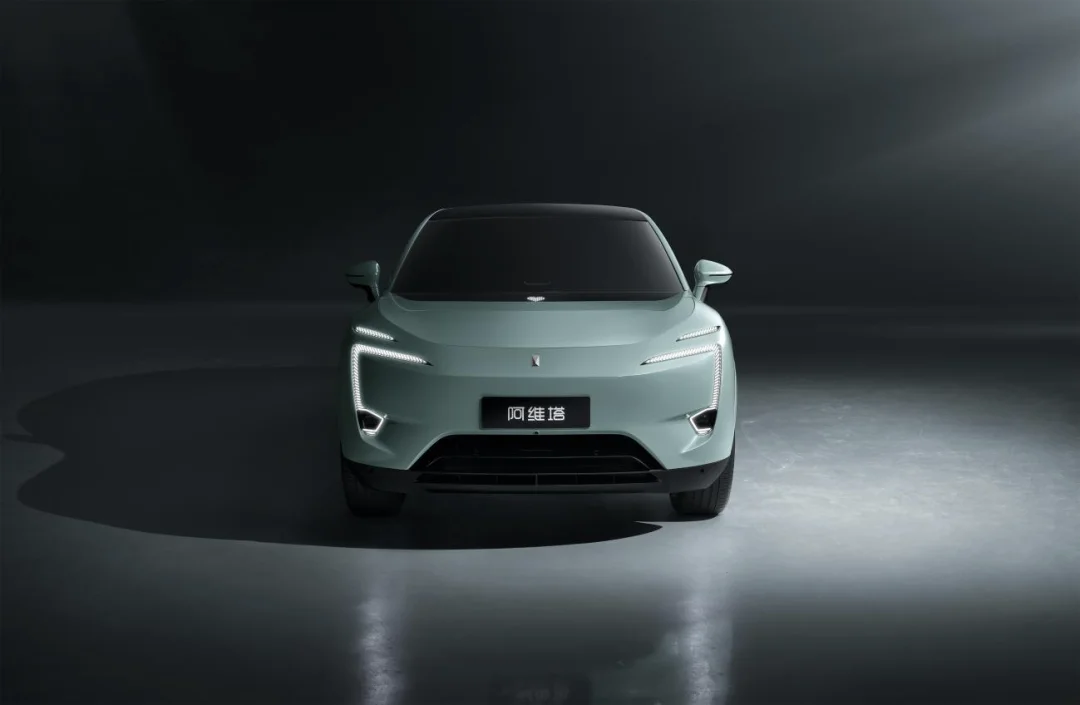
Slight bulges on both sides of the hood, combined with a black upward curve below the license plate area, visually flatten the front end. A similar technique is applied to the lower body with black cladding, creating a floating-roof effect.
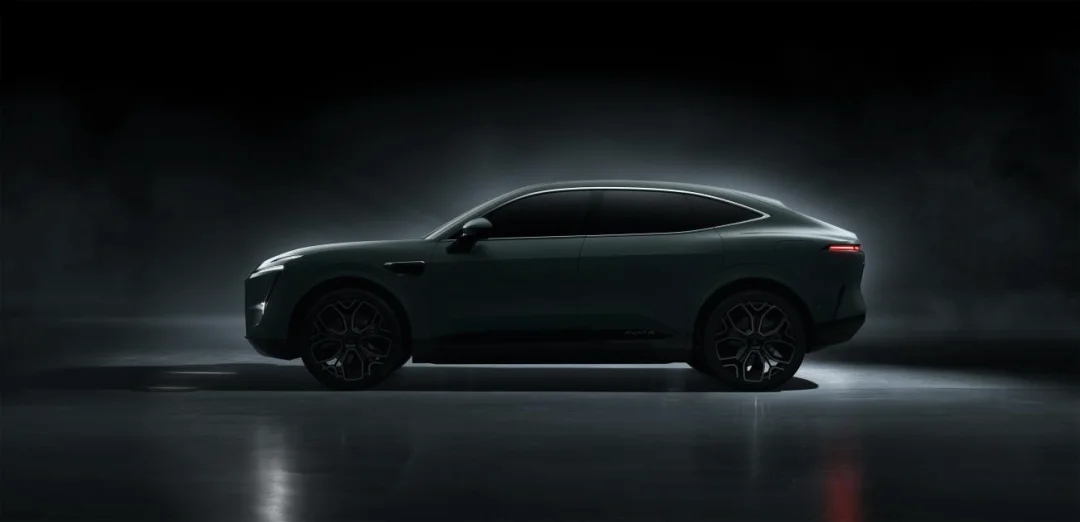
Although the AVATR 11 features a tall body, the designers aimed to evoke a coupe-like aesthetic while minimizing visual weight.
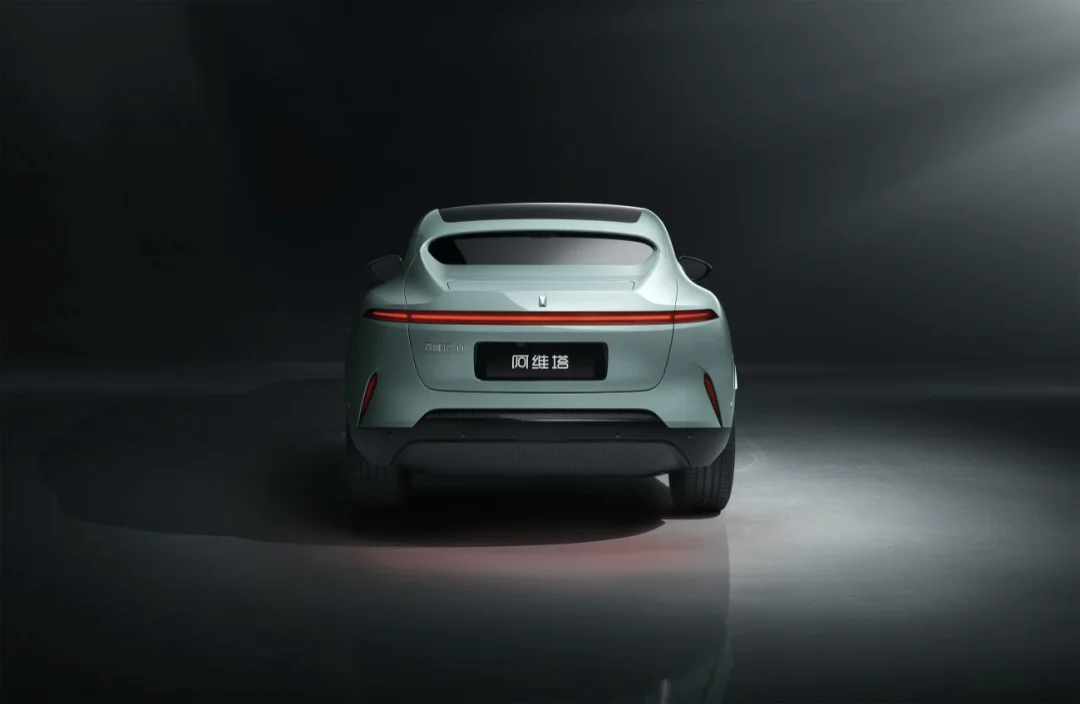
The design of the rear windshield is quite distinctive. It is rare to see an SUV with a rear window featuring such a steep angle and elongated shape, incorporating a porthole-style element reminiscent of a yacht.
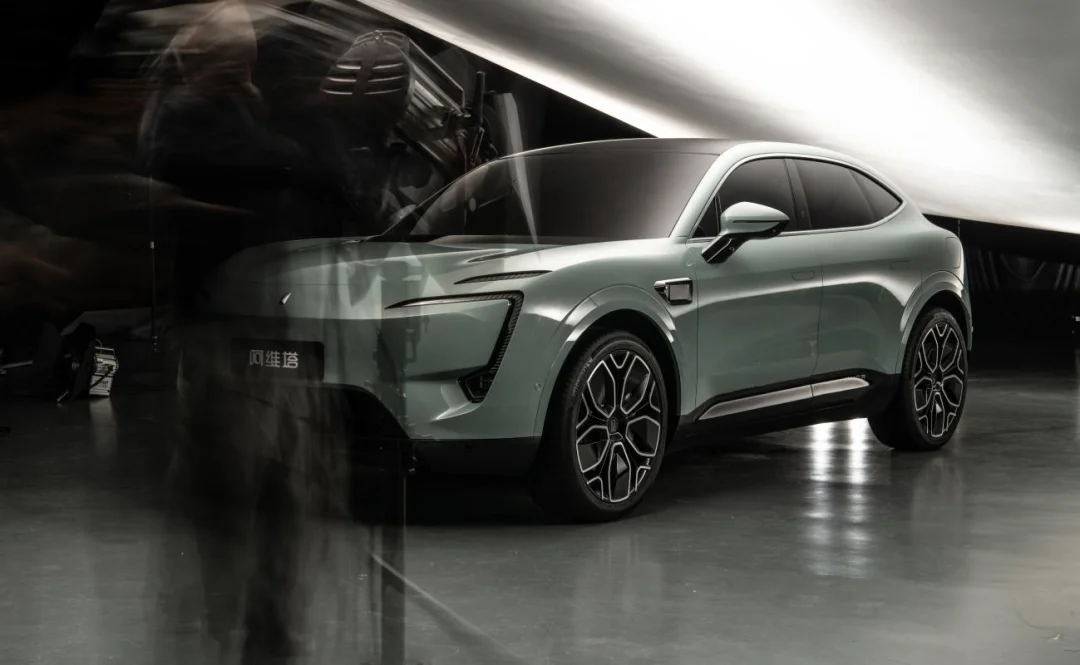
It is evident that the designers pursued a futuristic aesthetic for this model. The styling offers strong visual identity, allowing the vehicle to be instantly recognized as an AVATR on the street.
04Behind AVATR: There Are Also These Players
The power battery pack is undoubtedly the most critical single component in an electric vehicle, making partnerships with battery suppliers highly significant. CATL, which has held the top position in global EV battery installations for four consecutive years, enjoys an undisputed industry standing. In earlier stages, there were even reports of automotive executives waiting overnight at CATL’s facilities just to secure battery supply commitments.
As the automaker with CATL’s highest shareholding, AVATR holds 23.99% of its equity—second only to Changan’s 39.02%. The remaining shares are held by local government-backed funds in Chongqing and a group of southern-based investment funds.
CATL also secures a seat on AVATR’s board of directors, with three director positions allocated to representatives from CATL, Changan, and AVATR’s employee team.
This underscores CATL’s strategic emphasis on AVATR. Backed by CATL, AVATR gains support for its battery, electric motor, electronic control systems, energy management, and charging network infrastructure—and may even secure first access to CATL’s most advanced battery technologies.
After all, range anxiety has not yet been fully eliminated in the EV market; battery range remains one of the primary factors consumers consider when purchasing an electric vehicle. In this context, AVATR 11’s official advertised range exceeds 700 kilometers.
05Conclusion
On the path toward premiumization of domestic brands, we have seen too many predecessors stumble along the way—including some products with formidable technical capabilities. In the EV market, which is currently driven largely by second-car purchases and trade-ins, buyers are no longer focused solely on basic transportation needs. Coupled with the relatively weak product offerings of traditional luxury brands in the EV segment, this has created a unique phenomenon in China’s automotive industry: it is easier to build a successful premium brand than a mass-market one.
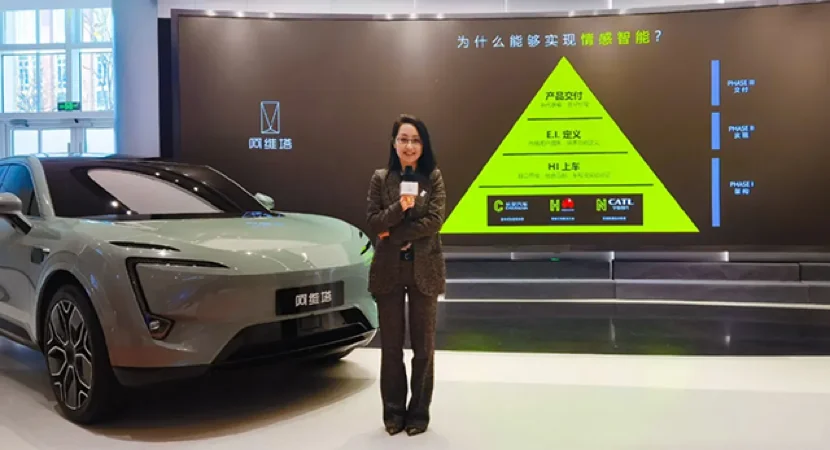
However, under the influence of new-energy startups over recent years, service experience has become an indispensable element of premium branding. Beyond exterior design, performance, and intelligent features, consumers expect automakers to deliver high-quality, full-lifecycle services spanning pre-sales and after-sales, as well as online and offline touchpoints. One of AVATR’s most intriguing potential advantages lies precisely in its service offerings, which remain partially undisclosed at present.
Wang Lin, Chief Marketing Officer at AVATR, oversees the company’s brand, marketing, public relations, and sales channels, with several of these functions directly involving user services.
Prior to joining AVATR, Wang Lin worked at Zhoujijiudianjituan. Earlier in her career, she was Apple Retail Greater China’s first local hire, bringing extensive experience in service and user operations.
At a Huawei HI DAY event in Suzhou, Wang Lin emphasized that end users are the ultimate consumers of every product. In her strategic thinking, the first consideration is always how users will perceive and feel about the offerings.
While "user-centric thinking" has become a buzzword in the new-energy vehicle industry, each company interprets and implements it differently. The way this mindset is applied within Wang Lin’s framework at AVATR could significantly influence the market performance of the AVATR 11.
In the upcoming Q2 2022, the AVATR 11 will see its official product launch. At that time, the true capabilities of the AVATR 11 will be fully exposed. Whether Wang Lin's concept of "thinking what users think" can be implemented remains to be seen.
Written by: Kai Xiang Edited by: Lai Yinhate