


DENZA's Zhao Changjiang Projects 600,000 MPV Sales in 2025
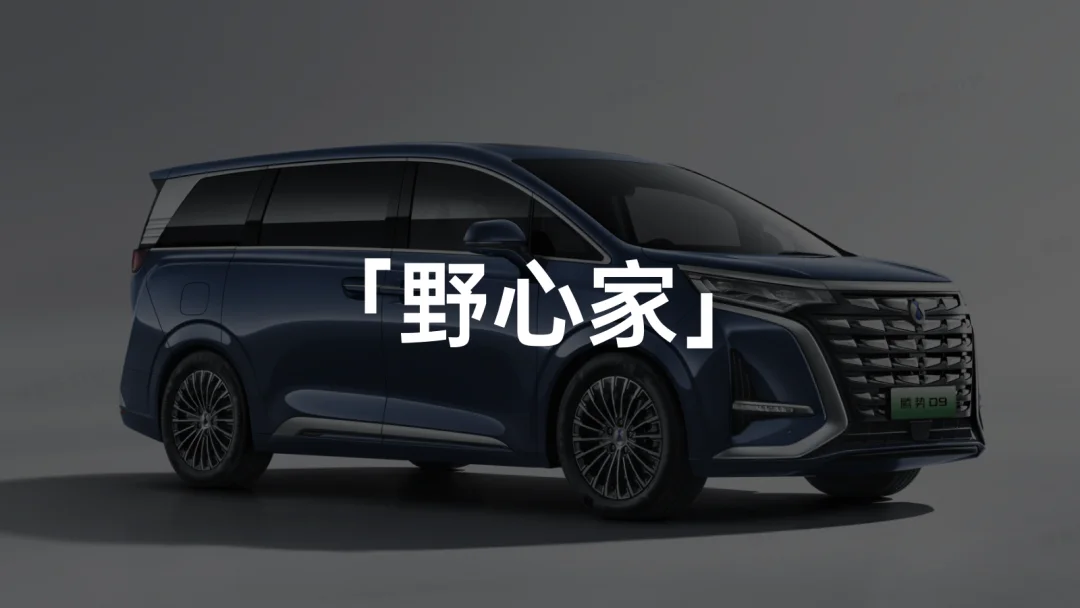
In 2010, BYD and Mercedes-Benz jointly established DENZA. Whether you believe it or not, DENZA was indeed China’s earliest "new energy luxury" brand.
BYD’s revitalization of DENZA can be viewed narrowly as starting with the D9 MPV. Broadly speaking, however, we have seen BYD implement sweeping reforms at DENZA since last year to lay the groundwork for this renewal.
Earlier last year, Zhao Changjiang, formerly General Manager of BYD’s Sales Division, was transferred to DENZA to oversee the brand’s reconstruction and marketing efforts. We suddenly saw a prominent figure emerge on Weibo, actively engaging with users and netizens.
At the end of last year, BYD and Mercedes-Benz reached an equity transfer agreement. BYD increased its stake in DENZA from 50% to 90%, granting it absolute control. This shift allowed BYD to direct group resources to fully nurture the brand, which had been in urgent need of support.
In February this year, DENZA Automobile Sales Service Co., Ltd., 100% held by BYD Auto Industry Co., Ltd., was officially established. With the birth of the D9, BYD has prepared all the gifts.
On June 1, half a month after the DENZA D9 was unveiled, I was invited to participate in a group interview with DENZA executives. The answers provided by Zhao Changjiang, General Manager of DENZA’s Sales Department, revealed not just DENZA’s ambitions, but the broader ambitions of the entire BYD group.
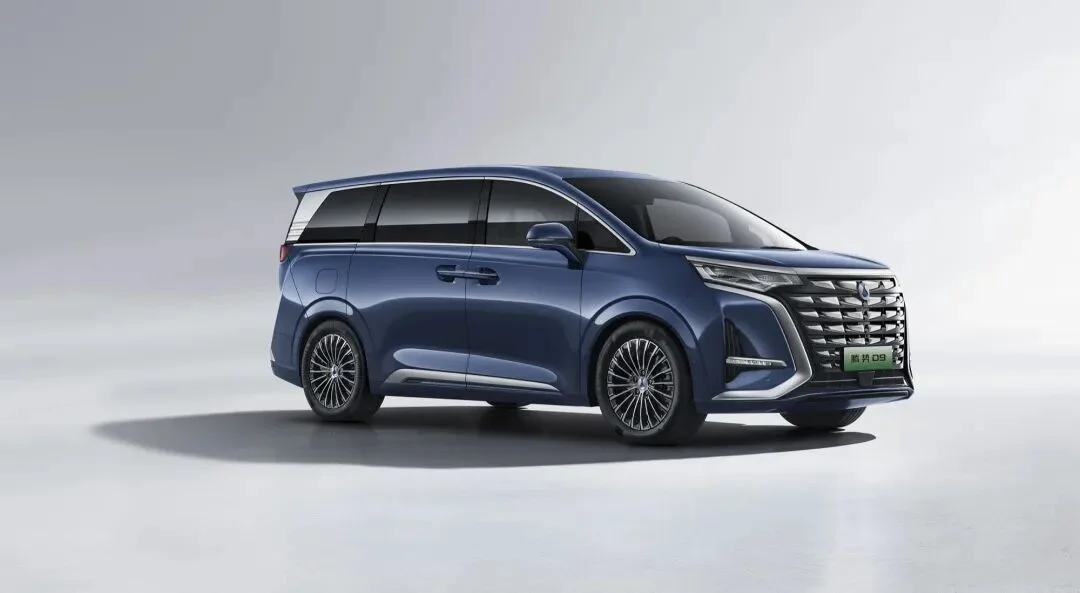
01Who Buys the DENZA D9?
Of the more than 20,000 orders held by DENZA, DM-i models account for the majority at 75%, while EVs make up 25%. Zhao Changjiang believes that the proportion of EV orders will gradually rise to around 30% in subsequent sales. This is because the DM-i version began deliveries in August, whereas the EV version’s deliveries are scheduled for November, which is relatively later.
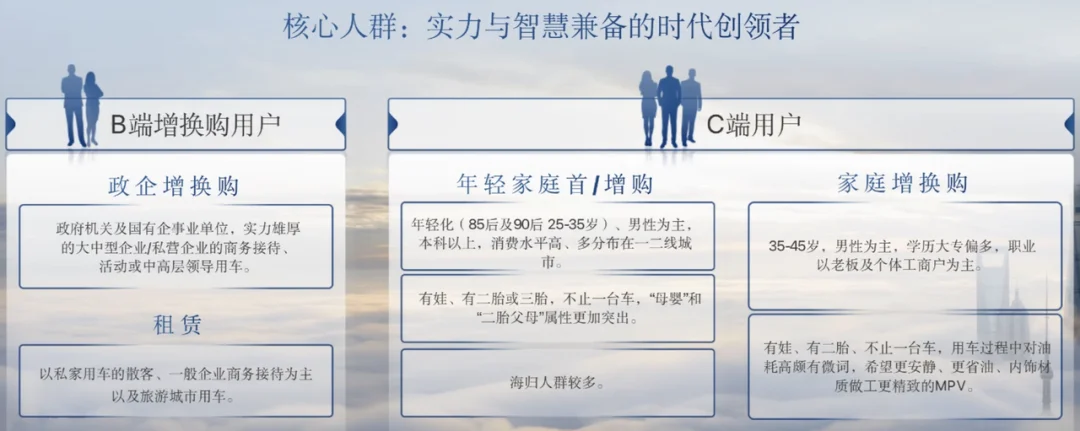
The target audience for the DENZA D9 is clearly segmented into B-end (business) and C-end (consumer) markets.
For the B-end market, since the DENZA mini-program currently only supports private purchases, B-end user demand has been suppressed. Once this restriction is lifted, a surge in demand is expected.
Among these 20,000 orders, 20–30% of users switched from SUVs to the D9, while another 30% are existing BYD owners upgrading their vehicles. Additionally, approximately 30% are trade-in customers converting from BBA brands.
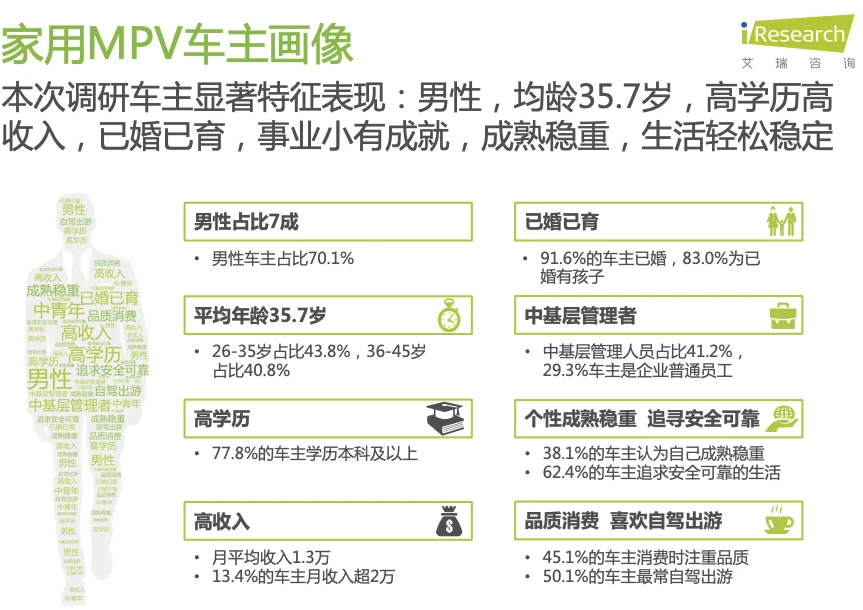
We are focusing primarily on the consumer (C-end) market. This is based on an iResearch report from April this year, which clearly outlines the profile of Chinese household MPV owners. This profile aligns almost perfectly with that of DENZA D9 family users: aged 25–45, middle-income, and typically requiring vehicles for two- or three-child families or multi-generational trips.
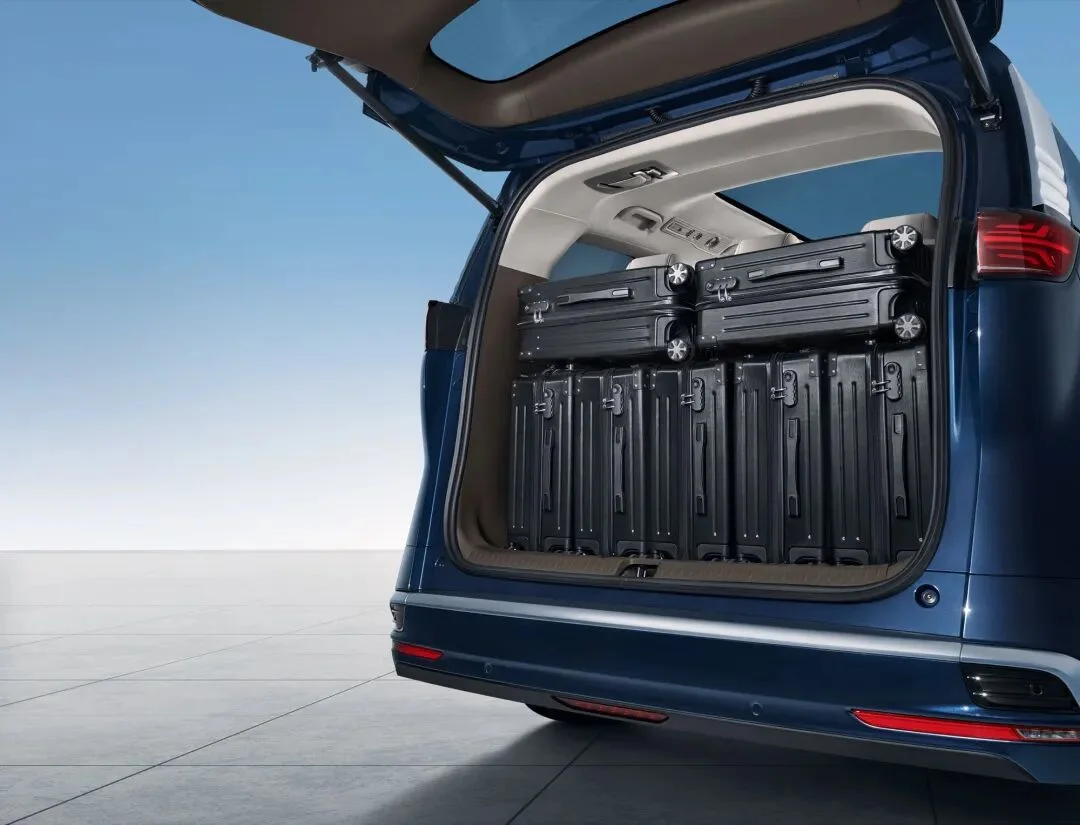
Zhao Changjiang believes the consumer market will see explosive growth in the future. The target vehicle combination for these users is a large seven-seat MPV paired with an SUV or sedan. During long-distance family trips, SUVs struggle to simultaneously ensure ground clearance and provide adequate space comfort for all passengers, particularly in the third row and the trunk.
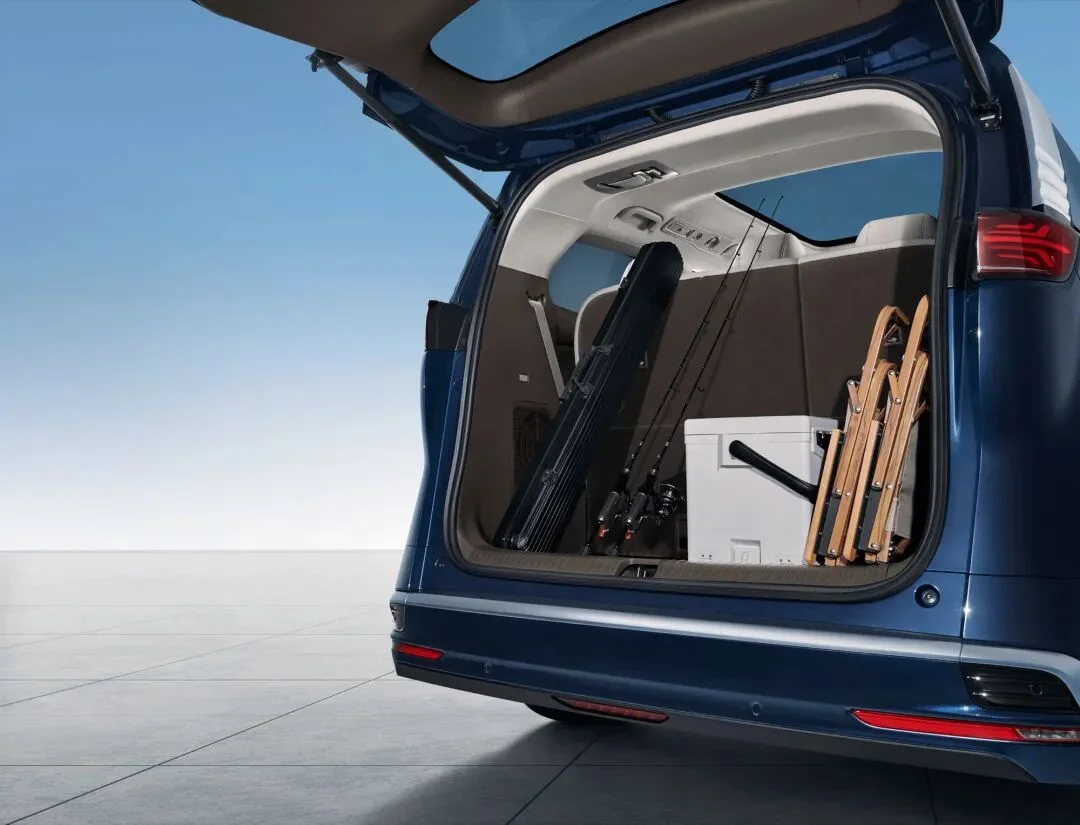
Thus, large six- or seven-seat MPVs become the obvious choice. Excluding the second-row independent aviation seats, the DENZA D9’s third-row space was designed to match the standard second-row dimensions of typical cars. This ultimately allows the trunk to accommodate seven 20-inch carry-on suitcases even when fully occupied by seven adult passengers.
02Why an MPV?
I was very curious why DENZA chose an MPV as its first model following the brand’s renewal, rather than a large sedan or SUV. The product positioning and target audience segmentation discussed above answer part of this question, but not all of it.
China’s auto market experienced its first negative growth in 2018, officially entering a stock market phase. In contrast, the high-end MPV segment—particularly high-end new energy MPVs—has emerged as a blue ocean market for domestic brands seeking to move upmarket.
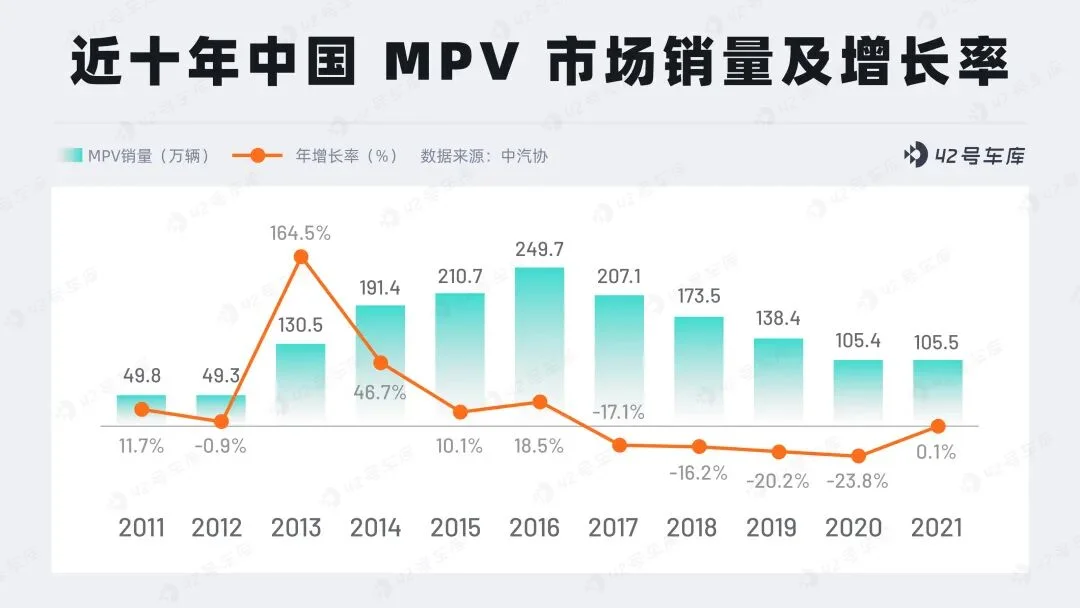
Pulling up MPV sales data reveals a peculiar trend: this is not a fluctuating upward curve. Instead, after China’s domestic MPV market reached its peak in 2016, it experienced four consecutive years of negative growth and continued to decline. Only in the last two years has this downward momentum begun to stabilize.
From 2011 to 2016, rapid development in China’s small and medium-sized business sector drove initial explosive growth in the domestic MPV market, fueled by the vehicle category’s dual utility for family and commercial use. Representative models included Wulinghongguang and Baojun 730. It was not until 2021 that domestic MPV sales returned to positive growth, signaling the end of the market’s adjustment period.
Looking solely at last year’s MPV market, retail data from Chenglianhui shows that sales of MPVs priced above RMB 200,000 reached 391,029 units, a year-on-year increase of 23.8%. This significantly outpaced the overall passenger vehicle market growth of 6.5%, indicating very optimistic demand growth in the mid-to-high-end MPV segment. DENZA forecasts that the MPV market priced above RMB 300,000 will reach a scale of 450,000 units this year.
Looking at the relatively mature U.S. market as a benchmark, MPV sales account for 1.45% of total auto sales. Although MPVs currently make up 5% of China’s total auto sales, this figure includes a large volume of entry-level models like Wulinghongguang. If we apply the 1.45% ratio to China’s mid-to-high-end MPV sales, the market size would be approximately RMB 120 billion.
Zhao Changjiang believes that the high-end MPV market has long been dominated by Japanese joint-venture brands, resulting in low market volatility. The DENZA D9 aims to disrupt this status quo.
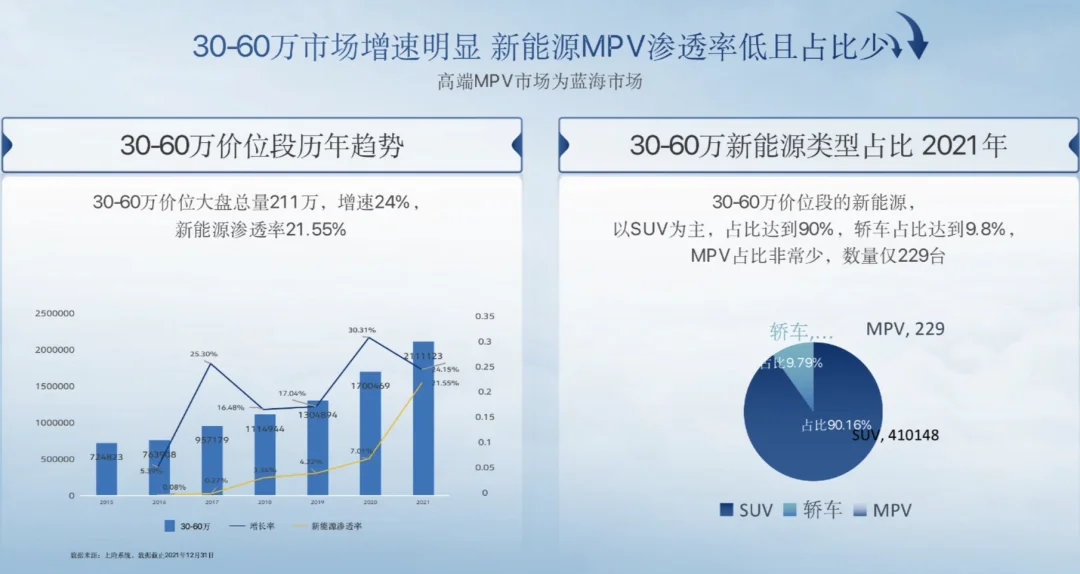
This chart clearly illustrates that the passenger vehicle market in the RMB 300,000–600,000 price range is expanding rapidly. Within the new energy vehicle (NEV) segment at this price point, SUVs dominate with 90% of the share, while sedans capture 9%. In contrast, NEV MPVs (plug-in hybrid + pure electric) have sold fewer than 300 units, remaining in an embryonic stage. As electrification becomes more widespread and NEV penetration deepens, the future incremental potential of this market is substantial.
From the DENZA D9 pre-sale launch on May 17 to May 23, more than 20,000 orders had been placed, demonstrating significant market enthusiasm. During a communication meeting, I specifically asked Zhao Changjiang for his sales forecast for the DENZA D9: "By the end of this year, the monthly delivery volume of the DENZA D9 will exceed 10,000 units, with cumulative deliveries reaching 40,000. According to Zhao Changjiang's prediction, China's MPV market will reach approximately 1 million units in 2024 and 1.5 million units in 2025. DENZA is expected to capture a 40% market share, resulting in sales of 600,000 units."
In four words: immense ambition.
03What supports this ambition?
With clear product positioning and target user groups defined, DENZA has set ambitious sales targets. This is backed by substantial support from BYD, which has allocated group resources to the brand.
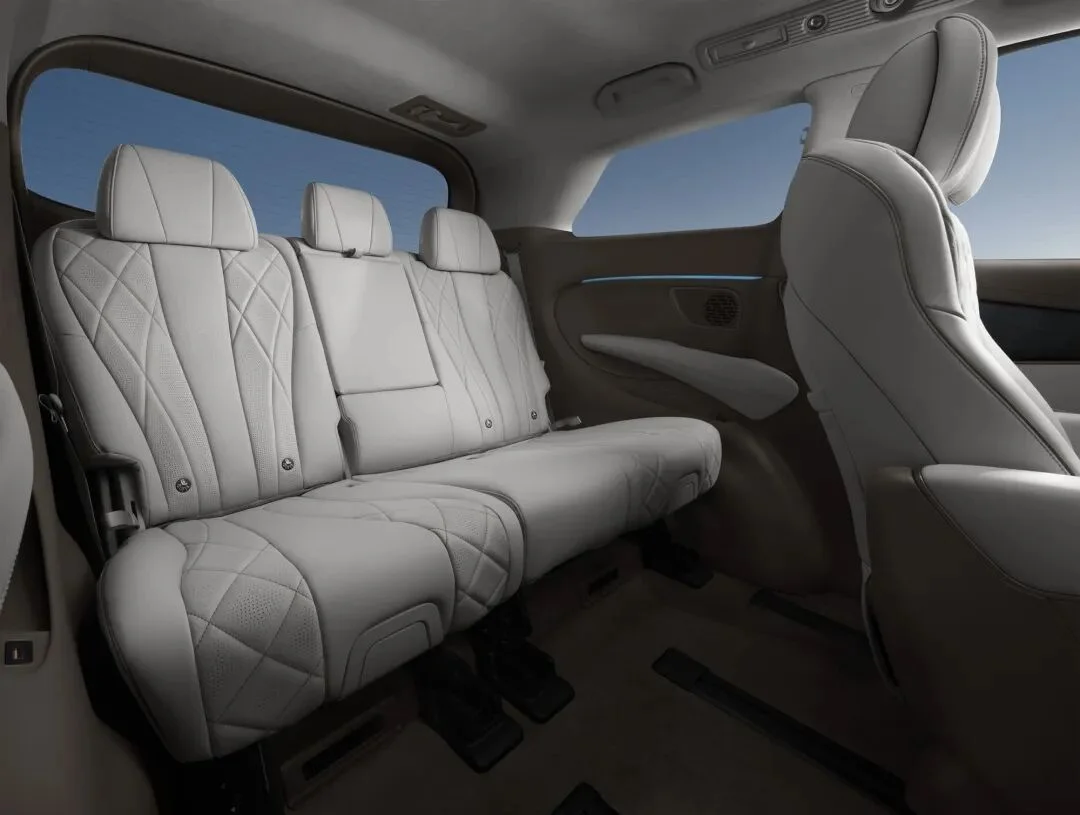
How can luxury be highlighted to convince consumers of its premium status? Beyond lavish features, craftsmanship—a difficult-to-quantify factor—is key. The production line for the DENZA D9 is located at BYD's Changshadiergongchang, and this line is currently exclusive to DENZA, adhering to Mercedes-Benz standards for craftsmanship and quality. This represents one of the primary contributions of Mercedes-Benz to the DENZA brand following the reduction of its equity stake.
During the meeting, Zhao Changjiang emphasized three independent attributes of DENZA: an independent brand, an independent team, and independent products. Brand independence implies that physical stores must be self-built. The density and coverage of these stores will directly impact DENZA's sales volumes.
Regarding channels, DENZA has chosen a direct-operated model. As Zhao Changjiang described it, this approach involved "investing heavily," with RMB 1 billion allocated to build and layout the channel network. In the current year, DENZA plans to open 200 stores covering 69 cities nationwide. Subsequently, coverage will expand to 138 cities, with most provinces achieving a radius of within 200 km, and 97% of the market covered within a 100 km radius.
These offline physical stores are divided into:
DENZA Center – A comprehensive store offering sales, experience, charging, and other services. It is the most fully equipped store type, located in city centers. The first DENZA Center opened at Guangming International Auto City in Shenzhen.
DENZA Flagship Store – Focused on sales and experience, it provides dedicated test-drive and energy-refueling services. These stores are typically situated near users' leisure and shopping venues.
DENZA Home – An experience space co-created and shared with users, fostering new connections among users themselves and between users and the brand.
DENZA MINI Center – Primarily handles paint and sheet-metal repair services.
Similarly, DENZA has comprehensively laid out its online channels, including its official website, mini-programs, and the DENZA App, which form a strong complement to its offline stores.
In terms of marketing strategy, DENZA’s core principle is user satisfaction. The company does not spend money purchasing lead traffic, instead relying on media coverage to build a positive reputation through word-of-mouth.
04Questions Regarding the D9 Product
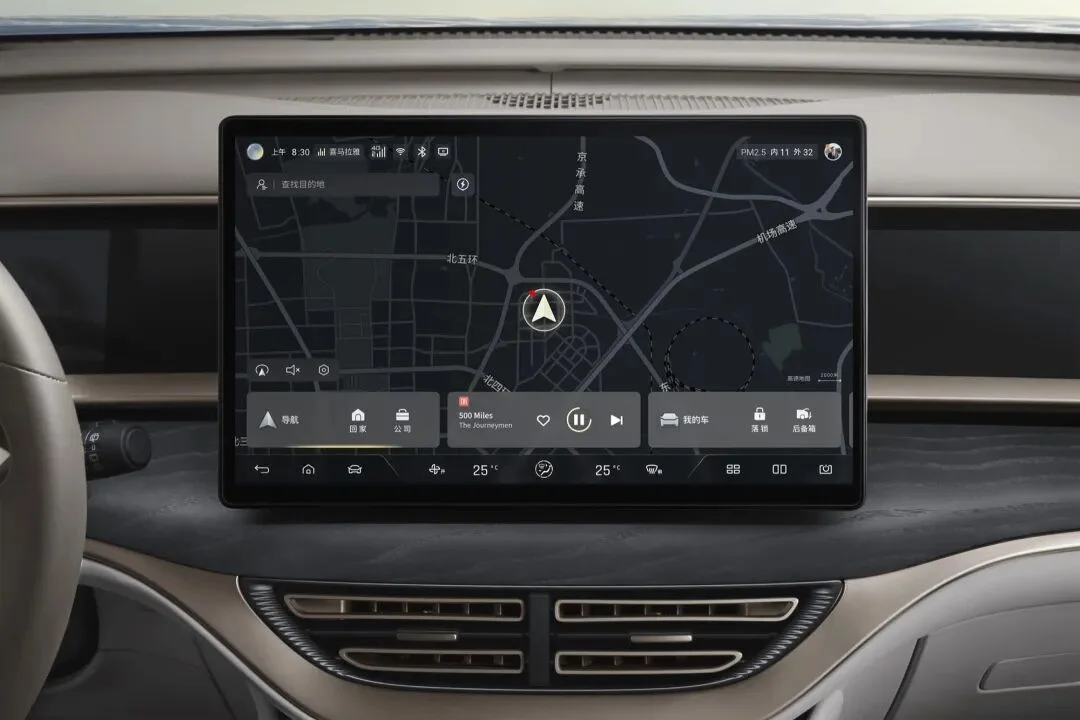
The non-rotating infotainment screen
Initially, BYD’s cabin featured a rotatable Android-based infotainment screen as a key promotional point. With DENZA, however, the approach changed: the screen no longer rotates. I sought clarification from DENZA regarding the reasoning behind this decision. On one hand, the D9 features multiple screens with interactive linkage capabilities; rotation would hinder this synergy, so the screens were made non-rotating to enhance visual and functional unity. On the other hand, eliminating rotation provides greater design flexibility.
The Choice Between 7325 and 8155
The D9 features a multitude of screens, totaling seven when including the headrest displays, armrest screen, and HUD. These screens boast high resolution, and the software supports multi-screen continuity and real-time dynamic wallpapers, all of which place significant demands on the infotainment chip's computational power. The DENZA D9 is equipped with the Gaotong 7325 (778G) infotainment chip. In contrast, it does not use the Gaotong flagship automotive chip 8155, which is quite confusing.
The rationale for adopting the 7325 is multifaceted. First, it addresses chip supply concerns; the 7325 offers more stable delivery, ensuring vehicle handover timelines. Additionally, DENZA states that the 8155 is not significantly more advanced. The two products belong to different architectures, and the switch aims to provide users with 5G connectivity and more comprehensive service support. The 7325 provides better image recognition capabilities and broader compatibility with the Android ecosystem.
To power the rear-seat screens in higher-trim models, DENZA added two chips, each dedicated to supporting one of the two rear screens.
05Final Thoughts
The original intention behind Wang Chuanfu’s entry into vehicle manufacturing was new energy. This goal was achieved in March this year, marked by the official discontinuation of internal combustion engine (ICE) vehicles. I know many people criticize this 'discontinuation of ICE vehicles' as not being for pure ICE models. But let's ask: even if it is not a 100% cessation of ICE production, who else has managed to do so? BYD claims to be the first among traditional automakers, and this claim is well-deserved.
BYD has completed a brand upgrade by shedding its ICE lineup, with its current product range directly competing against joint-venture ICE vehicles. DENZA serves as BYD’s extension further upmarket, representing the pinnacle of BYD’s ambition. Through the D9, this extension has penetrated the luxury MPV segment, though DENZA’s ultimate target is BBA.
I have previously mentioned that BYD’s weakness lies in intelligence, encompassing both smart cockpits and driver assistance systems. Now, DENZA’s cockpit has delivered its answer. Whether it is the new UI design or the 8-million-pixel pop-up camera, these features show aspects of DENZA that are distinctly un-'BYD'. As for surprises in driver assistance, they are actually hidden within DENZA’s two SUV models launched this year.
Here is a slight spoiler:
A 5-seat EV version, featuring C-segment space but B-segment dimensions, focusing on sportiness and technology;
Another 'world-class' SUV, a mid-to-large 6-seat model equipped with DM-i technology. LiDAR and more advanced driver assistance systems will be applied, with the primary target being the BBA market.
Written by: Liu Guangding Edited by: Liu San