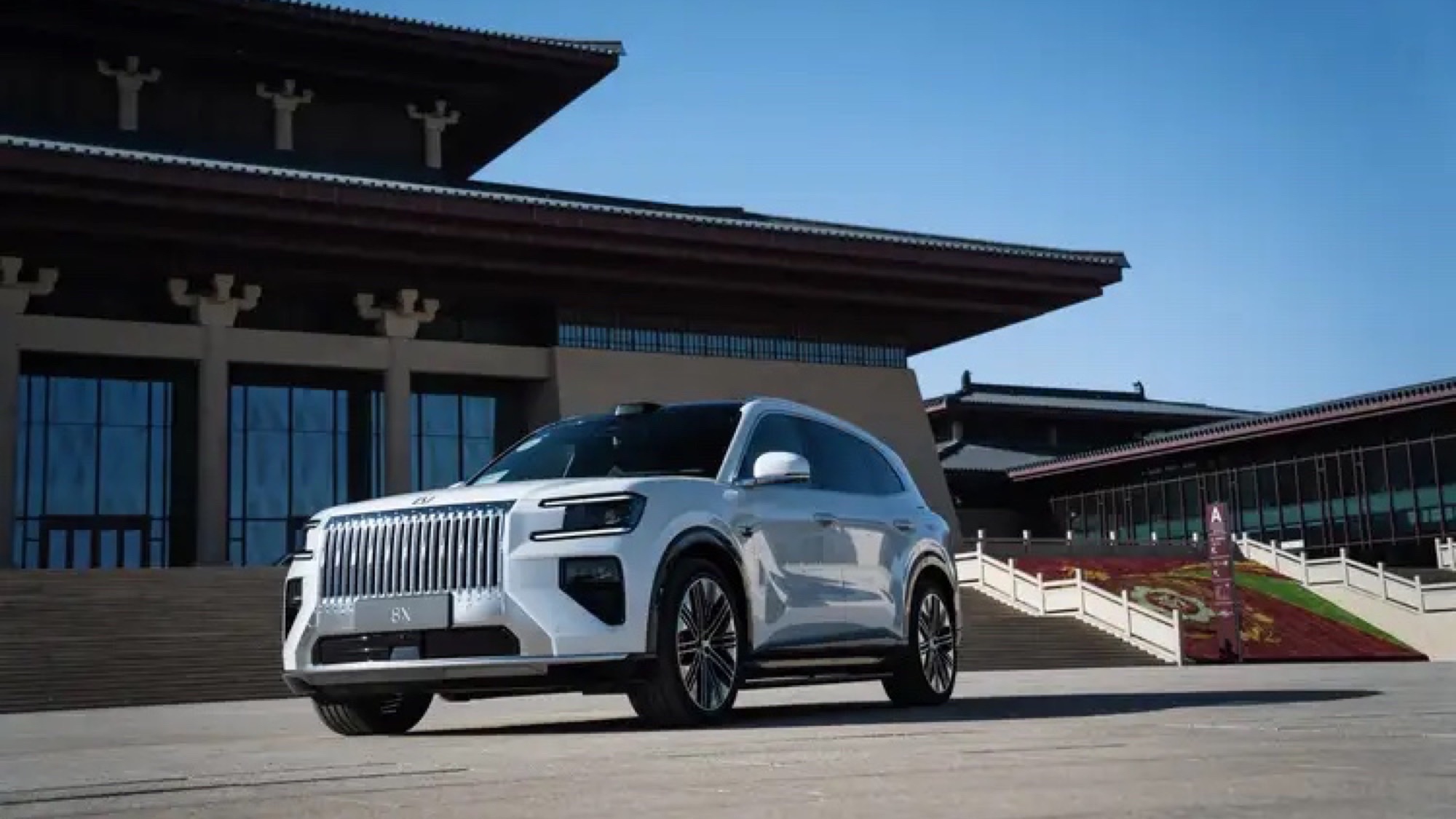
As the “leading independent” in the fuel vehicle era, Geely has delivered its best performance report since transitioning to new energy.
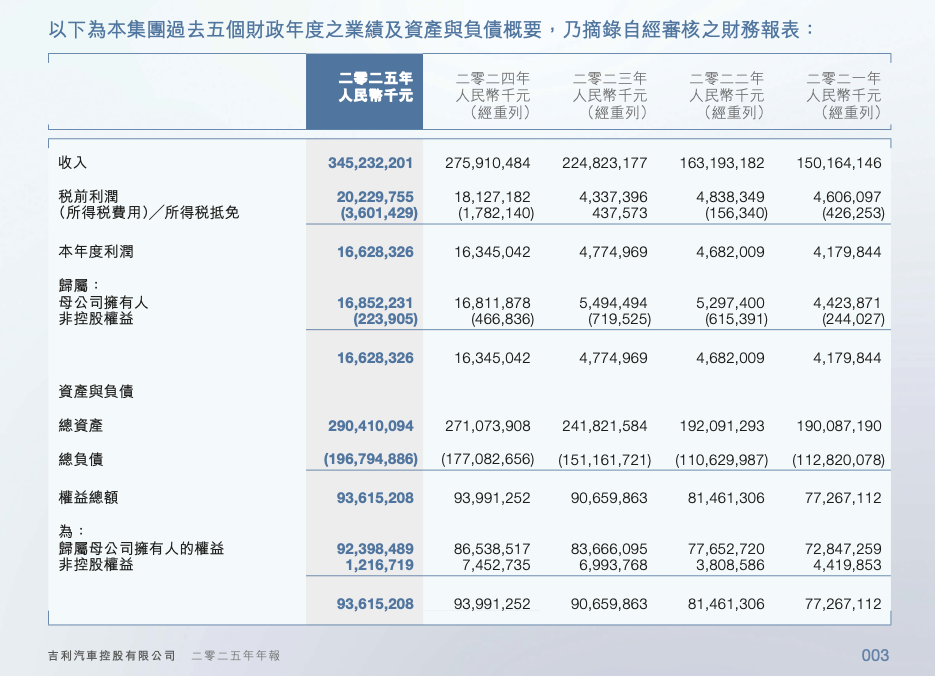
On April 29, Geely released a mid-day announcement disclosing its financial report for the first quarter of 2026. The report shows that in Q1 2026, Geely achieved revenue and profit growth, with quarterly revenue reaching a record high of 83.8 billion yuan, up 15% year-on-year. After excluding one-time factors such as exchange rates and non-financial asset impairments, core net profit attributable to the parent company for the quarter was 4.56 billion yuan, up 31% year-on-year.
Currently, the competition in the new energy vehicle market is intensifying, coupled with high investments due to technological changes in vehicle architecture, chassis, power, chips, and smart driving. Domestic car companies are generally trapped in the dilemma of “increased quantity without increased income, increased revenue without increased profit.” On the same day as Geely, SERES released its financial report, and even with Huawei’s strong support, it could not break the curse. The net profit after exceptionals for Q1 was only 103 million yuan, plunging 74% year-on-year.
Other automakers that disclosed their performance earlier also faced challenges. Once hailed alongside Geely as one of the “three strong independents,” CCAG and Great Wall saw declines across all three core indicators: sales scale, revenue, and net profit after exceptionals. While Great Wall achieved a 13% revenue growth, the net profit after exceptionals fell 67% year-on-year to 480 million yuan, far below market expectations, leading many institutions such as CICC to lower their profit forecasts or target prices.
According to the latest data from the National Bureau of Statistics, in Q1 2026, the overall sales profit margin of the automotive industry was 3.2%, falling to a historical low. Even the industry leader BYD is beginning to feel the pressure. BYD’s total revenue for Q1 2026 was reported at 150.2 billion yuan, above Bloomberg’s consensus expectation of 140.4 billion yuan but down 12% from the same period last year. The net profit after exceptionals was 4.15 billion yuan, down 49% year-on-year.
In contrast, Geely’s performance stands out. Notably, this is the first quarterly report since ZEEKR delisted from the US stock market and completed integration with Geely. Under the strategic guidance of “One Geely,” multiple brands under the Geely system jointly drove a total sales volume of 709,000 vehicles this quarter, surpassing BYD and reclaiming the top spot as China’s leading independent brand in sales after a four-year hiatus.
“The new performance high in the first quarter is just the beginning,” said Guibin Xu, CEO and Executive Director of Geely, at the performance briefing. Geely has achieved complete coverage of various energy forms and market segments through integration. Geely is now entering a new cycle of high-quality development, not only domestically but also internationally, where it will take the lead in breaking through and transforming the global image of Chinese automobiles.
One Geely: A Transformation Model for Traditional Automotive Giants
Who would have thought that just over a year ago, Geely, which now claims to represent Chinese cars internationally, was still grappling with transformation and globalization?
Rewind to September 1, 2024, all Geely Group’s management, led by Chairman Li Shufu, returned to Taizhou, where Geely’s dream began, to revisit its entrepreneurial journey. On September 20, Li Shufu released the “Taizhou Declaration” to the public, initiating Geely’s new strategic transformation, announcing a shift from strategic expansion to strategic focus and integration, shutting down and merging certain businesses, and emphasizing the commitment to prudent operations and avoiding blind expansion.This marks another crucial turning point in Geely’s automotive history.
As a private car manufacturer that originated in Taizhou, Geely’s path to making cars can be divided into three phases. The first decade after entering the automotive industry in 1997 can be seen as a startup phase focused on exploring car manufacturing. In 2006, following its successful listing on the Hong Kong Stock Exchange, Geely embarked on global capital expansion, particularly mastering car manufacturing techniques through the acquisition of Volvo in 2010, eventually surpassing Changan to become the top-selling domestic brand in 2017.
However, after securing the position as the leading independent automaker and joining the million-sales club, Geely began to encounter a growth bottleneck. In 2018, Geely’s sales hit a record 1.5 million vehicles, but the growth rate declined by 45.7 percentage points. In subsequent years, overall sales gradually receded to around 1.3 million vehicles, and Geely failed to meet its sales targets for five consecutive years starting from 2018.
A significant backdrop to this period is the industry’s transition phase. From 2018 to 2020, the domestic car market experienced negative growth for three consecutive years and only stabilized in 2021. Consequently, competition among automakers intensified, with tactics like price-for-volume exchanges becoming commonplace, leading to Geely’s per-unit profit dropping from 8,445 yuan in 2018 to 3,275 yuan in 2021.
In fact, this period served as a golden window for the rise of new energy vehicles. From 2018 to 2020, the first wave of new car-making forces like NIO, Xpeng, and Li Auto went public in the US, followed by emerging players in the second tier, such as LEAPMOTOR and HOZON. Traditional car companies also explored new car-making models with the introduction of brands like AION, VOYAH, and Avatr, while BYD successfully evolved from the e-platform 1.0 to 3.0.
During the same period, the penetration rate of the new energy market rapidly increased. According to statistics from the China Association of Automobile Manufacturers, in 2020, the domestic new energy market penetration rate reached 5.4%.
Geely, which had initiated a transformation plan as early as 2015, missed out on this wave of new energy vehicle growth. In 2018, Geely’s new energy vehicle sales were 68,500, with a penetration rate of 4.6%. In 2020, Geely’s new energy vehicle sales did not grow but instead fell to 68,000, corresponding to a penetration rate of 5.2%, far below the original “Blue Geely” plan target of a 90% penetration rate by 2020.
Faced with this gap, in 2021, Geely proposed the “Intelligent Geely” plan, deciding to invest 150 billion over five years to launch at least 25 new energy vehicle models. In the same year, Geely also focused on the ZEEKR and Jidu car-manufacturing routes and announced accelerated efforts for Volvo’s electrification transformation. However, the high-end dreams of Geometry could not be realized, resulting in a shift in positioning, yet the outcomes were minimal, with Geely’s new energy vehicle sales further declining to 61,000 units that year.Afterward, Geely continued to intensify its talent recruitment efforts and accelerated its diverse layout in new energy. Technologically, Geely has fully invested in various routes including pure electric, hybrid, battery swap, and methanol. In terms of brands, it has developed several independent subsets such as Geometry, Lynk & Co, Geely, ZEEKR, Maple, Ruilan, VOLVO, Smart, and LOTUS. In 2023, Geely also incubated the micro electric brand “Panda” and the mid to high-end brand “Galaxy”.
This multi-line advancement gradually dispersed Geely’s transformation focus, ultimately resulting in only a few brands such as ZEEKR, Lynk & Co, and Galaxy truly succeeding. Among these, none managed to be a market leader in their respective segments, and overlaps in positioning even led to internal friction. For example, Lynk & Co and ZEEKR, both targeting the market above 200,000 RMB, simultaneously offered pure electric and hybrid models.
Meanwhile, Geely’s multi-brand and all-ecology industry layout entailed massive resource investments. For instance, taking Geely’s new brands created from scratch, within just three years from 2021 to 2023, ZEEKR’s cumulative losses exceeded 13 billion RMB. In response, the Geely system has been seeking capital maneuvering through business spinoffs and listings. Still, after brands like ZEEKR, Polestar, ECARX, and LOTUS went public independently, most struggled in the market.
Furthermore, after brand spinoffs, subsidiaries like ZEEKR faced the necessity of independent accounting as listed companies, making full synergy within the Geely system challenging. This redundancy in R&D and distribution led to significant waste, and when facing market risks, sub-brands often appeared weakened. For instance, ZEEKR’s original plan to expand overseas sales in 2024 had to slow down due to EU tariff policies.
Until the strategic refocusing in 2024, Geely Auto’s new energy transformation did not achieve a substantial breakthrough.
In 2023, Geely Auto’s total sales reached 1.687 million units, an 18% year-on-year increase, whereas BYD’s sales exceeded 3 million units with a 62% year-on-year growth. In the face of underperforming compared to leading automakers, Geely’s new energy vehicle sales were only 487,000 units, with the new energy penetration rate lagging the market by 7 percentage points; overseas sales figures and growth also paled compared to competitors like Chery, SAIC, and Great Wall.
More critically, it’s universally acknowledged within the industry that the automotive sector’s final showdown is in 2025, meaning the time window for Geely to maneuver is closing.
In September 2024, after Li Shufu released the Taizhou Declaration, Geely’s various business units quickly consolidated, aiming to reshape “One Geely.”
In terms of brands, Geely is aligning with Volkswagen by restructuring: starting with the merger of ZEEKR and Lynk & Co, followed by Geometry and Yi Zhen being integrated into Galaxy. Last August, ZEEKR’s privatization was initiated for integration with Geely Auto. Presently, in the new energy market, Geely’s brand hierarchy is as follows: Galaxy focuses on the mainstream consumer market below 200,000 RMB to expand scale; Lynk & Co and ZEEKR target the high-end and luxury markets, enhancing brand premium.With brand consolidation, Geely also implemented a series of personnel adjustments. The integrated Geely Auto continues to be overseen by the original Geely Auto CEO, Gan Jiayue, with two business units under its wing: Galaxy and ZEEKR. The former is directly led by Gan Jiayue, while the latter is managed by the former ZEEKR CEO, An Conghui, who is also serving as Group CEO. The former Group CEO, Li Donghui, has been promoted to Group Vice Chairman, responsible for the daily management of the board and investment and financing.
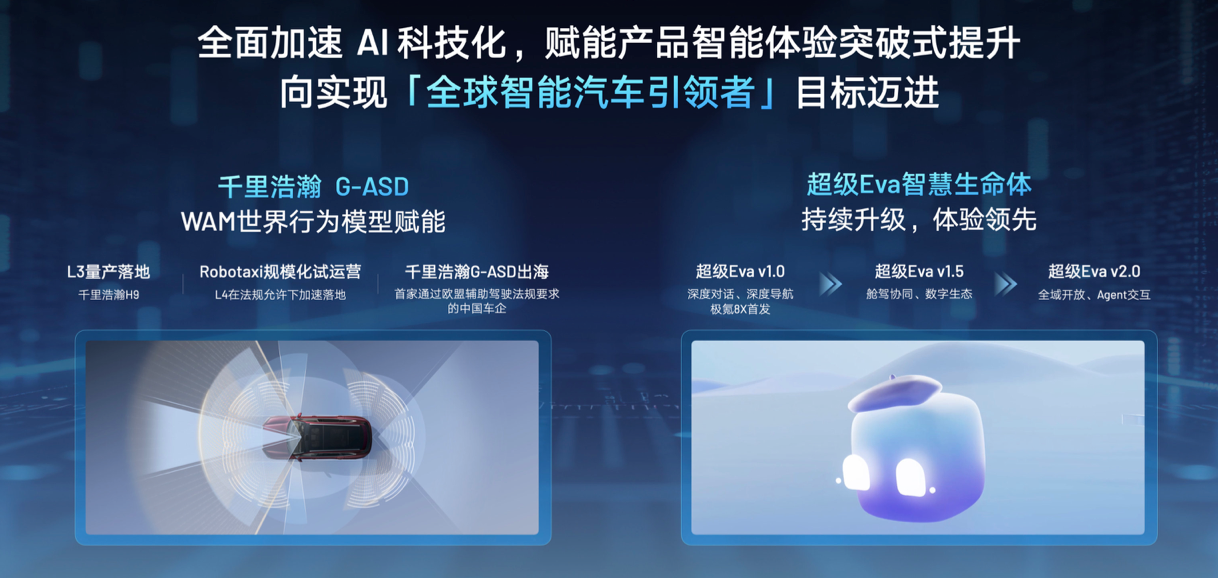
Business-wise, Geely has undertaken a systemic consolidation of seven core areas: vehicle mechanical architecture, electronic and electrical architecture, intelligent driving, interiors, electric drive systems, power batteries, and super hybrids, linking the product technology foundation of each brand. To rapidly enhance intelligence levels, Geely has brought in external forces, such as Yin Qi, to establish the joint venture company Qianli Technology, and launched five intelligent driving solutions last March to compete against BYD’s Dazhentian Eye.
This series of integrations gradually wound down by December last year when ZEEKR officially delisted from the U.S. stock market. In 2025, Geely, amid deep integration, began to show its edge, with its divisions—Geely, Volvo, Polestar, Proton, and Farizon—mostly achieving growth amid fierce market competition. The total annual sales reached 4.116 million vehicles, a year-on-year increase of 22%, significantly outperforming the market, with Geely Auto’s growth rate reaching 39%.
The penetration rate of new energy also reached a new level. In 2025, Geely’s compact vehicle, Xingyuan, which targets BYD’s Dolphin and Yuan UP, achieved sales of 470,000 units, topping the domestic all-category vehicle sales chart. Driven by Xingyuan and other hit models, Geely’s new energy vehicle sales grew by 90% year-on-year, reaching 1.688 million units, with the corresponding sales share at 56%, a year-on-year increase of over 15 percentage points.
At the beginning of this year, as domestic automotive growth gradually peaked, Geely further announced a plan for an average annual growth of 10% over the next five years and declared its aim to enter the top five in global sales by 2030.
Geely Group CEO An Conghui analyzed that new energy vehicles and international markets will be Geely’s two main growth points. By 2030, Geely’s new energy penetration rate should reach 75%, and overseas sales should account for one-third. Geely Auto CEO Gan Jiayue also clarified short-term objectives in the subsequent annual report communication: by 2026, Geely’s sales target is 3.45 million units, aiming to surpass BYD and reclaim the top domestic sales position.
New Geely’s Two Keywords: High-end and Internationalization
As the most successful transformation model among traditional car companies, Geely is gradually fulfilling its performance targets.
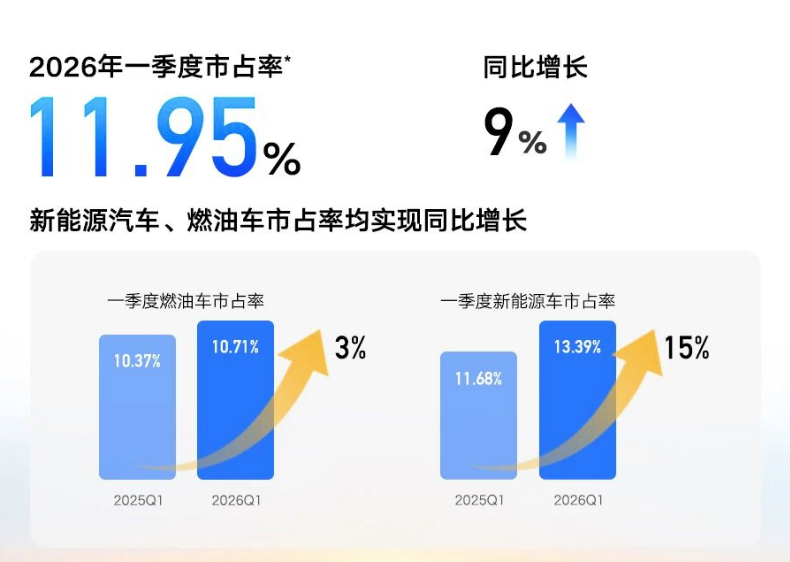
In Q1 2026, Geely surpassed BYD to become the independent brand sales champion with a total sales volume of 709,000 units across all lines. Its divisions, Geely, Galaxy, Lynk & Co, and ZEEKR, contributed sales of 312,000, 239,000, 82,000, and 77,000 units, respectively. Among them, Lynk & Co’s 10 EM-P took the crown in China’s B-segment hybrid market, while Galaxy’s Xingyuan, Galaxy M9, and Xingyao 8 models respectively won sales championships in their respective segments.Driven by the explosion of major products, in Q1 2026, Geely’s new energy vehicle sales reached 369,000 units, marking a 9% year-on-year growth. At the same time, due to factors like the phasing out of purchase tax policies and seasonal influences, domestic new energy vehicle sales decreased by 23% year-on-year to 1.802 million units. Calculating from this, Geely’s market share in the entire new energy segment has reached 20.5%, ranking second among independent brands, only behind BYD.
The automotive industry is one of extreme scale. In Q1 2026, against the backdrop of record-breaking scale, Geely’s revenue also hit a record high for the same period, reaching 83.8 billion yuan. After excluding component and technology licensing revenues, the average price per vehicle rose to 112,000 yuan, approximately 20,000 yuan more year-on-year. The overall gross profit margin also increased to 17.5%; during the same period, the automotive gross profit margins for the giants Tesla and BYD stood at 19.2% and 16.8%, respectively.
“We do not rely on price wars to compete in the market but build core competitiveness through brand, technology synergy, product quality, and service,” said Guo Shengyue at the performance meeting. Geely’s various brands integrate by sharing underlying technology, production capacity, and channels, which can significantly reduce manufacturing and operating costs. Many brands are focusing on external expansion, enhancing overall brand effect, and showing signs of high-end and international growth.
According to the management, under the new integrated architecture, Geely’s average vehicle development cycle and comprehensive costs can be reduced by over 30%.
“The Q1 gross profit margin performance was outstanding,” noted Dai Yong, CFO of Geely Automobile. He indicated that the pace of cost reduction due to integration was somewhat low last year, and Geely’s potential for gross profit was yet to be realized. With integration nearly complete at an 80% cost reduction rate this Q1, future gross profit margin space will be further opened. However, he also stressed that recent price increases in raw materials like upstream lithium carbonate would exert some pressure, expected to have a negative impact of about 2,000 yuan.
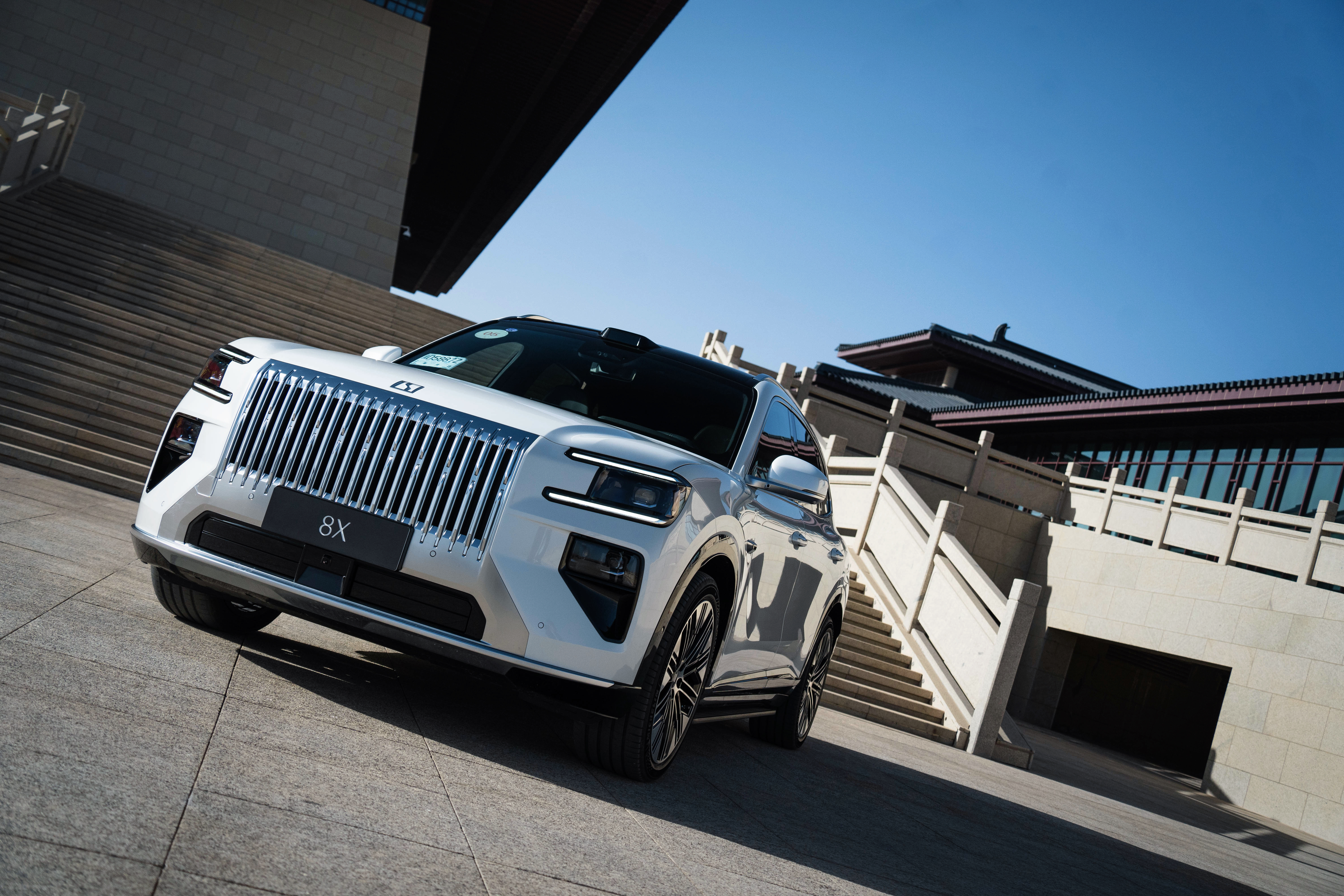
Regarding high-end market expansion, ZEEKR is the main driver behind the increase in Geely’s average price per vehicle. The management disclosed that in Q1 2026, ZEEKR’s average vehicle price had reached 295,000 yuan, compared to 281,000 yuan the previous year. Specifically, ZEEKR’s flagship model, the 9X, averaged a transaction price of 530,000 yuan. This model has consistently delivered over 10,000 units monthly for three consecutive months, while the newly launched 8X has an average selling price exceeding 400,000 yuan, with orders surpassing 10,000 within less than half an hour of launch.
Gan Jiayue revealed that at Geely’s recently held overseas dealers conference, models like the ZEEKR 8X and 9X garnered significant attention among over 1,400 dealers.
From 2024 onwards, Geely is also vigorously advancing the export of new energy vehicles, although the aforementioned two models have not yet been formally launched overseas. He stated that both the design and performance in terms of power and driving experience have amazed numerous overseas dealers. Currently, the 8X and 9X are sold at premium prices abroad, reaching as high as 1.1 million yuan. He did not disclose the target pricing for these cars overseas but emphasized that future gross profit margins will be much higher than in the domestic market.“`markdown
In terms of overseas market layout, Geely once gained an early advantage through investment mergers, technology equity acquisitions, and joint ventures. However, during the surge of exports driven by domestic new energy vehicles, it gradually fell behind, with only 184,000 vehicles exported in the first half of 2025. Subsequently, Geely made efforts to catch up by accelerating product internationalization and partnering with Renault, aiming to leverage the latter’s factories and dealer networks in Brazil to achieve a light asset overseas strategy.
Unlike other automakers like BYD, which build factories overseas, Li Shufu believes the global automobile production capacity is generally surplus. He emphasizes Geely should avoid building its own factories abroad and instead share capacity with partners for localized production, such as using Proton’s factory in Southeast Asia and Renault’s in Brazil. Industry analysts believe this model helps Geely expand overseas and catch up with competitors, though operational efficiency and control capability may face challenges.
As of now, Geely’s light asset model has covered more than 100 countries and regions, with over 1,900 global sales and service outlets. Geely uses the UK market, home to brands such as LOTUS, LEVC, and Manganese Bronze Holdings, as a strategic entry point, focusing on building four markets exceeding 150,000 sales in Europe, Eastern Europe, ASEAN, and Latin America, along with a market over 100,000 in Central Asia, aiming for an annual export target of 750,000 vehicles.
In its overseas strategy, Geely has also drawn on the experience of peers like BYD, gradually introducing domestically successful models overseas, such as Geely Xingyu, Starfleet 7 EM-i, Lynk & Co 01, and Lynk & Co 02. Geely Xingyu, marketed overseas as EX2, became popular in markets including Brazil, Indonesia, and Thailand, consistently topping sales charts for pure electric small cars in Indonesia and Thailand for several months.
In Q1 2026, Geely’s total overseas sales surpassed 200,000 vehicles, with a year-on-year growth rate of 126%, and new energy exports growing by 572%.
Overall, despite Geely Automobile’s rapid overseas growth, there remains a significant gap in export scale compared to leading companies like Chery and BYD. Analyst Guisheng Yue points out that this is mainly because Geely’s new energy exports started later and its overseas vehicle lineup is not yet comprehensive. As the vehicle structure optimized for overseas markets and scale continues to grow, Geely is expected to become one of the most strategically balanced and profitable Chinese automotive companies overseas.
The industry generally believes there is about a three-year gap between the Chinese and overseas new energy markets. However, Geely’s management believes the window won’t be that long, estimating only one to two years for alignment. To enhance overseas operational efficiency, Geely has reformed its overseas channels, transitioning from general distribution to subsidiary operations. Next, Geely plans to accelerate the launch of new products abroad, grasping the shrinking golden window period.
According to plans, ZEEKR 9X under Geely is set to debut in the Middle East market by the end of June and further expand to Europe and other regions in September.
Yet, standing at a new starting point for high-end and international expansion, Geely cannot be complacent.
On the one hand, Geely’s domestic surge against BYD was largely driven by popular fuel models like Boyue L and Xingyue L, while the overall fuel vehicle market has entered an irreversible decline. As giants like BYD, CATL, and Tesla continue to intensify efforts in energy replenishment networks, ultra-fast charging technology, and battery products, the irreplaceability of fuel cars shrinks. Whether Geely’s sales advantage can continue remains to be seen.
“`On the other hand, in Q1 this year, Geely’s main competitor BYD is in a transitional period between old and new products, making its strength relatively weaker. However, with the support of heavy-duty technologies like the new generation of Blade Battery and Megawatt Fast Charging, BYD is entering a period of intensive car launches, including the Dynasty series Datang, Dahan, the Ocean series 06, 08, the new Denza D9, Denza Z, and FangChengBao Titanium 7, which will increase the competitive pressure Geely faces.
Additionally, China and overseas are essentially the same market. In key export markets for Chinese car companies such as Thailand, Indonesia, the Middle East, and Europe, Geely is still competing closely with other Chinese car companies like BYD, Chery, and Great Wall. Moreover, the demand for electric vehicles in many of these target markets is already gradually saturating, so Geely, which has made its push relatively late, will inevitably face fiercer competition from fellow Chinese companies to establish a foothold overseas.
Whether the restructured Geely can overcome numerous challenges in the car industry’s extreme challenges and reach the global TOP 5 can only be answered by time.
This article is a translation by AI of a Chinese report from 42HOW. If you have any questions about it, please email bd@42how.com.