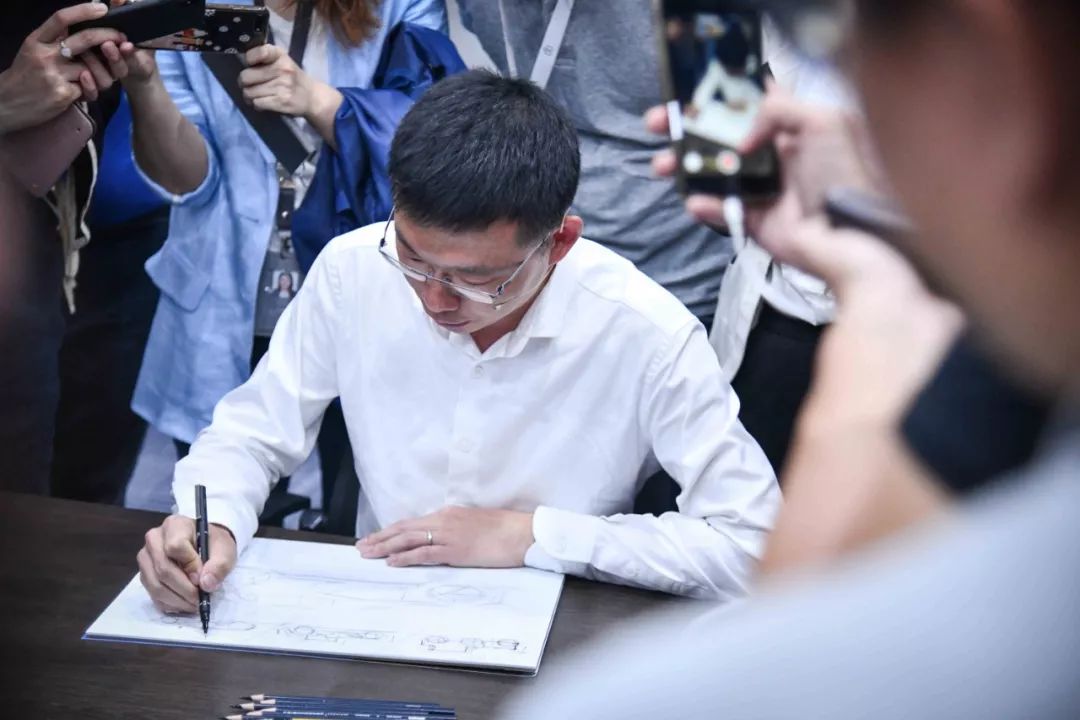
Introduction of Chen Chen: Graduated from ACCD Design Institute, currently the Design Director of BYTON. Before joining BYTON, he worked as Chief Exterior Designer at GAC Group, responsible for designing the GS8, GS4, as well as several other core products and concept cars. Prior to that, he started his career at Honda and Acura, leading the exterior design of 3rd generation Acura MDX and NSX concept cars, and teaching courses at ACCD Design Institute in his spare time.
Below is the interview of Mr. Chen Chen conducted by Garage Number 42 and re-edited by Garage Number 42 for easier reading. The interview is presented in first person narrative.
We are not making an SUV, we call it the next-generation smart terminal.
First, let’s talk about SUVs.
Actually, the SUVs on the market today are completely different from the earliest ones. The earliest SUVs were like the World War II Willys, the early Grand Cherokee or Defender. For me, that is an SUV. You can buy this car and go off-roading directly from the dealership.
What we see in the market now are more like urban CUVs that are designed on a car platform but have an SUV-like appearance. The interior space is quite similar with more headroom and lateral space, which is a special phenomenon in the Chinese market. Because our needs for family cars are different from Western consumers, the product size will be closer to earlier SUVs.
When designing, we still pursue some of the styling designs of SUVs, because SUVs represent freedom and confidence, and some people will feel that SUVs are luxurious. There are several aspects of luxury: comfort and privacy. I can see you, but you can’t see me, and that is also a kind of luxury. However, nowadays, there may not be many people taking an electric car off-road, especially when there are batteries underneath the chassis.
Next, let’s talk about how BYTON defines this smart terminal.
The design language of smart cars is different from traditional fuel cars. If you take a more traditional approach, you will always feel that the classic products you have used are good. If you want to change, you have to take risks and get used to it.
When designing, what we need to do is not to find the differences between the two languages, but to find common goals. We need to have a clear understanding of what BYTON wants to achieve, and it must be a smart product.
First of all, our inspiration is digital design, as you can see from the front and rear faces that it is a digital electronic product.

Secondly, you can see the luxury of BYTON’s vehicles. Because its design language is very simple, very delicate and very technological, it does not pursue some relatively short-term design styles.
When talking about simplicity and complexity, we don’t necessarily have to make an absolute choice. The design of a car should have both simplicity and thoughtful details. Because if it is too simple, users will feel that this car is cheap, without material, details and things that can be viewed for a long time.
In BYTON’s M-Byte Concept and K-Byte Concept, you can see very clean curved surface in some places, but in some places you can see very delicate details, and these details are very technological and textured.
For example, BYTON has a relatively low ground clearance, because of the battery and engineering arrangement, our tires are also very wide, and electric vehicles cannot grip the ground without wide tires, which may cause skidding on some road conditions, so our cars are solid. When you look at the side of all luxury cars, the body volume is very solid and stable, and the line shape is relatively flat, which is the consumer’s feeling for the car.
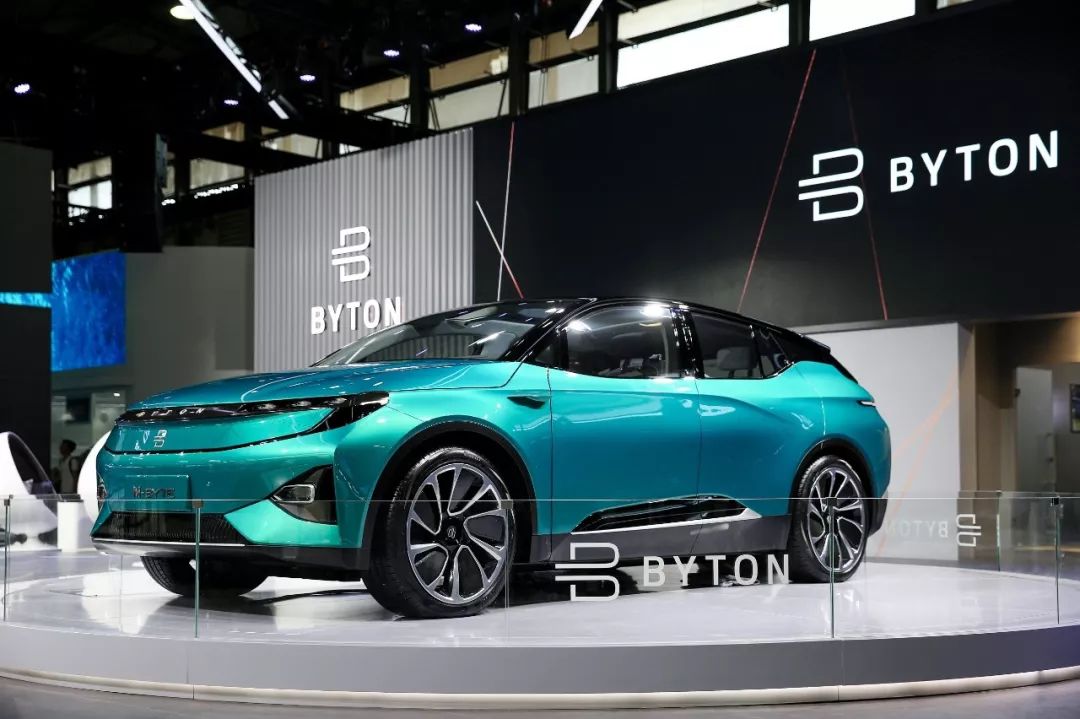
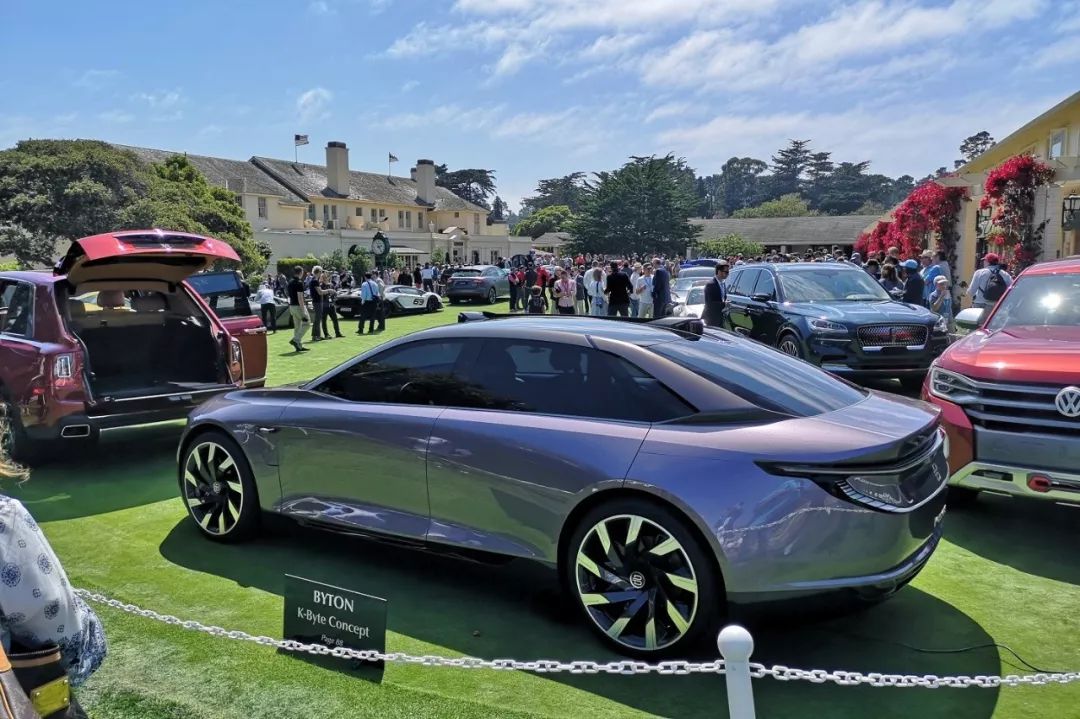
At the back and front of the car, with very thin, wide and technological lights, first of all, there is an aesthetic decoration effect, which makes you feel that this car is very sporty, and being sporty gives a very youthful feel. No one wants to buy a car that makes them look old, no matter what age you are, you want the car to express your youth and liveliness. At the same time, the horizontal lights also convey a sense of luxury, which shows that you are stable and not someone who wants to prove their ability when they are thirteen or fourteen years old.Third, we need to innovate on top of a luxurious taste, while expressing our individuality, especially for a new brand, to establish our own concept.
We expect more than just going from point A to point B, more than just driving, it is life and even fashion. Our design team comes from different backgrounds, such as graphic design, fashion design, product design, and automotive design. Personally, I hold a Bachelor of Science degree.
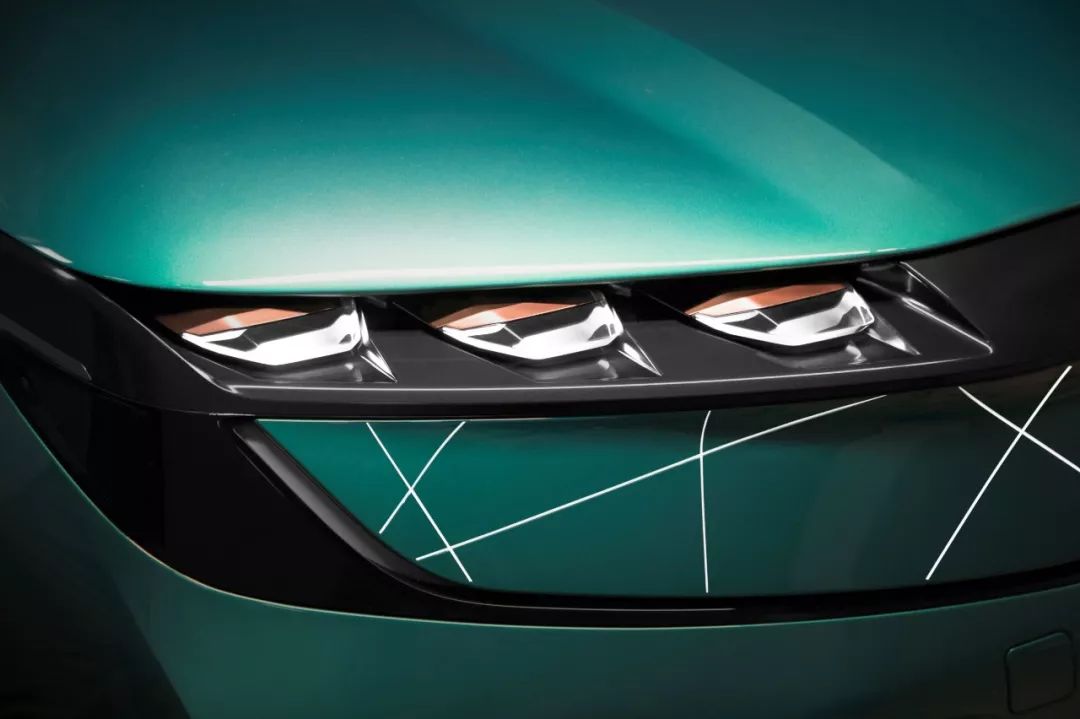
For example, our Connecting Lines are designed by a graphic designer. This design language has its own meaning, not just decoration. In traditional design concepts, the feature lines of the waist and shoulder of a car body should not cross or be too close. However, our intelligent design allows people to connect with each other, with the car, and with other cars. This is our brand’s personality.
Designing the Connecting Lines was very challenging because no manufacturer has done it before. We searched for many suppliers and finally found one that could provide a solution. They were willing to spend time helping us realize our dream of designing a product without knowing if it would sell hundreds of thousands or millions of units. This is recognition for our product and brand. This is just a small example, and there are many similar cases throughout our cars.
In addition, each BYTON product has a family design feature called the Gliding C-Pillar on the C-pillar. It can be understood as a decoration that can be omitted. However, we want to give it more personality to enhance its recognition. At the same time, it can reduce wind resistance. We hope that our design not only focuses on the appearance but also has functionality.
Fourth, we need to use a new approach to consider the design of a traditional structure or its engineering possibility. For example, the change in structure behind the shared screen.
Our experience with traditional cars is that the instrument panel is in the middle with a small screen, almost in a T-shape. But with this layout, if the screen is enlarged, it will block the view, so the main structure needs to move downwards or forwards.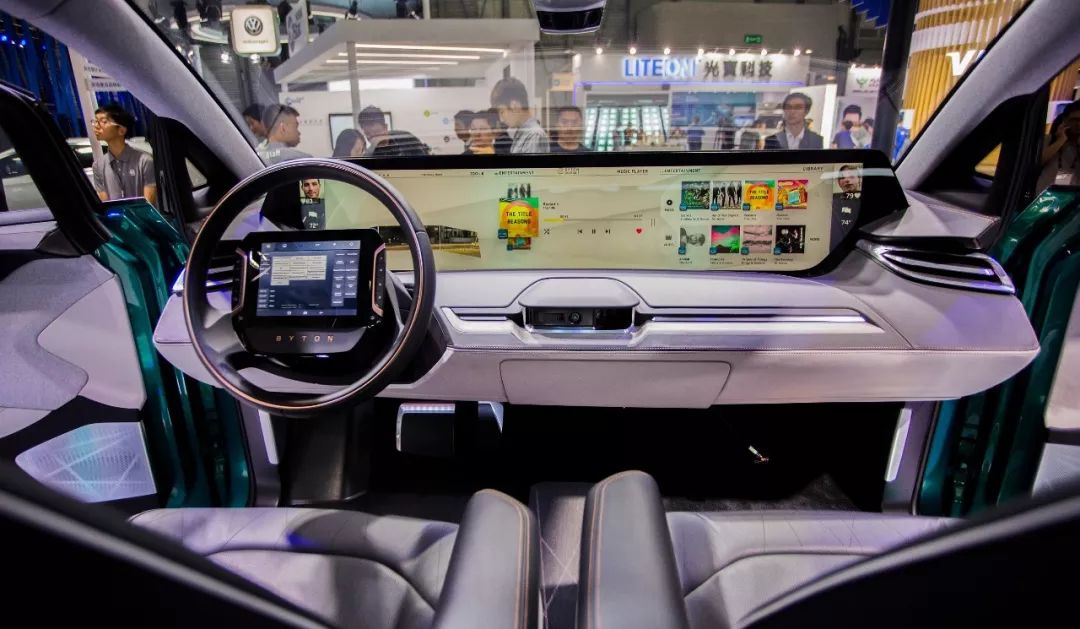

To maintain a good field of vision, we rearranged the structure below the line of sight. The entire air conditioning system is placed in front of the firewall, allowing for a higher screen. In fact, the position of the entire screen is downward, not upward.
The large screen was a controversial issue from the outset. However, the large screen is an important aspect of Byton’s digital design and will continue on the K-Byte in the future.
Fifth, we use some technologies to meet the consumers’ demands, as the consumers are always right.
For example, designing a car to look solid but not bulky, sporty and lively, luxurious and versatile, as well as comfortable and spacious, yet without being too large (difficult to park), is indeed a challenge to our designers and engineers, but we will try our best to meet these requirements.
If you want to maintain a good balance between electric power, weight, and performance, you must consider wind resistance from the outset.
Byton’s tail lights have sharp corners, designed to allow air to flow cleanly off the rear of the car without creating chaotic eddies. We will optimize the chassis design to reduce wind resistance. For example, if we look at race cars, they must be very close to the ground and the floor must be extremely flat and clean to reduce drag.
In addition, Byton has a unique design that removes the shark fin. From the standpoint of wind resistance, shark fins create more wind resistance, noise, weight, and cost. Instead of a shark fin, Byton’s design features a hidden antenna, which is concealed in the roof for a simpler, smoother airflow and lower noise.
For such aesthetic adjustments, our designers and engineers must work together to conduct 1:1 tests in the wind tunnel.
Whether creating a new energy vehicle or a traditional one, we must pay attention to safety.
For example, we hope to make the A, B, and C pillars thinner and narrower to widen the field of vision, which is important. However, this aspect of safety is actually in conflict with another equally important security factor. After a rollover or a side impact, the structure needs to be thick and strong, and the A, B, and C pillars need to withstand the impact or a certain weight.These two safety designs are in conflict, and since electric cars have batteries, they are heavier, which poses a great challenge for us. However, as designers and engineers, we need to strike a balance, such as using lighter materials, better calculations and balance. We also need to work with our supply partners to develop lighter and smaller batteries for the optimization of next-generation and future products.
Sixth, subtraction is the hardest thing to do.
Making a big car is easy. We just add materials, weight, and size to make a big space, but this cannot provide new value, especially in this fast-paced era. Our approach is different from tradition.
The feeling that Tesla’s Model 3 gives me is that it has done more subtraction than the previous Model S and Model X. The interior is cleaner, removing countless buttons and keyboards accumulated over the past hundred years, and some details that need us to operate with the body, leaving more space and returning space to consumers. Next, we also expect how they will use this space or time.
I think what our two companies are doing is more about the future of mobile space, not just a moving car. What we are doing is creating a new experience of space and time, and electric is just a way of energy.
Seventh, the biggest breakthrough of Byton’s products, we have only revealed a small part to the outside world. Behind the technical platform is a large digital window.
The window faces both sides of the world. We see one side, but we have not revealed the other side of the world behind the window, which is the biggest breakthrough and differentiation of our products.
PS: Chen Chen demonstrated the evolution of styling from gasoline cars to electric cars on-site with drawing, which can be followed by searching Chen Chen on Weibo at @42号车库.

 * BYTON K-Byte made its debut: As expected, avant-garde and radical at 42HOW event

This article is a translation by ChatGPT of a Chinese report from 42HOW. If you have any questions about it, please email bd@42how.com.