Elon Musk has finally remembered his Twitter password.
After a silence of almost two months, Tesla CEO Elon Musk is back in full force. Last week, Elon went all out on Twitter, taking on his competitors and revealing progress within his own company. The unpredictable CEO is up to his mischievous antics again, no doubt causing sleepless nights for the Tesla global communications team.
Without further ado, let’s take a look at what Elon had to say.
PK Taycan
On the evening of September 4th at 9:00 pm, Porsche globally launched its first all-electric sports car, the Taycan. One year prior to the launch of the Taycan, Klaus Zellmer, the CEO of Porsche North America, had already stated that more than half of the Taycan pre-order customers were not Porsche owners, with the number one pre-order being a former Tesla owner.
True to form, Elon couldn’t sit still and started shouting on Twitter: “@Porsche, Porsche! The actual word Turbo does not mean what you think it does.”

The naming convention of Porsche’s Turbo and Turbo S was mainly a continuation of logic from the era of combustion engines to reduce the learning curve for users, while Elon believes that Turbo obviously means “turbocharger,” which is not a component of an electric car.
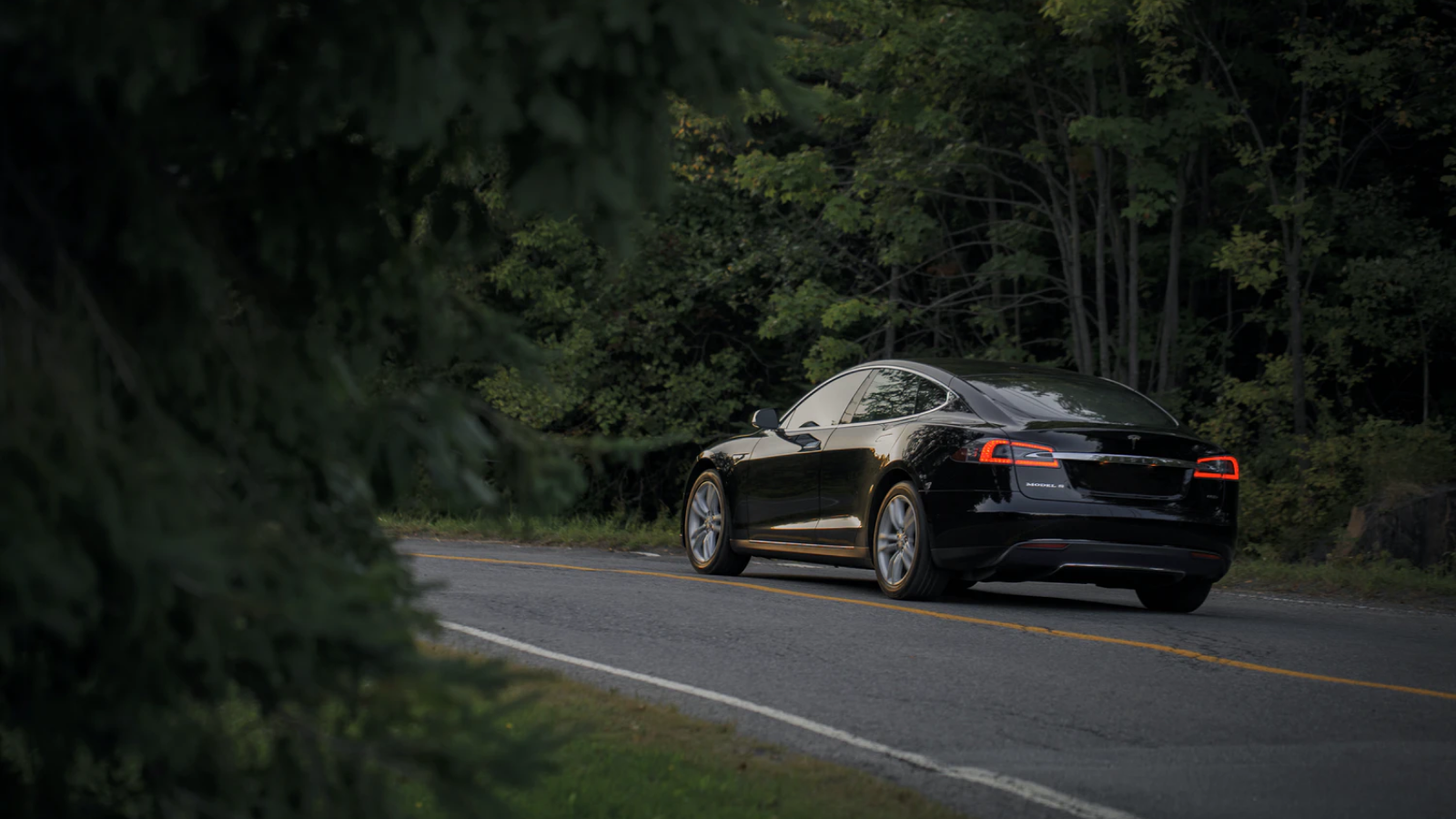
Although both sides have their reasons for complaining, it doesn’t affect the use of the cars, and the matter should have ended there. However, perhaps it was because Porsche ignored him, Elon slowly typed out another line of text: Model S will be deployed to the Nurburgring next week.

Why go for the attack on the Nurburgring? Two months before the Taycan launch, the car set a new four-door electric car record on the famous Green Hell, clocking 7 minutes and 42 seconds. Elon wants to take the Model S to Porsche’s home turf and beat the Taycan.

This tweet made everyone laugh. Why? It’s quite obvious that Elon was just messing with Porsche, but some netizens commented that perhaps the Tesla track mode team only found out about the Model S mission to the Nurburgring after seeing Elon’s tweet.
Who could have imagined that two days later, someone would capture a trailer carrying a Model S on the highway leading to the Nuernberg-North racetrack. The highlight is that the car was equipped with four Michelin PS CUP2 R tires, which according to Michelin are “designed for racetrack use, born for high-performance enthusiasts, and can also be used on highways.”
Well, the execution of the Tesla team cannot be underestimated. We do not know when these people took action, nor if the racetrack mode was ready. This large company, with a staff of 40,000, has any team that can move independently like Elon’s four limbs, which follow his decision-making process.
Racing driver Nico Rosberg also joined in, telling Elon to just call him if no one helps him brush the track. Nico previously drove a Nio ES8 and also a Tesla Model 3, but most importantly, he was the 2016 F1 World Champion.

This really can’t be ignored. Foreign media Road&Track contacted the operator of the Nuernberg-North racetrack to confirm the matter, and Nuernberg-North quickly replied: “Tesla did not send us a request for a racetrack record, nor did they rent a dedicated time slot for the racetrack. ” The Nuernberg-North racetrack has been fully booked this season, and Tesla will not be able to perform lap record tests for the next few days.
A Tesla spokesperson quickly clarified: Tesla has rented Industry Pool from Nuernberg-North, our request has been confirmed and signed by Nuernberg-North operators.
Does this mean that the Model S has reversed its situation for the Nuernberg-North track?
The Industry Pool mentioned here is actually a venue for car manufacturers and component suppliers to test and improve prototypes on the Nuernberg-North track. Because there are a large number of test cars and staff coming and going, it is forbidden to set lap records here. It is allowed to drive fast under traffic conditions, but it is not allowed to run the track at full speed.
Elon brought his car and team to Nuernberg-North to do his best, and what results he will get, we await with bated breath.
Autopilot V10 approaching
When CEO publicly criticized Porsche, users were naturally unhappy. This is because since the release of Autopilot V9 in September 2018, Tesla has been developing the tenth version, Autopilot V10, for a full year.A car owner gets straight to the point: When will V10 be released? Elon evades the question by saying it looks good and the Smart Summon feature is approaching perfection. The Theater Mode, Caraoke, and Cuphead (new game) are all fantastic. In other words, everything is going smoothly except for the release date.

It’s clear that there are no users willing to listen to promises anymore: It’s still another week until the early user plan sees a large-scale rollout? Elon is honest this time: We’re merging code branches, and this week we’ll release a QA level version (the last version before large-scale rollout for quality assurance purposes) in the hopes of a large-scale rollout one week later.

Jokes aside, let’s talk seriously about Autopilot’s progress.
Why is V10 getting so much attention? V8 completed the construction of L2-level core capabilities based on Tesla’s independent R&D of hardware and software. V9 introduced Navigate on Autopilot. The latest version of NoA supports smooth high-speed entry/exit on ADAS-supported highways without confirmation or self-signal lane change.
Although V10 has not yet been released, Tesla’s ongoing testing of early development versions is showing more and more updates for visual perception breakthroughs.
Firstly, there is support for new models. Currently, AP is able to identify pedestrians, bikes, cars, SUVs, vans, buses, and heavy trucks on the road. In V10, it will also support identification of pick-up trucks, as seen in the following evidence.


You might ask, what’s the big deal about recognizing one more vehicle type?
The entire Tesla AP Vision team works by analyzing the image data sent from all 8 cameras of the car using the available computational power, filtering out obstacles that do not affect driving (such as leaves, ropes, and plastic bags), and identifying traffic participants such as pick-up trucks from the depth information of the images.# Accurate Understanding of the Real World with Enhanced Autopilot
Every time Enhanced Autopilot (AP) adds support for recognizing a new type of vehicle, its understanding of the real world becomes more accurate. The pickup truck is the first new model discovered in version 10, and we’ll have to wait for the official release to see if any other new vehicle types are supported.
Regarding the second question about AP, there are differences between HW 2.5 (Hardware) and 3.0 models in version 10. Let’s take a look at the following two images.

Even with at least one meter-wide median, the latest AP version still recognizes four opposite lane vehicles accurately.

At a large intersection, AP accurately recognizes a car and a school bus turning at the center forward position, as well as other vehicles on the right rear, left, and left front positions, displaying their turning angles on the screen.

This image is a bit blurry but it still demonstrates that in the latest AP version, the entire environment display information supports 360-degree movement. From the blue guiding line, it can be seen that the leftmost vehicle is actually located in front of the Model 3, while the other five vehicles, especially the four distant ones, are all recognized through the rear camera.
What we can be sure of is that all these vehicles are equipped with HW 3.0 hardware.
The recognition of long-distance vehicles on opposite lanes means that Tesla has enabled all three front cameras. Meanwhile, the recognition of a large number of vehicles from the rear means that the rear cameras are also working in full resolution mode.
This is significantly different from the performance of AP under HW 2.5 hardware. Due to the limitation of the NVIDIA Drive PX2, which drives Tesla HW 2.5 (the video port only supports real-time perception of six video streams), Tesla had to disable the long-distance camera and fisheye camera in the three front cameras, only enabling the four on the left and right and the main and rear cameras at lower resolutions.
Even so, due to insufficient computing power, only the main front camera can achieve full resolution output. Recognizing a large number of vehicles in the opposite and rear directions, as shown in the image above, is still very difficult under these circumstances.The greater possibility is that, with the abundant computing power support from HW3.0, AP has already opened up full resolution perception support for eight cameras.
Since the second half of 2019, Volkswagen and Tesla have had further divergent understandings of Autopilot. To many Tesla owners, FSD (Full Self-Driving Capability) seems to be a distant dream, and purchasing the FSD package is completely unnecessary.
On the other hand, Tesla has begun to play a subtle game with consumers at the sales level.
On March 1st, Tesla redefined the scope of Autopilot, making the basic L2 level functions standard, and including all functions including NoA and Summon into the FSD package.
On April 22nd, Tesla held an investor conference and released the last hurdle of hardware, the FSD chip.
Just after the re-definition of AP function and the announcement of the FSD chip, Elon suddenly tweeted that the FSD price would increase significantly, leaving everyone confused.
After that, Elon further explained the pricing logic: The FSD package price will be strongly tied to technological progress. For every additional feature added, the FSD price will increase by $1,000.
Elon believes that ultimately, users will choose to purchase the FSD package. Because even if the functional form is not FSD, the AP driven by HW3.0 still has stronger computing power and more rich perception details. Its improvement in safety and convenience does not necessarily depend on the landing of FSD functions.
For example, take NoA function. The current version of NoA sometimes hesitates when performing automatic lane changes, because the system may not be able to discern the road conditions behind the side after you turn on the turn signal. But with AP driven by HW3.0, there will be a more accurate understanding of the surrounding environment, which will result in more efficient and safe performance in many scenarios including automatic lane changes.
The stronger perception and decision-making ability will be reflected in all aspects of the system operation, and as time goes on, the differences in system boundary capabilities between users who have purchased the FSD package and those who have not will become more and more significant.
All these differences will begin from HW3.0 + V10.
This article is a translation by ChatGPT of a Chinese report from 42HOW. If you have any questions about it, please email bd@42how.com.